 By Robert AlexanderShareNewsweek is a Trust Project member
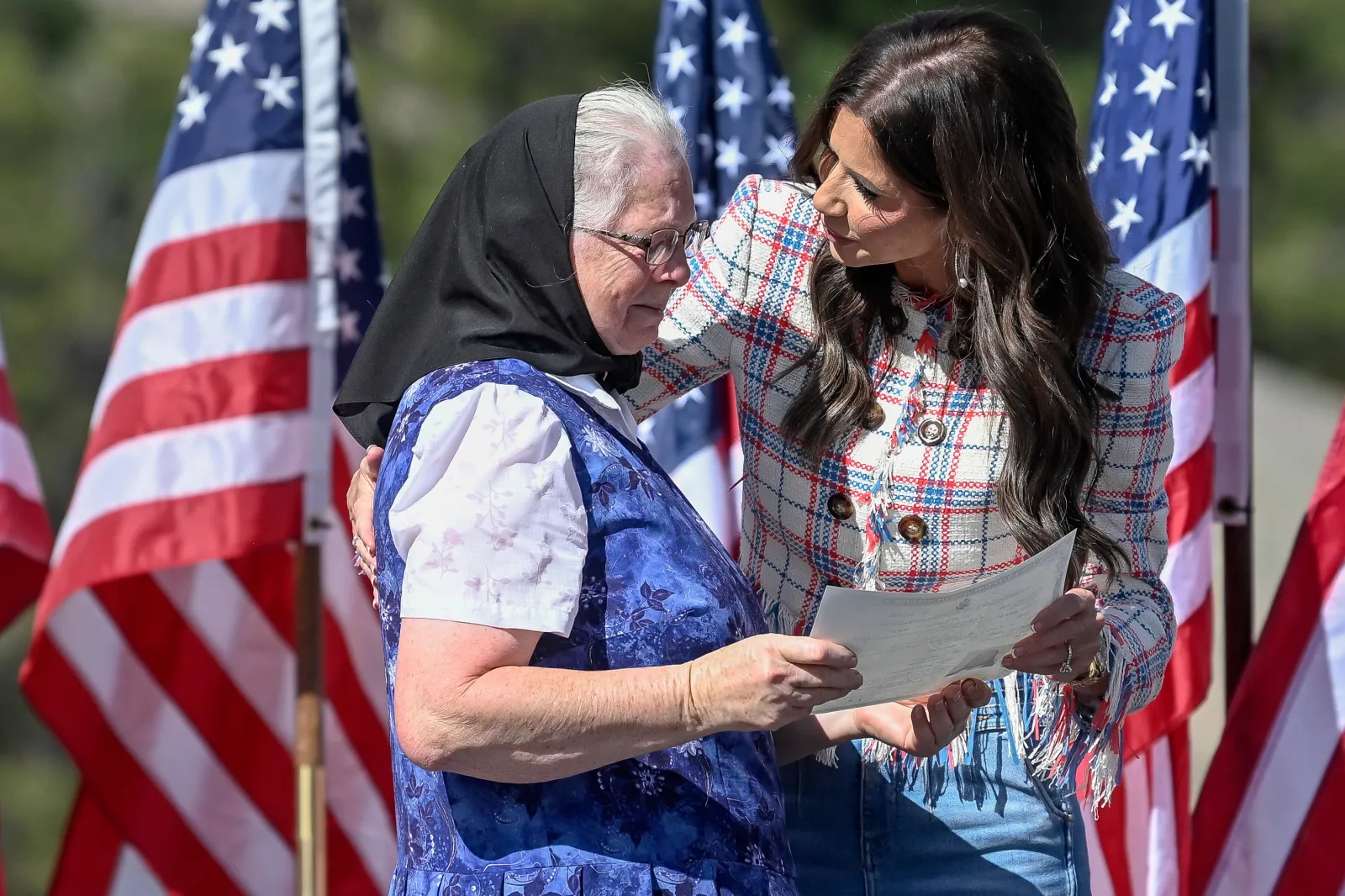
As the Trump administration signals a willingness to broaden the use of denaturalization—amid pledges to "terminate all of the millions of Biden illegal admissions" and pursue "REVERSE MIGRATION"—longstanding Supreme Court precedent places sharp limits on when the government may revoke citizenship.
Those limits, set over the course of nearly a century, reflect a consistent judicial view that denaturalization is a narrow tool reserved for cases of proven fraud, not a mechanism for political punishment or broad immigration enforcement.
Newsweek contacted citizenship and denaturalization scholars and constitutional law experts for comment via email outside of normal office hours on Monday.
Why It Matters
With the Trump administration considering broader grounds for revoking citizenship—including proposals to strip it from people who "undermine domestic tranquility" or are deemed "noncompatible with Western civilization"—the Supreme Court’s long-established constraints on denaturalization draw a sharp line around what the government can actually do.
For nearly a century, the Court has held that citizenship may be revoked only in rare cases of proven fraud, warning repeatedly against turning denaturalization into a tool of political retaliation.
With millions of naturalized Americans now watching new enforcement moves and rhetoric aimed at immigrants, the legal limits the Court has set—and why it set them—have become central to understanding how far any administration can go.
 ...
...What To Know
Legal Limits on Denaturalization
The administration’s recent rhetoric includes proposals to strip citizenship from individuals who "undermine domestic tranquility," as well as foreign-born Americans deemed "noncompatible with Western civilization."
The administration’s push comes amid its broader effort to tighten immigration enforcement and reshape the system in ways that emphasize ideological alignment and national-security concerns, making denaturalization a tool it now views as politically and strategically useful.
Immigration attorney Mariam Masumi said such bases have no footing in law, noting that denaturalization "is extremely limited" and may be pursued only when citizenship was obtained "through fraud or by concealing a material fact."
She warned that expanding denaturalization beyond those limits could conflict directly with the First Amendment.
How the Supreme Court Built Its Modern Doctrine
The Supreme Court’s modern denaturalization jurisprudence began during World War II and the early Cold War, when thousands of naturalized Americans were targeted on grounds ranging from political affiliation to perceived insufficient loyalty.
As documented in historical accounts, more than 22,000 people lost citizenship between 1907 and 1967 on such bases.
But beginning in the 1940s, the Supreme Court reined in these practices.
In Schneiderman v. United States (1943), which challenged an attempt to denaturalize a labor leader over Communist Party ties, the Court held that "the facts and the law should be construed as far as is reasonably possible in favor of the citizen."
It further said the government "must sustain the heavy burden…to prove lack of attachment by ‘clear, unequivocal, and convincing’ evidence."
This reasoning reflected the Court’s broader conclusion that citizenship, once granted, cannot be taken away lightly.
The Supreme Court gradually built a strict framework limiting the government’s ability to revoke citizenship when it emphasized in Baumgartner v. United States (1944) that "one should not be denaturalized on evidence that would not be sufficient to convict him of a minor offense" and that such cases "call for the closest scrutiny."
Soon after, the Court underscored the value of citizenship in Knauer v. United States (1946), declaring that "citizenship is a priceless treasure…We will not permit it to be taken away without the clearest sort of justification."
A little more than a decade later, the Court made clear in Trop v. Dulles (1958) that "citizenship is not a license that expires upon misbehavior," reinforcing the idea that citizenship cannot function as a tool of punishment.
That principle was cemented in Afroyim v. Rusk (1967), where the Court held that the Fourteenth Amendment "was designed to, and does, protect every citizen of this Nation against a congressional forcible destruction of his citizenship," that the government cannot forcibly strip citizenship from a naturalized American without the individual’s consent, except when it was "unlawfully procured."
Most recently, the Court unanimously reaffirmed these protections in Maslenjak v. United States (2017), insisting that "the Government must establish that the defendant’s illegal act played some role in her acquisition of citizenship" and warning that it was "unconvinced that Congress meant to grant prosecutors nearly limitless leverage over naturalized citizens."
The Constitution Annotated summarizes this principle: an individual has no right to retain citizenship "if, by false evidence or the like, an imposition has been practiced upon the court," but citizenship may be revoked only when there is "strict compliance with all congressionally imposed prerequisites" and those requirements were violated. Otherwise, naturalization stands.
Recent Caseloads and the Court’s Continuing Constraints
In recent decades therefore, denaturalization has remained rare.
According to research conducted by The Brennan Center for Justice, the Justice Department filed an average of 11 cases per year between 1990 and 2017, rising modestly during the Obama and Trump administrations as technological tools enabled renewed fraud detection.
As Cassandra Burke Robertson and Irina D. Manta, from their academic article (Un) Civil Denaturalization (2019), explain: "Denaturalization is no longer so rare. Naturalized citizens’ sense of security has been fundamentally shaken by policy developments in the last five years. The number of denaturalization cases is growing, and if current trends continue, it will continue to increase dramatically. This growth began under the Obama administration, which used improved digital tools to identify potential cases of naturalization fraud from years and decades ago."
Even so, the Supreme Court has continued to reject expansive theories.
In 2017, the Court ruled unanimously that the government must show a direct causal link between an unlawful act—such as a false statement—and the actual acquisition of citizenship; prosecutors may not merely "scour paperwork" to identify technical omissions.
Today, as the administration pauses asylum decisions for Afghan nationals and signals a broader reexamination of green cards and immigration benefits, the Supreme Court’s precedents remain clear: denaturalization is permissible only in narrowly defined circumstances, and political viewpoints, post-naturalization conduct, or broad character assessments are not among them.
Any attempt to use denaturalization as an instrument of policy rather than law is likely to face steep constitutional headwinds.
What People Are Saying
Cassandra Burke Robertson and Irina D. Manta, from the academic article (Un) Civil Denaturalization (2019) state: "The Trump administration…is taking denaturalization to new levels as part of its overall immigration crackdown."
The Brennan Center for Justice, warning that renewed calls for denaturalization "recall a dark history," and cautioning that citizenship revocation "as a political weapon" would run up against the Court’s longstanding doctrine.
What Happens Next
The administration’s push to widen denaturalization is likely to trigger rapid legal challenges, with federal courts relying on long-established Supreme Court precedent that restricts revoking citizenship to cases of proven fraud.
While the government can increase file reviews and investigations, any attempt to strip citizenship based on ideology or broad security claims will face significant judicial resistance, creating a gap between political rhetoric and legal reality.
As challenges unfold, naturalized Americans may experience heightened scrutiny and uncertainty, and the issue could ultimately return to the Supreme Court if lower courts split on how to interpret the limits.
Request Reprint & LicensingSubmit CorrectionView Editorial & AI Guidelines Add Newsweek as a preferred source on Google to see more of our trusted coverage when you search.
Recommended For You
 U.S.Black Friday Spending Raises Eyebrows Over US Economy5 min read
 NewsStrange Chernobyl Black Fungus May Eat Radiation4 min read
 U.S.Blue-Collar Jobs Are Collapsing Under Trump4 min read
 NewsDoes Cannabis Actually Have Medical Benefits?8 min read
 PoliticsTrump ‘Wouldn’t Have Wanted’ Second Strike on Venezuela Boat4 min read
 PoliticsKristi Noem Says National Guard Shooter Was ‘Radicalized’ in the US5 min read
Related Podcasts
Top Stories
 NewsThe Motive Behind the National Guard Shooting: What We Know6 min read
 NewsUncommon Knowledge: Trump Closes Venezuelan Airspace, but Not NATO Airspace5 min read
 WorldRepublicans Demand Probe into Pete Hegseth’s Boat Strikes5 min read
 PoliticsDonald Trump Suffers Blow in Alina Habba Case4 min read
 WorldNetanyahu Pardon: Israel’s President Responds to Trump-Endorsed Request3 min read
 NewsManhunt Underway After 3 Children Killed at California Birthday Party4 min read
Trending
 FloridaAmazon Driver Sees Food Left for Stray Cats—Ring Cam Captures What He Does3 min read
 NWSWinter Storm Warning as 8 Inches of Snow to Hit North and Midwest3 min read
 Donald TrumpMap Shows Donald Trump’s Approval Rating in Each State After 10 Months4 min read
 Delta AirlineDelta Air Lines Plane Slides Off Runway During Winter Storm1 min read
 WeatherWinter Storm Warning As 13 Inches of Snow To Strike: ‘Extreme Caution’3 min read
Opinion
 OpinionForeign Energy Companies Have No Home in Our Forests | Opinion4 min read
 OpinionThe Hemp Ban Shows America Still Works | Opinion4 min read
 OpinionConventional Wisdom: The Somali Minnesota Welfare Fraud Edition4 min read
 OpinionRedefining Professional Degrees Will Hurt Everyday Americans | Opinion5 min read
 OpinionAI Is Coming for Our Most Intimate Communications. Congress Must Act | Opinion5 min read