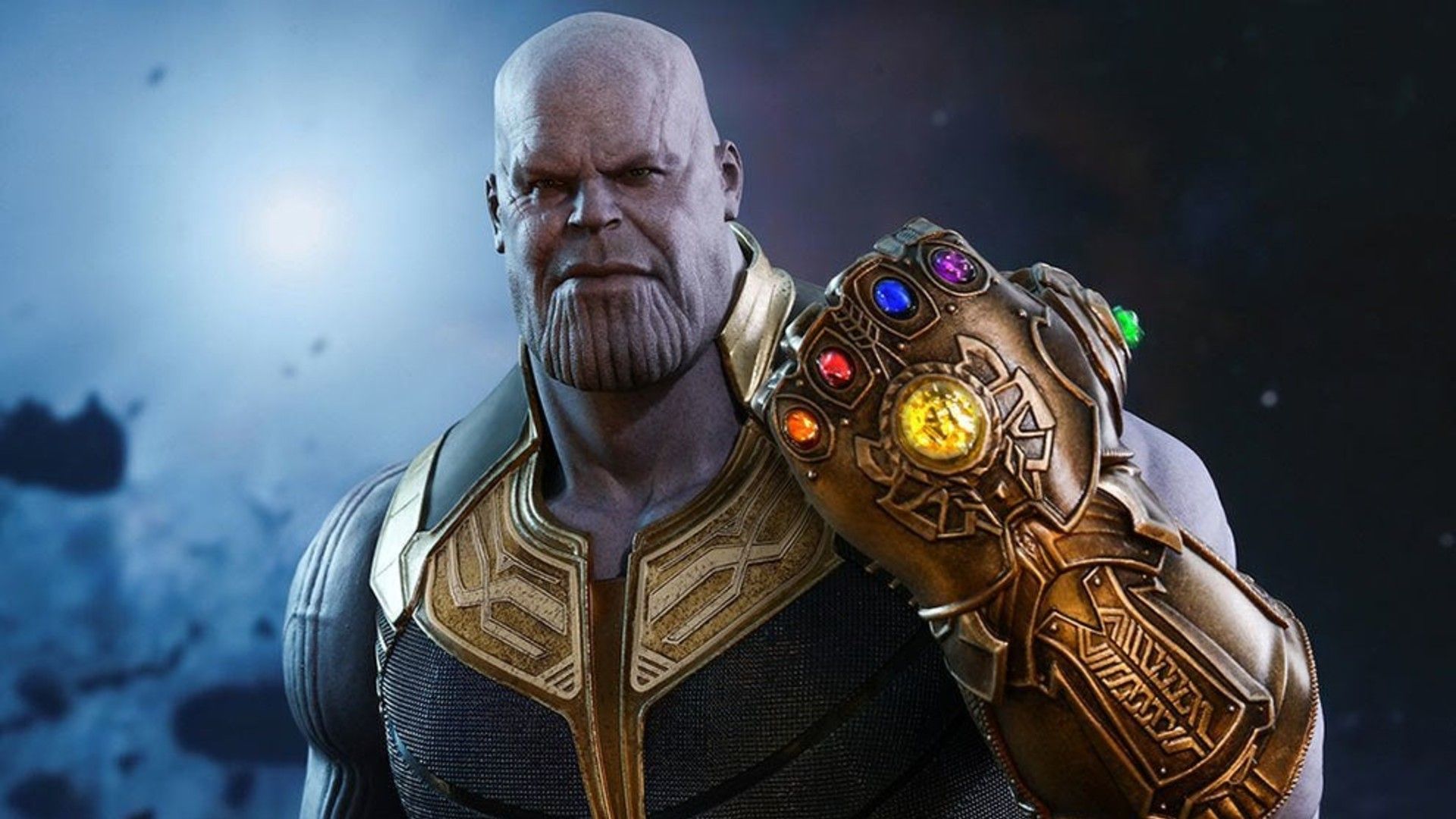
 Thanos wielding the Infinity Gauntlet
 By
Ambrose Tardive
Published 24 minutes ago
Ambrose Tardive is an editor on ScreenRant's Comics team. Over the past two years, he has developed into the internet's foremost authority on The Far Side. Outside of his work for ScreenRant, Ambrose works as an Adjunct English Instructor.
Sign in to your ScreenRant account
Summary
Generate a summary of this story
follow
Follow
followed
Followed
Like
Like
Thread
Log in
Here is a fact-based summary of the story contents:
Try something different:
Show me the facts
Explain it like I’m 5
Give me a lighthearted recap
By
Ambrose Tardive
Published 24 minutes ago
Ambrose Tardive is an editor on ScreenRant's Comics team. Over the past two years, he has developed into the internet's foremost authority on The Far Side. Outside of his work for ScreenRant, Ambrose works as an Adjunct English Instructor.
Sign in to your ScreenRant account
Summary
Generate a summary of this story
follow
Follow
followed
Followed
Like
Like
Thread
Log in
Here is a fact-based summary of the story contents:
Try something different:
Show me the facts
Explain it like I’m 5
Give me a lighthearted recap
Marvel Comics’ new “blind bag” initiative is great for hardcore comic collectors, but it neglects the real problem impacting the publisher’s sales: like most things, comics are just too expensive these days. Major and minor companies alike, from Marvel and DC to Image, Dynamite, Boom! Studios, and others, need to figure out how to bring costs down for comic consumers.
Publishing incentives like Marvel’s “True Believer Blind Bag” program target a specific subset of comic fans. It’s an artificial way to boost sales, even as prices continue to rise.
 Ultimate Endgame Marvel Comics
The “True Believer” initiative is a smart business move, in its own right, but it should be counterbalanced by a plan to get wider audiences to invest in comics.
Marvel's "Blind Bag" Program Is Great For Collectors, But What About The Average Reader?
Will Comic Prices Continue To Rise In 2026?
 Ultimate Endgame #1 cover, the Maker laughing maniacally as heroes are sucked into a vortex
Ultimate Endgame #1 hits shelves December 31, 2025, and kicks off Marvel's "True Believer Blind Bag" program. It is the first wide-scale initiative of its type for the publisher. Readers can opt to purchase a "blind bag" copy of the issue, meaning they won't know which variant cover they are getting until they open it.
The initiative also promises unannounced covers that will only be revealed when a fan finds them. For collectors, it's going to make 2026 a fun year. Like this year's Labubu phenomenon, the surprise element is meant to motivate consumers to buy multiple versions of the same product. In this case, the same issue of a comic.
For the uninitiated, the average Marvel book these days is published with upward of six, sometimes more, cover options. A main cover and multiple "variants." This is already a marketing decision geared toward collectors, first and foremost. The "True Believer" program is an extension of that. Let's say, then, that committed collectors buy 2-3 variations on each issue they buy.
How many does the average Marvel fan buy? The answer is one. If their interest isn't in collecting comics, but simply reading them, the "blind bag" concept offers little more than a passing fancy when they're in the comic store getting their books. But behind-the-scenes, it is costing them money anyway.
Comics Have Become A Collectors' Market, But Is That Sustainable For Marvel And Other Publishers?
What Happens When Most Readers Can't Justify Buying Comics?
 Ultimate Endgame variant cover in the style of an MCU poster
Printing so many variant versions of the same comic issue costs money. So do the "special sealed bags" that the "True Believer" variant covers come in. Targeting the collectors' market makes sense for Marvel, to a degree, but as rising production costs drive up the prices of books for consumers, it becomes a more fraught financial calculation.
After all, a collector who is already buying multiple copies of a comic book has discretionary income to spend, and is choosing to spend it on Marvel Comics. The average reader, meanwhile, is being priced out of comics, and new readers are being scared away by sticker shock when they see when an individual comic issue runs.
Marvel makes many creative decisions that are seemingly geared toward appealing to new fans, even at the risk of alienating longtime readers. It seems that in order to sustainably expand the publisher's readership, it needs to adopt equivalent business practices. Marvel needs to make comics cheaper if it wants more people reading.
Marvel Need To Focus On Lowering Costs For Consumers, But How Can It Do That?
Is There A Way To Appeal To Collectors And Baseline Comic Consumers?

There are a few things Marvel could do to lower comic costs. One immediate change the company could implement would be a reduction in digital comic prices. Currently, the Kindle version of most new comics sells for the equivalent price to the physical copy. Cheaper digital comics would be more enticing to the wider casual audience, the "dabblers" in comic reading.
For physical comics, there is an obvious solution, but it is one Marvel likely won't be keen on: using cheaper paper. Marvel books, as a product, are higher in quality than ever before. They look great, and have a sleek, glossy feel to them. It's rare to suggest that lowering the quality of the product is ever the solution.
Yet comic books are unique. It is a pulp medium, by origin. That term, "pulp," literally indicated a lower quality of paper. The terminology is outdated, but comics today would now be classified as "slicks," made using higher quality paper stock. However, it's worth asking if the distinction matters to the average reader.
Marvel Needs To Rediscover Its "Pulp" Origins, But What Would That Look Like?
Is Cheaper Paper The Key To Lowering Comic Prices?
 Captain America, Wasp, and Wolverine lead the charge alongside Hawkeye, Rogue, and She-Hulk in Marvel's original 1984 Secret Wars comic cover
Marvel could still sell "slick," modern, high-quality collectors' editions of its titles in limited quantities. In fact, it should. Still, mass-producing "pulp" versions of its comics would be a potential solution, or at least stopgap, for rising prices. In other words, comics need to return to the medium's roots as a cheap, disposable form of "pulp" art.
Of course, cheaper, pulpier comics would also evoke nostalgia from older readers, those that still remember the 1990s, at least. Plenty of collectors would be grabbing pulp copies of issues alongside their slick collectors' copies. It sounds strange on the surface, but making Marvel books cheaper might actually mean making them cheaper.
-
 Comics
We want to hear from you! Share your opinions in the thread below and remember to keep it respectful.
Be the first to post Images Attachment(s) Please respect our community guidelines. No links, inappropriate language, or spam.Your comment has not been saved
Send confirmation emailThis thread is open for discussion.
Be the first to post your thoughts.
- Terms
- Privacy
- Feedback
 3 days ago
Netflix's Next Harlan Coben Series Reveals First Look At Returning Actor's Twisted New Mystery
 3 days ago
Yellowstone’s New Spinoff May Have Confirmed Monica Dutton’s Fate
 3 days ago
One Piece Season 3 Gets Massive Production Update With Major Returning Cast Changes
 3 days ago
Rick & Morty Teases Its "Epic" Finale With Wild New Ending Details
Trending Now 3 Best Prime Video Shows To Binge This Weekend (Nov 28–30, 2025)
 Dragon Ball’s Cast Knows This Is the Real Best Transformation
 8 Overhated Avengers Who Deserve an Apology