- Home
Edition
Africa Australia Brasil Canada Canada (français) España Europe France Global Indonesia New Zealand United Kingdom United States Edition:
Global
Edition:
Global
- Africa
- Australia
- Brasil
- Canada
- Canada (français)
- España
- Europe
- France
- Indonesia
- New Zealand
- United Kingdom
- United States
Academic rigour, journalistic flair
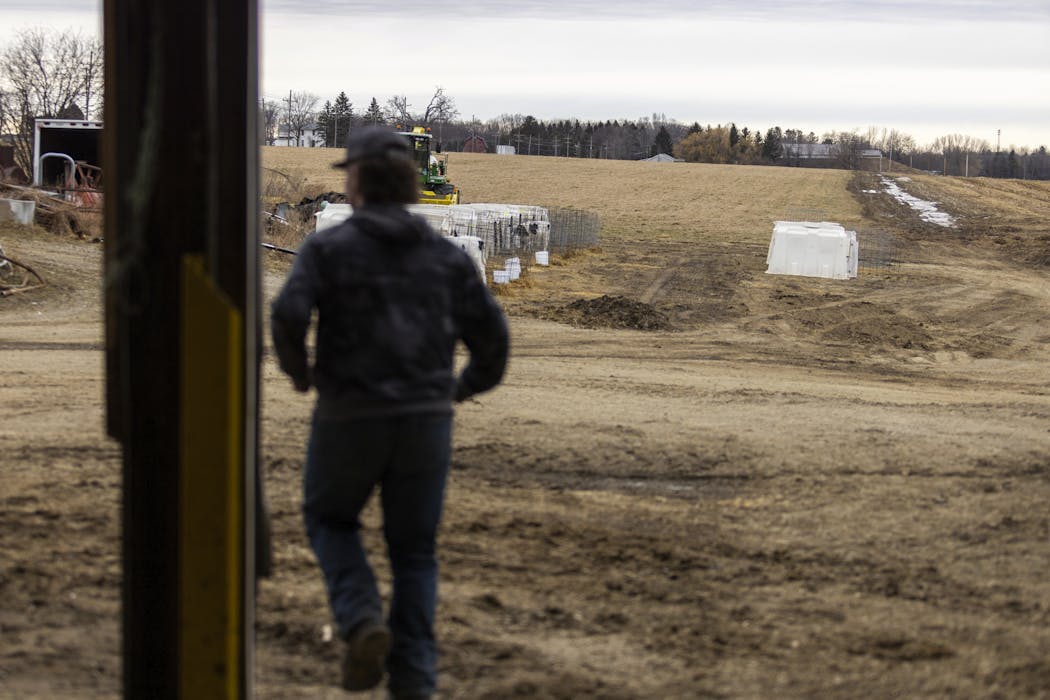
 A high school junior looks over a farm where he works in Perry, N.Y., in March 2025.
Lauren Petracca/Associated Press
Rural high school students are more likely than city kids to get their diplomas, but they remain less likely to go to college
Published: December 1, 2025 1.16pm GMT
Sheneka Williams, Michigan State University
A high school junior looks over a farm where he works in Perry, N.Y., in March 2025.
Lauren Petracca/Associated Press
Rural high school students are more likely than city kids to get their diplomas, but they remain less likely to go to college
Published: December 1, 2025 1.16pm GMT
Sheneka Williams, Michigan State University
Author
-
 Sheneka Williams
Professor of Educational Administration, Michigan State University
 Sheneka Williams
Disclosure statement
Sheneka Williams receives funding from the U.S. Department of Education.
Partners

Michigan State University provides funding as a founding partner of The Conversation US.
View all partners
DOI
https://doi.org/10.64628/AAI.v7jreemv5
https://theconversation.com/rural-high-school-students-are-more-likely-than-city-kids-to-get-their-diplomas-but-they-remain-less-likely-to-go-to-college-269246 https://theconversation.com/rural-high-school-students-are-more-likely-than-city-kids-to-get-their-diplomas-but-they-remain-less-likely-to-go-to-college-269246 Link copied Share articleShare article
Copy link Email Bluesky Facebook WhatsApp Messenger LinkedIn X (Twitter)Print article
Many high school seniors are currently in the midst of the college application process or are already waiting to hear back from their selected schools.
For high school students in rural parts of the United States, the frantic pace of the college application process can look a bit different. For starters, some of these rural students might not have large numbers of elite universities and colleges coming to admissions fairs in their areas. They might not have all of the required high school courses to attend some of these schools, either, according to Sheneka Williams, a scholar of educational leadership and rural education who graduated from a small, rural high school in Alabama.
Amy Lieberman, the education editor at The Conversation U.S., spoke with Williams to understand the particular experiences of rural students – and what, exactly, coming from a rural background can mean as students think about college.
How are rural high school students’ experiences unique?
Nationally, nearly 10 million students – or 1 in 5 public school students in the U.S. – attended rural schools in the fall of 2022.
Research suggests that rural students finish or complete high school at a higher rate than urban students.
While approximately 90% of rural high school students graduated in 2020, 82% of urban high school students got their diplomas that year.
But rural students’ college entrance rate is lower than that of urban and suburban students.
Within four years of graduating high school, 71% of rural students attended college, compared to 73% of suburban and 71% of city students who also went to college, according to 2023 findings by the National Center for Education Statistics.
Why are rural students finishing high school at a higher rate than their suburban and urban peers but attending college at a lower rate?
First, we know that some colleges are not really recruiting students in rural areas. If these universities don’t know you exist, and if your parents haven’t gone to college and don’t know how the admission system works, you might not have help as you move closer to attending college. Some rural schools also do not have college counselors.
There are other reasons why some rural high school graduates are not going to college, I have personally seen. Some students are apprehensive about leaving home. They have close-knit families and communities, and they might be wondering where they fit in at a school in a large place that is much bigger than where they grew up.
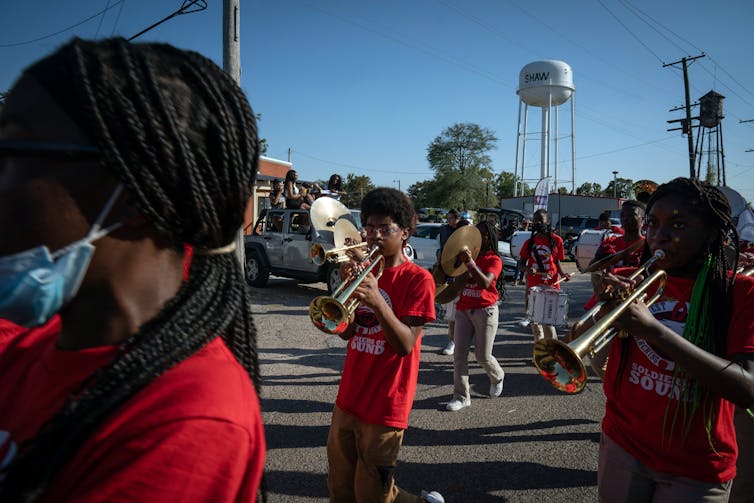 Students in the West Bolivar High School marching band take part in the McEvans School homecoming parade in Shaw, Miss., in September 2022.
Rory Doyle for The Washington Post via Getty Images
Students in the West Bolivar High School marching band take part in the McEvans School homecoming parade in Shaw, Miss., in September 2022.
Rory Doyle for The Washington Post via Getty Images
Do any of these scenarios describe your own educational journey?
I grew up in a small town in Alabama and was different from some of the other Black students, since I came from a family of educators who had gone to college for two generations.
But when I did go to college, I went to a campus that was two times the size of my hometown, which has a population of just 12,000. It takes a confident student, as well as encouragement from parents or mentors, to believe that you can go to school away from home.
We had some college fairs in high school, but the visiting colleges were state universities and regional schools. You did not have selective schools coming to recruit.
Students today can learn about schools online, but there is still the issue that universities are not, on their own, connecting enough with rural students.
Do rural students fit into universities’ diversity goals?
Only recently have people begun to think and talk more about what rural really means. Some people use the U.S. Census Bureau’s definition of rural, which is “all population, housing, and territory not included within an urban area.”
But that’s a somewhat surface definition. It’s hard for some scholars to agree on what counts as rural, including me. It feels like something you have to experience and know, and that is hard to define. Part of the issue is that rural has been defined by what urban is not, and that makes it seem it doesn’t deserve its own definition.
Universities are beginning to think about these rural students more and the particular challenges they experience in school. That includes not necessarily having stable access to high-speed internet, which approximately 22.3% of Americans in rural areas and 27.7% of Americans in tribal areas don’t have, compared to only 1.5% of Americans in urban areas.
Another issue is that even for rural students who want to go to college, they might not have the right qualifications, such as certain courses they have completed.
I am currently involved in research with sociologists Barbara Schneider and education scholars Joe Krajcik and Clausell Mathis about how some rural high schools in Alabama and Mississippi aren’t able to teach physics or chemistry. Physics and chemistry are both gateway courses to college, and if you want to be an engineer or STEM major, you have to complete these courses in order to have a shot at certain colleges.
Rural high schools tend to have a lack of resources, in terms of both budget and their staffing. Schools not being able to find teachers who are qualified or certified in certain subject areas, such as science courses, is a nationwide problem. But this issue is tougher in smaller, rural towns.
Schools will say they don’t have students interested in those subjects. But the states also aren’t requiring that these classes are offered.
This lack of science course offerings can create a whole block of students who are not going to college. And if we are talking about the South, in particular, and states that have a high population of Black students in rural areas, we are talking about a whole swath of students who don’t have this education and would find it a struggle to get into larger, splashier schools that are not near home.
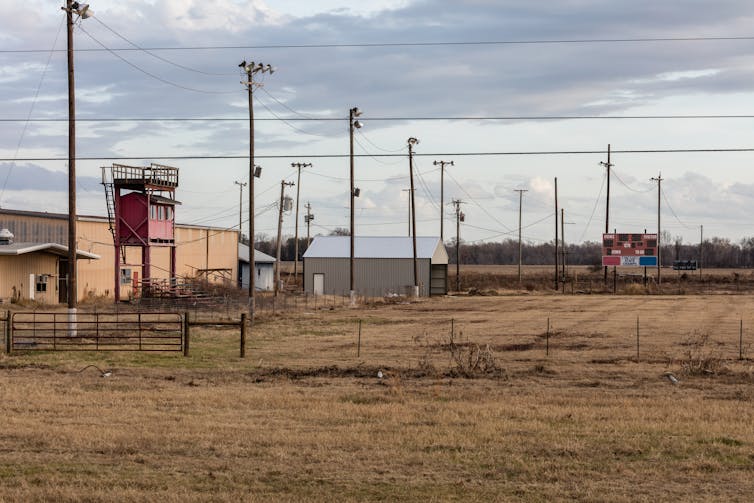 High school students in rural areas might not have access to the same classes or technology that peers in suburban and urban areas do.
iStock/Getty Images Plus
High school students in rural areas might not have access to the same classes or technology that peers in suburban and urban areas do.
iStock/Getty Images Plus
What do you think are some of the solutions to these challenges?
There are many local efforts to offer tutoring and things of that nature for rural high school students. Some of those efforts have been blunted because schools are funded by property taxes, and some of them just don’t have the revenue to pay for these add-ons without federal support.
I think colleges need to do a better job of recruiting students at rural high schools. I also think that once these students make it to college, it would help if there were support or affinity groups.
Some colleges have not thought enough about rural students. I think the narrative around rural students and college needs to shift – these students may want to go to college, but nobody is looking for them. When you live in small, geographically isolated places, sometimes you only know what you see.
- Higher education
- Higher education policy
- College admissions
- College tuition
- college access
- College cost
- Rural America
- Rural schools
- High school graduation rates
- Higher ed attainment
- Rural life
- rural youth
Events
Jobs
-
 Senior Lecturer, Clinical Psychology
-
University Lecturer in Early Childhood Education
-
Case Specialist, Student Information and Regulatory Reporting
-
Lecturer in Paramedicine
-
Associate Lecturer, Social Work
 Senior Lecturer, Clinical Psychology
 University Lecturer in Early Childhood Education
 Case Specialist, Student Information and Regulatory Reporting
 Lecturer in Paramedicine
 Associate Lecturer, Social Work
- Editorial Policies
- Community standards
- Republishing guidelines
- Analytics
- Our feeds
- Get newsletter
- Who we are
- Our charter
- Our team
- Partners and funders
- Resource for media
- Contact us
-
-
-
-
Copyright © 2010–2025, The Conversation