- US
- US Money
Renters insurance can help cover the cost of replacing stolen or damaged items such as holiday gifts and electronics
J.R. DurenIn JacksonvilleWednesday 03 December 2025 14:08 GMTComments open image in galleryRenters insurance offers a way to reduce the financial impact of personal property theft, and other scenarios this holiday season, by offering a potential cash payout for stolen or damaged items your policy covers (Getty Images)
The latest headlines from our reporters across the US sent straight to your inbox each weekday
Your briefing on the latest headlines from across the US
Your briefing on the latest headlines from across the US
Email*SIGN UPI would like to be emailed about offers, events and updates from The Independent. Read our Privacy notice
Imagine arriving at your apartment after a day of work, only to find that someone broke in while you were gone and stole your laptop, TV, and all the holiday gifts you bought on Black Friday for family and friends.
As helpless as you may feel, renters insurance offers a way to reduce the financial impact of personal property theft, and other scenarios this holiday season, by offering a potential cash payout for stolen or damaged items your policy covers.
However, major insurer GEICO estimates that 80 percent of renters don’t have renters insurance.
“Holiday season or not, you should always carry renters insurance,” Franklin Manchester, an advisor at SAS Principal Global Insurance, told The Independent by email. “It’s not just about theft; it provides you liability protection as well as access to the carrier’s claims expertise should you find yourself in a situation where your property is damaged and someone else is responsible.”
Knowing how renters insurance works, what it does and doesn’t cover, and what types of policies are available, can help protect your important belongings - and gifts - during the holidays.
 open image in galleryAs helpless as you may feel, renters insurance offers a way to reduce the financial impact of personal property theft, and other scenarios this holiday season, by offering a potential cash payout for stolen or damaged items your policy covers (Getty Images)
How renters insurance works
Renters insurance is a type of coverage that primarily protects your personal belongings, whether they’re in your apartment, for example, or in your car.
Renters policies cover the gap that’s left by your landlord’s insurance, which is usually designed to protect the buildings and property that your landlord owns, according to Progressive. In some cases, your landlord or property manager may require you to have a renters policy.
Coverage for personal belongings in your home
In general, renters insurance protects your property from incidents such as theft, vandalism, or fire. So, if your apartment catches on fire a few days before Christmas and all your belongings in your living room - including gifts under the tree - are destroyed, your policy may help cover the cost of replacing those items.
Belongings coverage away from home
An added benefit to renters policies is that they typically cover your personal belongings outside of your apartment, too, Travelers points out.
For example, if there’s a fire in the hotel you’re staying at, your policy might help you replace personal belongings damaged by the flames, up to your policy’s limits. That limit may be lower for items damaged or stolen away from home, Manchester said.
Liability claims
Most renters policies include liability coverage, which may help cover expenses related to a lawsuit resulting from an injury someone sustained in your apartment or damage you cause to someone else’s property, according to Geico.
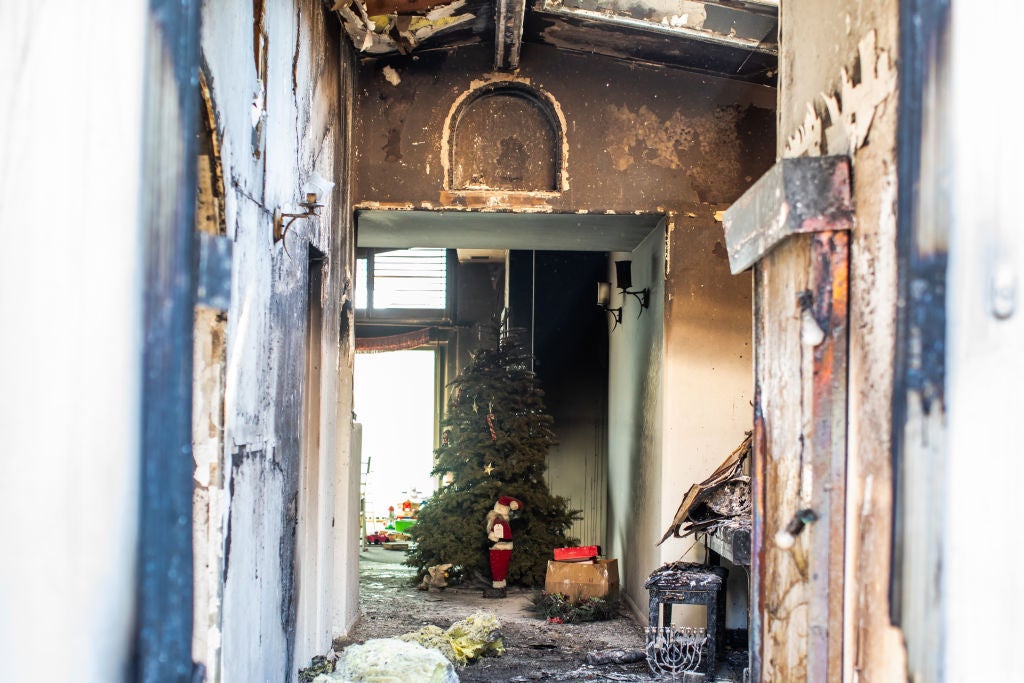 open image in galleryIn general, renters insurance protects your property from incidents such as theft, vandalism, or fire. So, if your apartment catches on fire a few days before Christmas and all your belongings in your living room - including gifts under the tree - are destroyed, your policy may help cover the cost of replacing those items (Getty Images)
Your renters policy’s liability coverage might help offset your legal fees and other costs (up to your policy’s limits) if someone sues you because they slipped on your kitchen floor, broke an arm, and had to go to the emergency room.
Loss of use
Generally speaking, renters insurance policies will kick in if a covered event makes your housing uninhabitable. Loss of use coverage may be able to provide reimbursement for expenses such as lodging, provided it costs around the same as your rent, according to Geico.
Actual cash value coverage vs. replacement cost coverage
Renters insurance policies usually fall into one of two categories: actual cash value or replacement cost. Knowing the difference between the two can help you avoid surprises when you receive a claim payment from your insurer.
Actual cash value
An actual cash value (ACV) policy covers your personal belongings, based on what the items were worth at the time they were stolen or damaged, taking into account the item’s age and depreciation, according to the National Association of Insurance Commissioners.
 open image in galleryRenters insurance policies usually fall into one of two categories: actual cash value or replacement cost. Knowing the difference between the two can help you avoid surprises when you receive a claim payment from your insurer (Getty Images)
Say a thief steals your high-end laptop from your car, and your insurer agrees to cover the theft via your renters insurance. If you have an ACV policy and your laptop was worth $800 when it was stolen, then your insurer would pay you $800 instead of the $2,500 you paid for the computer three years ago.
You may have to replace your laptop with a lower-quality model since the laptop you lost would cost more than $800 to replace.
Replacement cost
Unlike ACV policies, replacement cost policies cover your personal property according to what it would cost to replace it, without considering depreciation and age. Using the previous example, a replacement-cost policy would pay what it would cost to replace your laptop.
Replacement-cost policies are typically considered better than ACV policies for this reason - they’re designed to replace the items you lost without considering age and depreciation.
How much does renters insurance cost?
You can typically find a renters insurance policy for less than $30 a month. For example, Progressive’s average premiums for renters policies range from $13 to $27. Your premium amount depends on your personal property and liability coverage amounts, where you live, and other factors such as your deductible.
Your deductible, which is the lump sum you pay for your claim, can range from $250 to $2,500, Progressive points out. In general, the higher your deductible, the lower your premium and vice versa.
How much can a renters insurance claim raise rates?
If you have to make a claim for damaged or stolen goods, or for liability or loss of use, Manchester said your rate can increase by as much as 30 percent.
So, if you make a claim on a policy that costs you $20 a month, your premium might increase to $26 after the claim is processed. Manchester pointed out that you may lose any claims-free discounts your policy has, which could also bump up your premium.
More about
InsuranceTheftrentersJoin our commenting forum
Join thought-provoking conversations, follow other Independent readers and see their replies
Comments