
- Lifestyle
- Health & Families
Kim’s doctor pointed out ‘holes’ on her brain scan that he said were related to ‘low activity’
Sarah HellewellThe ConversationWednesday 03 December 2025 09:34 GMTComments
 CloseKim Kardashian’s Brain Scan Shows ‘Low Activity’ After Aneurysm.
Sign up to our free Living Well email for advice on living a happier, healthier and longer life
Live your life healthier and happier with our free weekly Living Well newsletter
Live your life healthier and happier with our free weekly Living Well newsletter
Email*SIGN UPI would like to be emailed about offers, events and updates from The Independent. Read our Privacy notice
A recent episode of The Kardashians shared some startling news about Kim Kardashian’s brain.
Discussing Kim’s recent brain scan, her doctor pointed out “holes” on her brain scan, which he said were related to “low activity”.
While this sounds incredibly sad and concerning, doctors and scientists have doubts about the technology used and its growing commercialisation.
I study brain health, including imaging the brain to look for early signs of disease.
Here’s what I think about this technology, whether it can really find holes in our brains, and if we should be getting these scans to check our own.
What can imaging really tell you?
Earlier this year, Kim was diagnosed with a brain aneurysm, or widening of an artery, after an MRI.
The type and extent of this aneurysm is unclear. And there doesn’t seem to be a clear link between her aneurysm and this recent news.
But we do know the latest announcement came after a different type of imaging, known as single-photon emission tomography (known as SPECT).
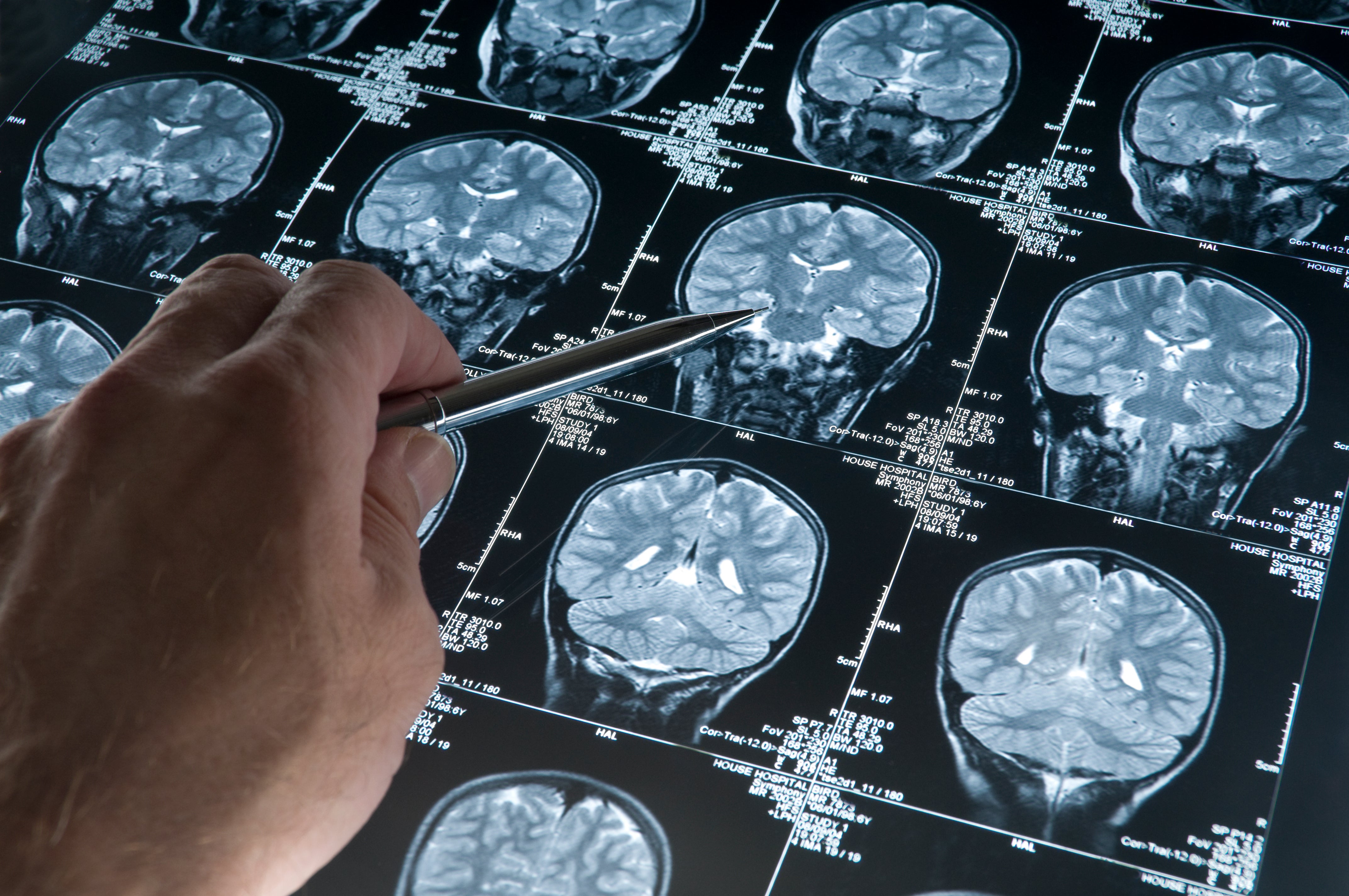 Kim was diagnosed with a brain aneurysm, or widening of an artery, after an MRI (Getty/iStock)
This involves injecting radioactive chemicals into the blood and using a special camera which creates 3D images of organs, including the brain. This type of imaging was developed in 1976 and was first used in the brain in 1990.
SPECT scans can be used to track and measure blood flow in organs, and are used by doctors to diagnose and guide treatment for conditions affecting the brain, heart and bones.
While SPECT does have some clinical use under limited circumstances, there is not good evidence for SPECT scans outside these purposes.
Enter the world of celebrities and private clinics
The clinic featured in The Kardashian episode offers SPECT to its clients, including the Kardashian-Jenners.
SPECT images have mass appeal due to their aesthetically pleasing pastel colours, widespread promotion on social media, and claims that these scans can be used to diagnose any number of conditions. These include stress (as in Kim’s case), Alzheimer’s, ADHD, brain injury, eating disorders, sleep problems, anger and even marital problems.
But the scientific evidence to support the use of SPECT as a diagnostic tool for an individual and for so many conditions has led many doctors, scientists and former patients to criticise the work of such clinics as scientifically unfounded and “snake oil”.
About the author
Sarah Hellewell is a Senior Research Fellow at the Perron Institute for Neurological and Translational Science and a Research Fellow in the Faculty of Health Sciences at Curtin University. This article is republished from The Conversation under a Creative Commons licence. Read the original article.
Scans could potentially show changes in blood flow, though these may be common across conditions. Blood flow can also vary depending on the area of the brain examined, time of day, and even how well-rested a person is.
Areas in which blood flow is reduced have been described as “holes”, “dents” or “dings” on such SPECT scans.
In Kim’s case, this reduced blood flow was explained as “low activity” of the brain. Her doctor suggested the frontal lobes of her brain were not working as they should be, due to chronic stress.
But there is no scientific evidence to link these changes in blood flow to stress or functional outcomes. In fact, there is no single technique with scientific support to link changes in brain function to symptoms or outcomes for an individual.
These scans aren’t cheap
Doctors have several concerns about people without symptoms seeking SPECT as a diagnostic tool. First, people are injected with radioactive materials without a defined clinical reason.
Patients may also undergo treatment, or be recommended to take particular supplements, based on a diagnosis from SPECT that is scientifically unfounded.
And as SPECT scans are not recognised as a medical requirement, patients pay upwards of US$3,000 for a SPECT scan, with dietary supplements costing extra.
Do I need a scan like this?
While imaging tools such as SPECT and MRI may be genuinely used to diagnose many conditions, there is no medical need for healthy people to have them.
Such scans for healthy people are often described as “opportunistic”, with a double meaning: they may possibly find something in a person with no symptoms, but at several thousand dollars a scan, they take advantage of people’s health anxieties and can lead to unnecessary use of the health-care system.
It can be tempting to follow in the footsteps of the stars and look for diagnoses via popularised and widely advertised scans. But it’s important to remember the best medical care is based on solid scientific evidence, provided by experts who use best-practice tools based on decades of research.
More about
The ConversationKim KardashianBrain healthThe Kardashiansbrain aneurysmMRIJoin our commenting forum
Join thought-provoking conversations, follow other Independent readers and see their replies
Comments
