
- News
- World
- Americas
Exclusive: ‘There are so many things wrong with this,’ one government-affairs watchdog told The Independent
Justin RohrlichMonday 01 December 2025 19:26 GMT
 CloseICE agents ram into and arrest immigration advocate US citizen in California
The latest headlines from our reporters across the US sent straight to your inbox each weekday
Your briefing on the latest headlines from across the US
Your briefing on the latest headlines from across the US
Email*SIGN UPI would like to be emailed about offers, events and updates from The Independent. Read our Privacy notice
U.S. Immigration and Customs Enforcement is spending more than $7 million on a fleet of armored vehicles designed to protect occupants against bomb blasts and which can stop a .50 caliber round, according to federal procurement records reviewed by The Independent.
However, the 20 bulletproof personnel carriers ordered by the nation’s deportation agency are not coming from an American manufacturer, but a Canadian company headquartered in Ontario – the province whose recent anti-tariff TV ad so infuriated Donald Trump, the president threatened additional levies on all goods coming in from the country.
On Trump’s first day back in office, he announced his “America First Trade Policy,” calling it “a critical component to national security” that he claimed would lessen America’s “dependence on other countries to meet our key security needs,” and, “above all,” benefit the nation’s workers and businesses.
In a so-called sole-source justification document issued the day before Thanksgiving, ICE’s Office of Acquisition Management laid out the reasons why Roshel LLC, headquartered in the Toronto suburb of Brampton, is the only approved vendor “that possesses sufficient inventory to meet the required delivery schedule and the salient characteristics identified by ICE.”
“Roshel is uniquely positioned to fulfill this requirement within the necessary timeframe, having confirmed immediate availability of vehicles that fully meet ICE’s specifications,” the lightly redacted document reads. “While other sources were consulted, they had limited quantities available or none could fulfill the entire requirement within the required period of performance, nor meet all technical requirements.”
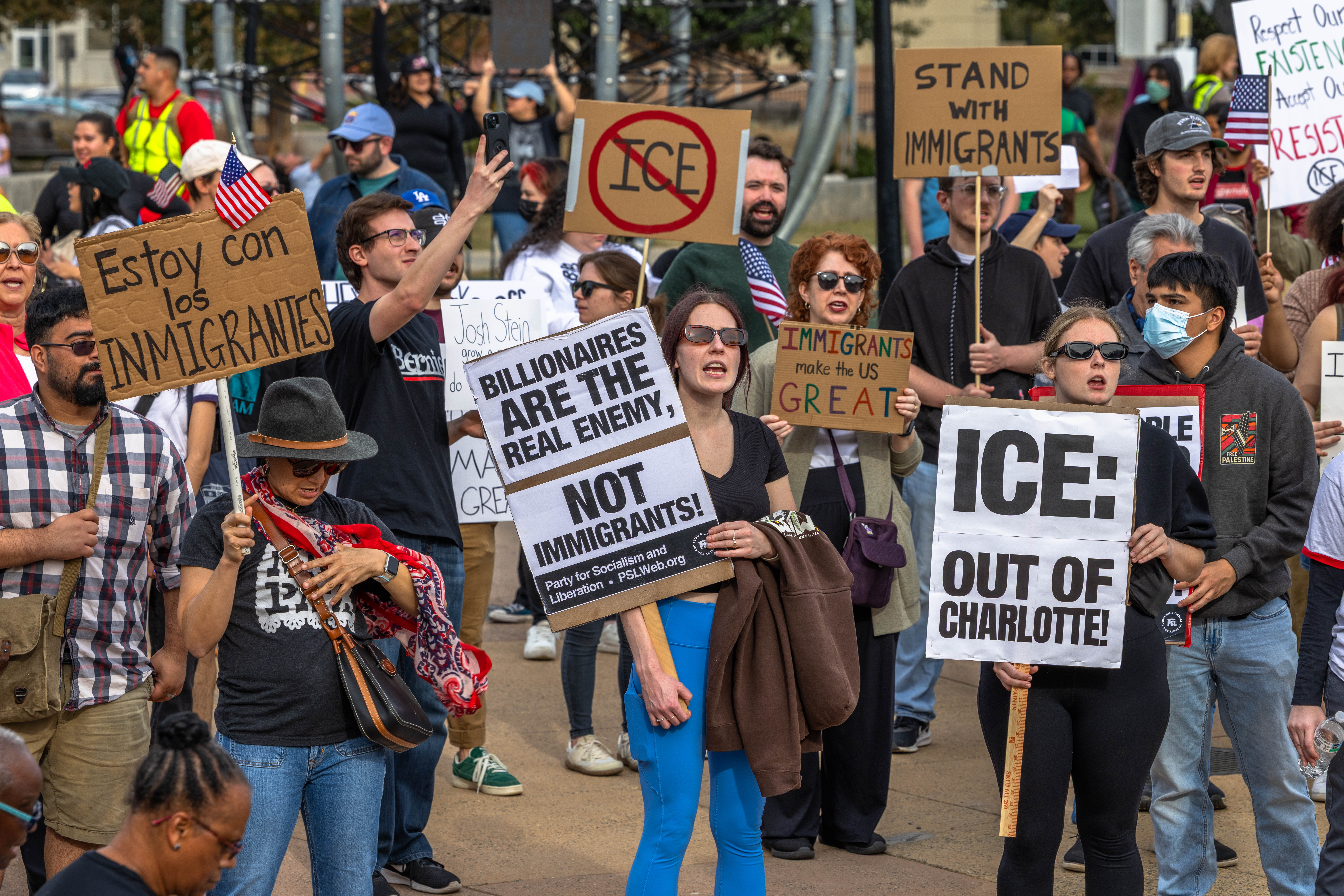 open image in gallery“Who are they trying to protect themselves from? Frightened immigrants, or angry Americans” an expert told The Independent when asked about the vehicle purchases. (Getty Images)
Those specifications and requirements call for “twenty (20) Roshel Senator STANG [sic] 4569 Level 2/B7 Emergency Response Tactical Vehicle (ERTV) [sic] armored security vehicles,” according to the document.
The Roshel Senator Emergency Response Vehicle, or, “ERV,” is certified as providing Level 2 protection under STANAG 4569, a NATO designation that stands for “Standardization Agreement 4569,” meaning it will defend against the equivalent of an 8 kilogram TNT blast underneath the vehicle.
CEN B7 ballistic protection is designed to stop a .50 caliber round, which can penetrate an inch of concrete when fired from a distance of 1,500 meters, or, 16 football fields away.
ICE is laying out exactly $7,234,926.20 in taxpayer funds for the 20 vehicles, the justification document states.
The Senator ERV is powered by a 6.7 liter V8 engine, a 10-speed automatic transmission, and can seat 12. It also features military-grade tires, a hydraulic breaching ram, perimeter gun ports, and escape hatches, as well as options such as video surveillance capabilities, night vision, and “chemical protection systems.”
With a “critical need to support the agents in the field,” the ICE justification says “proceeding with Roshel as the sole source vendor is both justified and in the best interest of the Government, ensuring continuity of operations, mission readiness, and timely deployment of needed assets.”
Roshel will be able to deliver the 20 vehicles within 30 days, according to ICE. The document includes responses from four U.S.-based companies: Alpine Armoring, which told the agency it could only deliver up to 15 vehicles meeting ICE’s specs; CITE Armored, which said it could deliver 20 vehicles but would need 180 days to do so; DGM LLC, which was capable of delivering 20 vehicles but failed to provide any sort of timeline and was not a verified supplier; and Lenco Armored Vehicles, which told ICE it could deliver just three used vehicles, in 30 to 60 days.
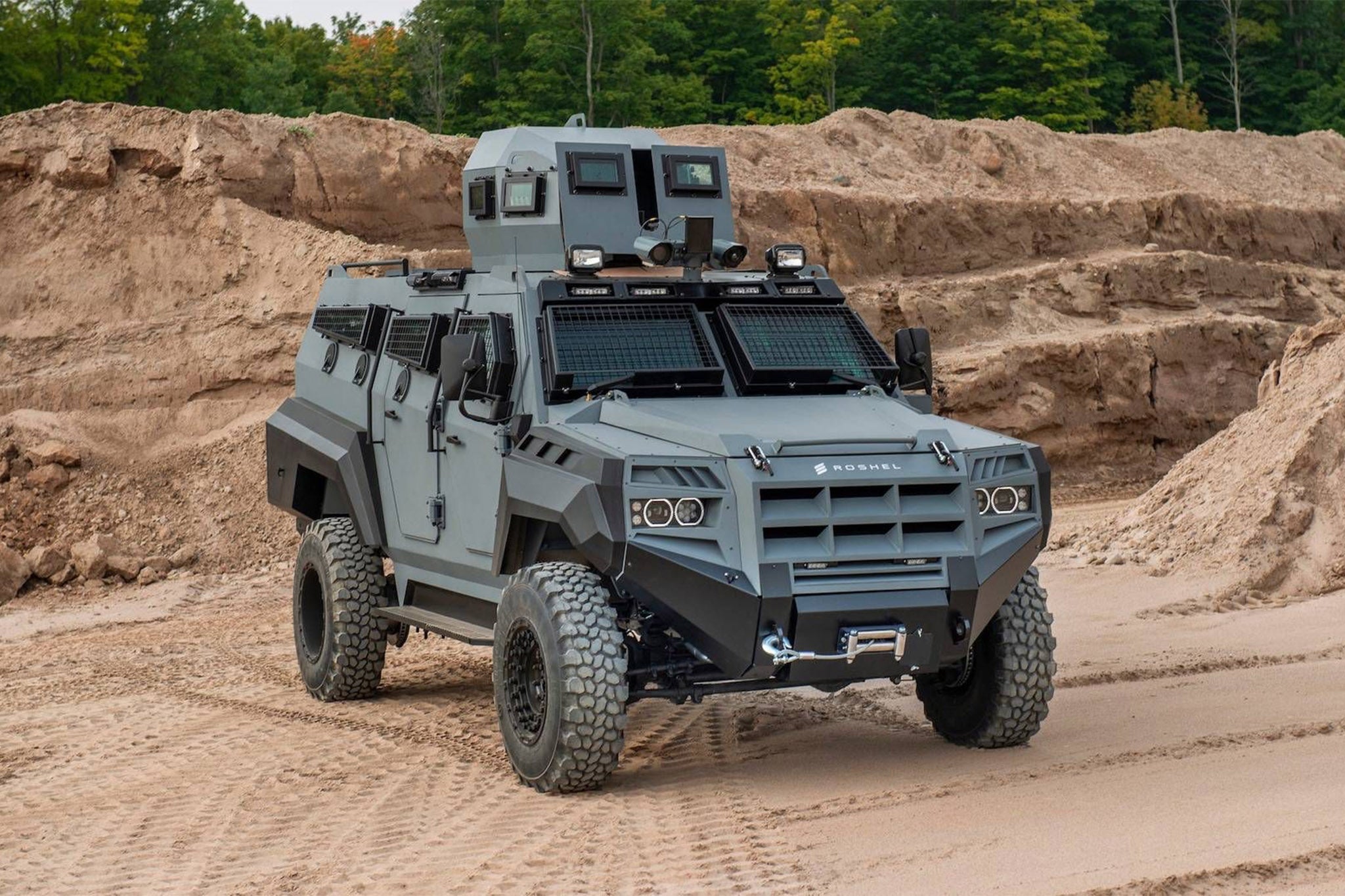 open image in galleryICE is purchasing 20 Roshel Senator Emergency Response Vehicles for exactly $7,234,926.20 in taxpayer funds, according to government procurement records reviewed by The Independent (Roshel)
Delaying the purchase “would significantly impact” ICE’s “ability to deploy mission-critical resources in a timely manner,” according to the document. Further, it maintains that buying all the vehicles from a single seller “minimizes integration risks, ensures configuration uniformity across the fleet, and streamlines maintenance and operator training, which is essential to supporting law enforcement missions.”
The document places Roshel at a two-story office building in Dover, Delaware, an address linked to various registered agents providing virtual domiciliary for out-of-town companies. Yet, Roshel’s own corporate materials tell prospective customers that “[a]ll processes… from R&D to painting, are facilitated on-site,” at its four Ontario plants.
Purchases by federal agencies are generally exempt from tariffs.
Among other things, Craig Holman, a government-affairs and lobbying expert at Washington, D.C. watchdog nonprofit Public Citizen, questioned why ICE would ever need 20 armored vehicles to carry out its domestic mission.
“There are so many things wrong with this,” Holman told The Independent. “Who are they trying to protect themselves from? Frightened immigrants, or angry Americans?”
He also took aim at the $7.2 million expenditure for just 20 vehicles as a “waste of taxpayer money,” especially when it’s not earmarked for a U.S. business, seemingly counter to all of the administration’s publicly stated intentions.
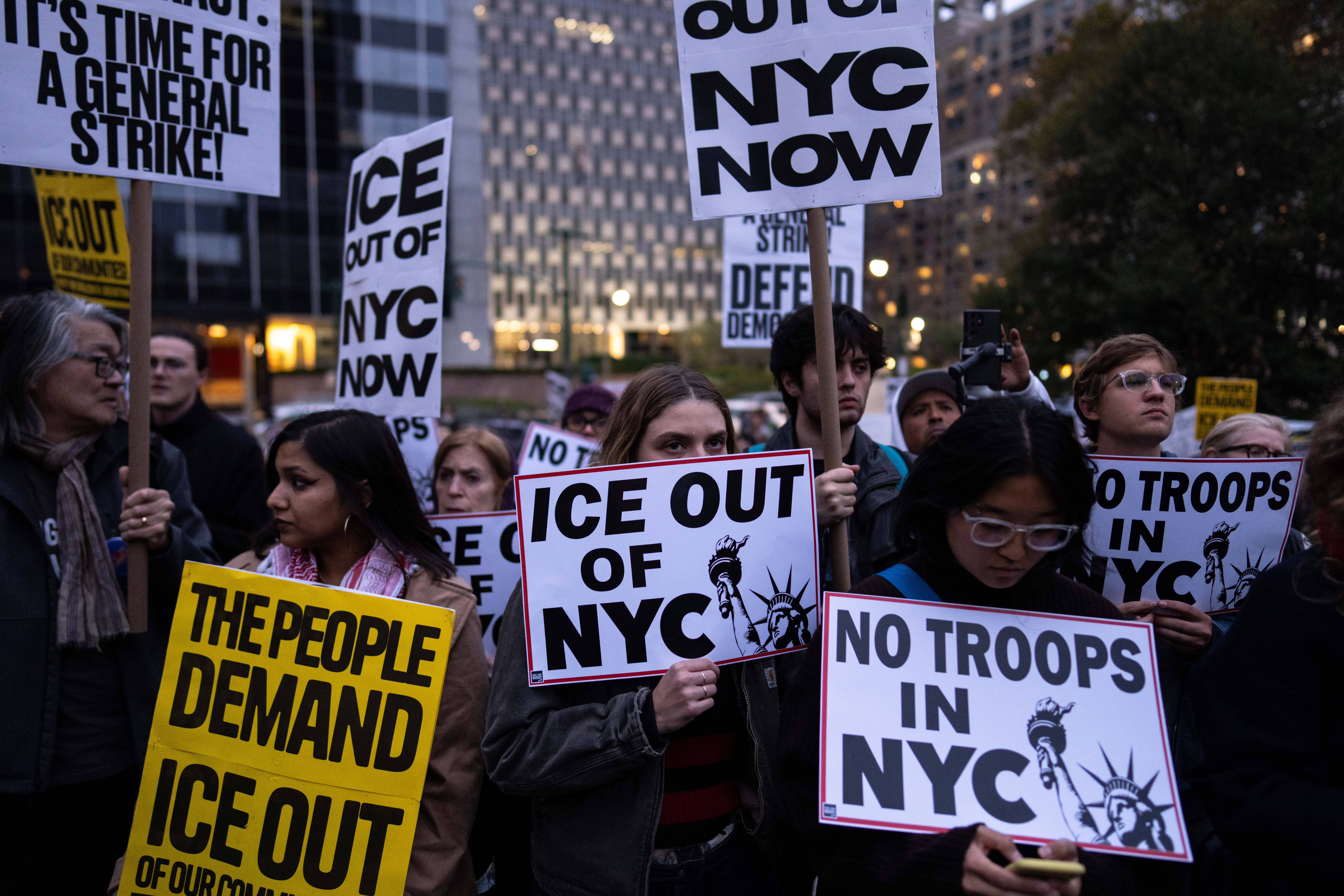 open image in galleryICE's $7.2 million purchase of 20 armored vehicles comes amid growing outrage over the deportation agency's tactics (Getty Images)
“This is at the same time Trump is telling us that Canada is gorging itself on America's economy without giving much in return,” Holman said.
ICE has come under withering criticism for strongarm tactics against detainees, as well as elected officials, journalists, and religious leaders. A mid-November poll by YouGov found a majority of Americans disapprove of the job ICE is doing, and agents have reportedly become burned out and demoralized as public outrage intensifies over its work.
Trump’s signature "Big Beautiful Bill” has allotted the agency a budget of $170 billion over the next 10 years, exceeding that of most of the world’s militaries.
Prior to any future armored vehicle purchases, ICE says it will “conduct additional market research to identify any new manufacturer or emerging technologies capable of meeting ICE’s armored vehicle requirements,” and will also “periodically review industry advancements and engage with potential vendors through RFIs or capability inquiries to determine whether comparable products become available.”
This, according to the sole-source justification, “will help broaden future competition and reduce reliance on a single source where feasible.”
ICE did not respond on Monday to a request for comment.

