Monday, Dec. 1, 2025: Your daily feed of the biggest discoveries and breakthroughs making headlines.
News By Patrick Pester, Tia Ghose, Ben Turner, Alexander McNamara last updated 1 December 2025When you purchase through links on our site, we may earn an affiliate commission. Here’s how it works.
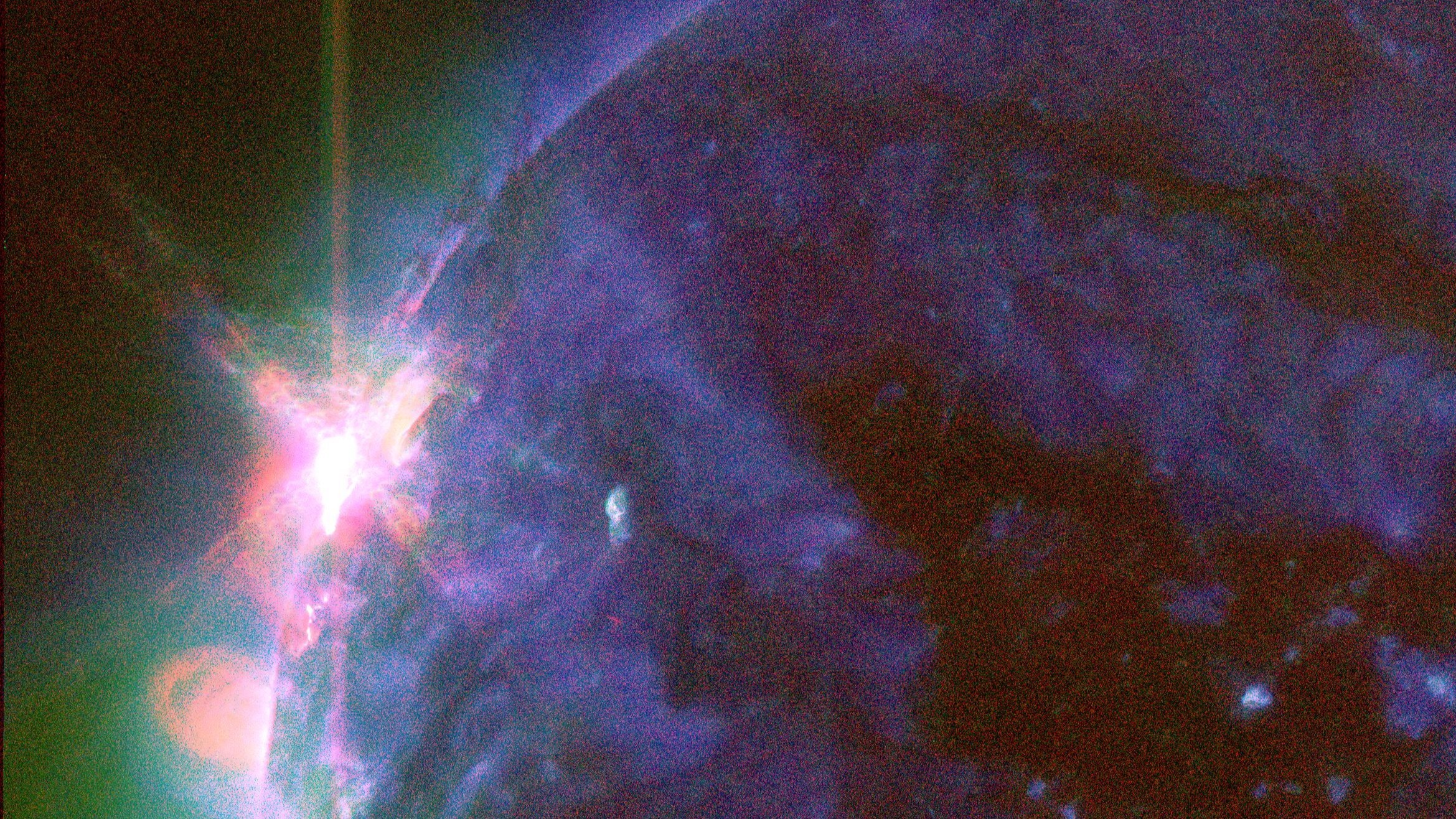 (Image: © AIA/SDO/NASA)
Here's the biggest science news you need to know.
- Mould discovered at the site of the Chernobyl nuclear disaster could be feeding on radiation. Scientists want to use it to shield astronauts from cosmic rays.
- An X2 class solar flare hit Earth last night, with more flares and a coronal mass ejection likely on the way.
- Modern humans arrived in Australia 60,000 years ago and may have interbred with archaic humans such as 'hobbits'.
Latest science news
Refresh Get notified of updatesGood morning, sunshine
Welcome back, science fans. We’re here with news of fresh geomagnetic storms, as Earth was hit by one solar flare last night and many more — alongside a coronal mass ejection — appear to be in the offing.
Coronal mass ejections (CMEs) are large, fast-moving clouds of magnetized plasma that occasionally get spat out into space by the sun alongside solar flares — powerful explosions on our star's surface triggered when solar magnetic loops snap in half like an overstretched elastic band.
Last night’s flare was a surprise, spaceweather.com reports, coming from a new sunspot on the sun’s northern surface that appeared to be harmless until it exploded. The flare ionized the Earth’s atmosphere and caused a radio blackout over Australia.
With multiple more sunspots appearing on the sun’s surface, it could be a busy week for solar storms, potentially bringing more disruption in space and auroras here on Earth.
 Ben TurnerActing Trending News Editor
LATEST ARTICLES
Ben TurnerActing Trending News Editor
LATEST ARTICLES 17 Cyber Monday binocular deals to avoid (and 7 we think you should buy)
- 2Deep sky imaging, simplified. If you've got cash to drop on your own home observatory, you could save this Cyber Monday.
- 3'Potentially hazardous' asteroid 2024 YR4 was Earth's first real-life planetary defense test
- 4Roman sun hat: A 'very rare' 1,600-year-old brimmed cap that may have protected a Roman soldier from Egyptian sandstorms
- 5Lowest prices ever on the Apple Ultra 2, Apple Watch Series 10 and Apple Watch SE smart watches for Cyber Monday