- News
- Science
With its unusual combination of features, the deep sea creature helps explain how other modern species emerged from a common ancestor
Vishwam SankaranMonday 01 December 2025 12:03 GMTComments
 CloseUS: Hawaiian pilot whales consume mountains of squid
Sign up for our free Health Check email to receive exclusive analysis on the week in health
Get our free Health Check email
Get our free Health Check email
Email*SIGN UPI would like to be emailed about offers, events and updates from The Independent. Read our Privacy notice
Scientists have sequenced the genome of the elusive “vampire squid from hell” for the first time, providing insights into the origin of cephalopods like octopuses.
It’s the largest cephalopod genome sequenced to date at over 11 billion DNA base molecules, twice as large as the biggest known squid genome and four times larger than the human genome.
Researchers found the enigmatic deep-sea creature retained parts of an ancient species, suggesting that its modern octopus cousins also evolved from squid-like ancestors.
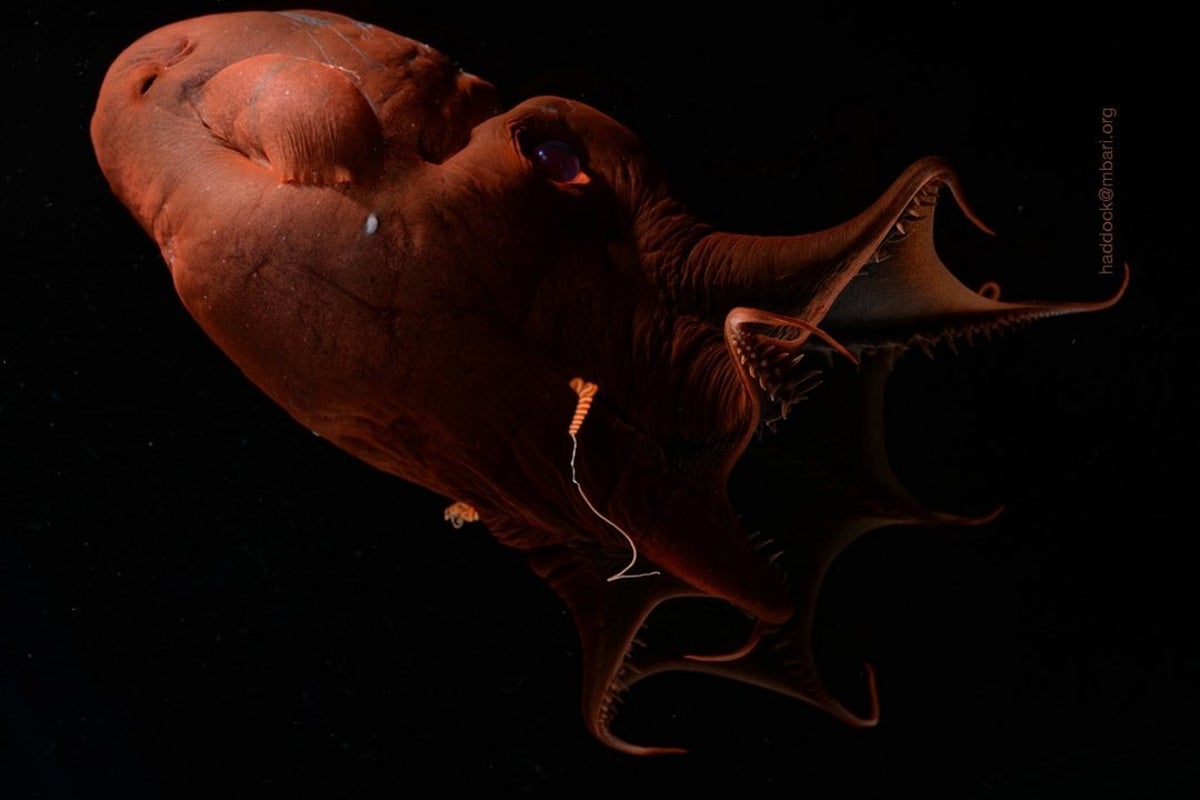
With its dark body, large eyes that appear red or blue, and cloak-like webbing between the arms, the species is dubbed Vampyroteuthis infernalis, literally the “vampire squid from hell”. It does not suck blood as the name suggests, but feeds peacefully on organic detritus.
In spite of being classified as an octopus, the vampire squid shares characteristics with squids and cuttlefish.
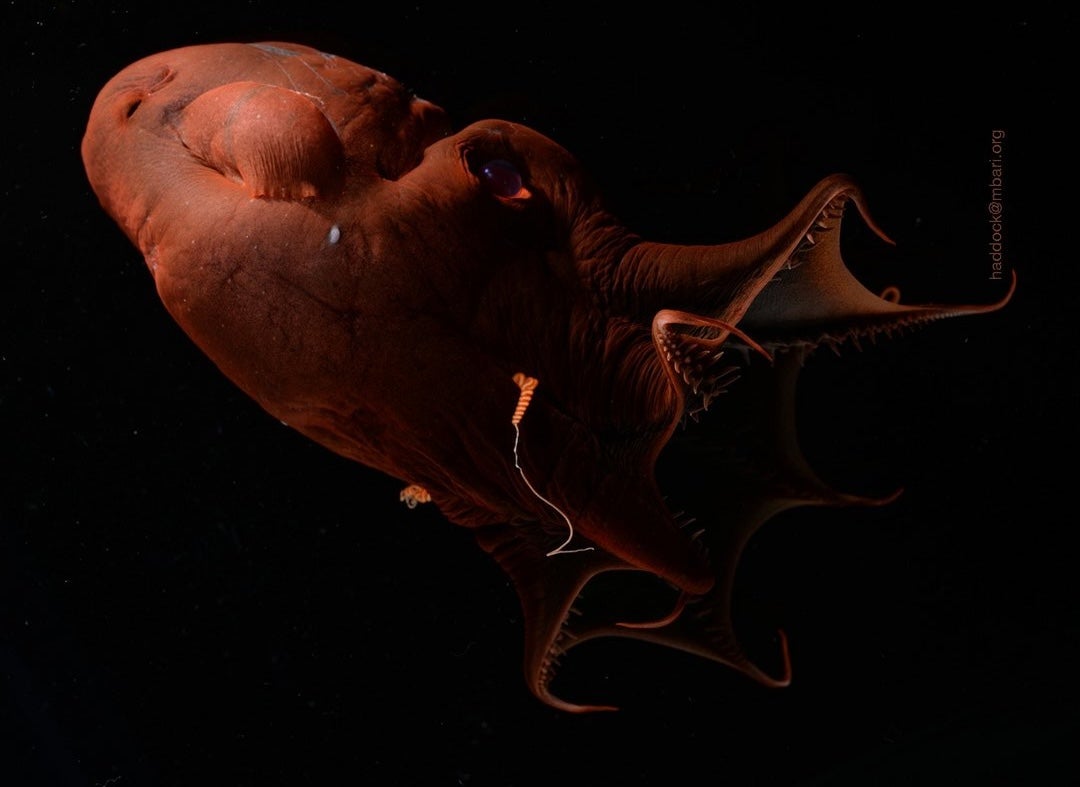 Vampire squid (University of Vienna)
To understand how the species originated, scientists at the National Institute of Technology, Wakayama College, Japan, decoded its genome, and compared it to genomes of other cephalopods such as the pelagic octopus to trace the direction of its DNA changes over evolutionary time.
The findings helped reconstruct and analyse a key chapter in cephalopod evolution.
"Modern" cephalopods split over 300 million years ago into two major lineages: the eight-armed Octopodiformes, like octopuses and the vampire squid, and ten-armed Decapodiformes such as squids and cuttlefish.
While the vampire squid has eight arms like an octopus, it shares key genomic features with squids and cuttlefish, occupying an intermediate position between these lineages.
"The vampire squid sits right at the interface between octopuses and squids,” said Oleg Simakov, senior author of the study published in iScience. “Its genome reveals deep evolutionary secrets on how two strikingly different lineages could emerge from a shared ancestor.”
"Although it is classified as an octopus, the vampire squid retains a genetic heritage that predates both lineages. It gives us a direct look into the earliest stages of cephalopod evolution,” said Emese Tóth, another author of the study from the University of Vienna.
Analysing the genome revealed that the common ancestor of both octopuses and squids was more squid-like than previously believed. This ancestor, at some point, underwent large-scale reorganisation of the genome, contributing to the remarkable diversity of modern cephalopods, scientists said.
More about
OctopusesGenomeViennaJoin our commenting forum
Join thought-provoking conversations, follow other Independent readers and see their replies
Comments