
 By
Nicholas Raymond
Published 36 minutes ago
Nicholas Raymond is an author and journalist based out of Alabama, where he proudly roots for the Alabama Crimson Tide football team. A graduate of the University of Montevallo, he has a degree in mass communication with a concentration in journalism.
Sign in to your ScreenRant account
Summary
Generate a summary of this story
follow
Follow
followed
Followed
Like
Like
Thread
Log in
Here is a fact-based summary of the story contents:
Try something different:
Show me the facts
Explain it like I’m 5
Give me a lighthearted recap
By
Nicholas Raymond
Published 36 minutes ago
Nicholas Raymond is an author and journalist based out of Alabama, where he proudly roots for the Alabama Crimson Tide football team. A graduate of the University of Montevallo, he has a degree in mass communication with a concentration in journalism.
Sign in to your ScreenRant account
Summary
Generate a summary of this story
follow
Follow
followed
Followed
Like
Like
Thread
Log in
Here is a fact-based summary of the story contents:
Try something different:
Show me the facts
Explain it like I’m 5
Give me a lighthearted recap
The martial arts movie genre, as we know it today, is officially 55 years old. Over the years, we've been treated to hundreds of excellent martial arts classics, from Bruce Lee's Enter the Dragon, to Jean-Claude Van Damme's Bloodsport, to Jackie Chan's Drunken Master. But all of them, regardless of subgenre and era they released in, owe a doubt to one film, which has just reached a massive milestone.
Several movies and filmmakers have received considerable recognition for the impact they've had on martial arts movies as a medium, with no single individual getting more credit than Bruce Lee. But though the star did play a heavy hand in the launch of "the kung fu craze" and Bruce Lee's career did coincide closely with the start of the martial arts movie genre, he wasn't responsible for the first kung fu film.
Interestingly, that came just one year prior to Bruce Lee's breakout role in The Big Boss. The movie that first defined what we think of as "a martial arts movie" was first seen by moviegoers in Hong Kong on November 27, 1970.
The Chinese Boxer Is The First True Martial Arts Movie
The martial arts movie genre evolved from wuxia, which is a term used to describe stories set in ancient China, and generally involves multiple martial arts sects and fantasy elements. Hong Kong studios like Shaw Brothers made a lot of these movies in the late 1960s, including Come Drink With Me, The One-Armed Swordsman, The Assassin, and Golden Swallow.
The action in all these wuxia adventure movies had one thing in common, and that was that the action was centered around swordplay. Due to wuxia's similarities to the genre, these films are often retroactively referred to as "martial arts" movies, despite the fact that actual martial arts aren't featured.
Shaw Brothers' top male star in its wuxia movies, Jimmy Wang Yu, decided to make a key change to the studio's formula. In 1970, Wang Yu wrote, directed, and played the starring role in The Chinese Boxer, a movie that put the swords aside in favor of unarmed combat.
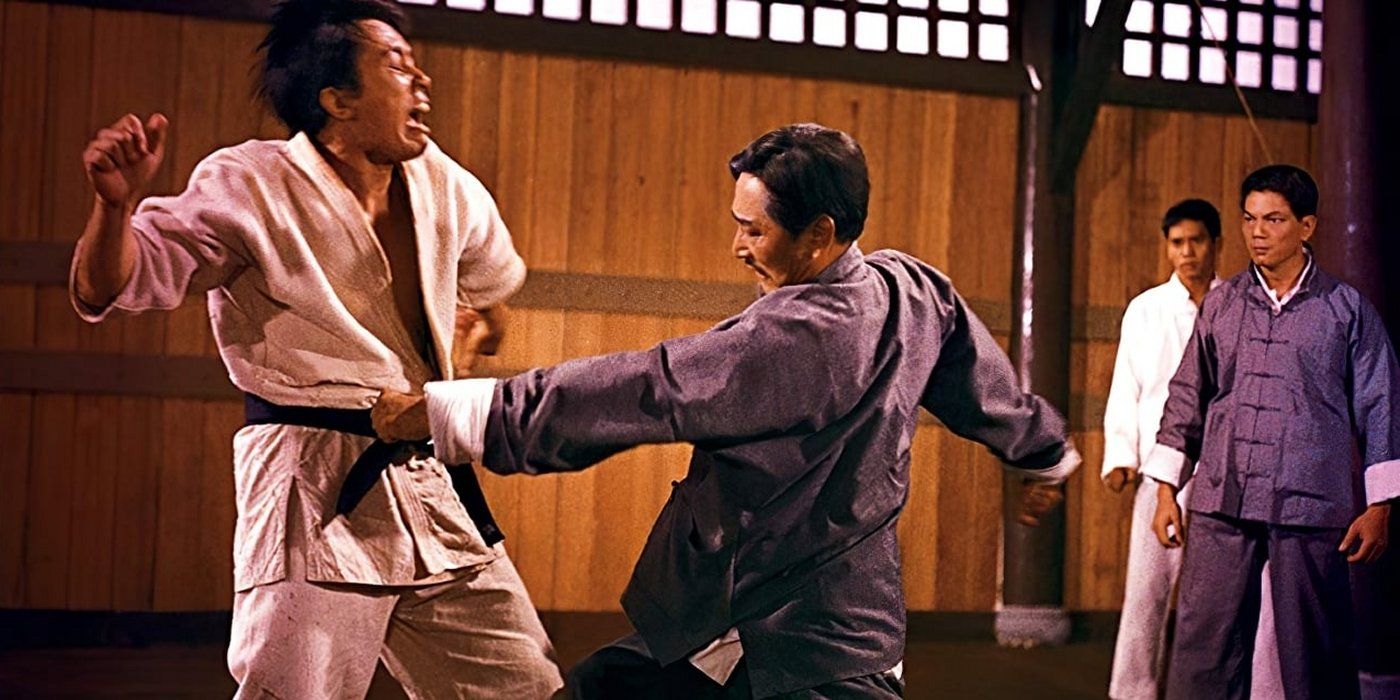
Kung fu was at the heart of not only the action, but also the story itself. In The Chinese Boxer, Jimmy Wang Yu plays a kung fu student whose school winds up on the losing end of a rivalry with a Japanese karate school. After a massacre that leaves everyone but him dead, Wang Yu's character dons a disguise, learns a new martial arts technique, and embarks on a quest for vengeance,
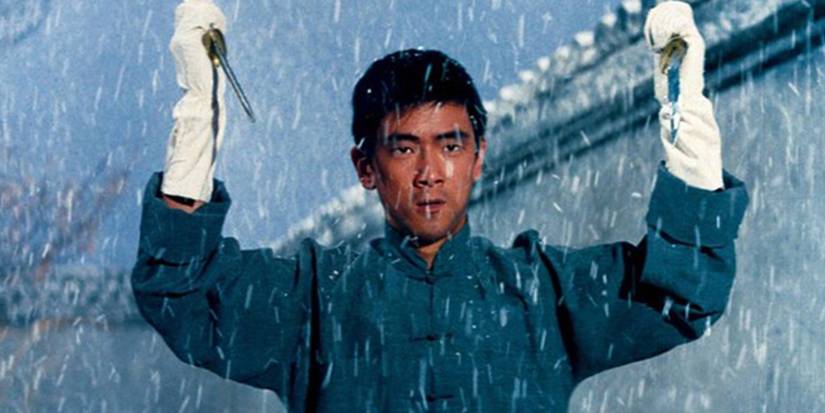
Rather than use weapons to get revenge, the hero tests his expertise in kung fu against the villains' karate skills in a series of heated, well-choreographed hand-to-hand battles that culminates in a bloody final showdown in the snow.
In 2025, the fighting in The Chinese Boxer may not seem groundbreaking, but in 1970, when swordplay dominated Hong Kong cinema, it was unprecedented - and the beginning of a new era for the industry.
The Chinese Boxer's Influence On Action Movies Explained
 A scene from The Chinese Boxer (1970)
The Chinese Boxer was a phenomenal success, and it had a tremendous influence on filmmakers in Hong Kong going forward. But that's not to say that directors and studios turned away from sword-fighting adventure films; swordplay remained important, but The Chinese Boxer did lean to a steady stream of movies that leaned on kung fu across multiple studios, not just Shaw Brothers.
It was only a year after The Chinese Boxer that Bruce Lee exploded onto the big screen with The Big Boss. Thanks to Jimmy Wang Yu's move, studios like Golden Harvest had recognized the interest in seeing Chinese martial arts in movies and began to capitalize on that.
Notably, that influence extended beyond The Chinese Boxer's focus on unarmed combat. There was also its themes of national pride and revenge, which evidently became the blueprint for several other great kung fu movies, including Bruce Lee's second martial arts film, Fist of Fury.
Bruce Lee himself was said to be personally inspired by The Chinese Boxer. According to Matthew Polly's book, Bruce Lee: A Life, The Chinese Boxer caused Lee to see a rival in Jimmy Wang Yu, and one that he was determined to beat at the box office - a task he ultimately achieved.
The significance of Wang Yu's masterpiece can still be felt even when watching more modern martial arts movies. A perfect example of this is Kill Bill, as its director, Quentin Tarantino, has already acknowledged that one of its best-remembered fight scenes was directly inspired by a scene from The Chinese Boxer.
Not Only Is It The First, But The Chinese Boxer Is One Of The Best Martial Arts Movies Ever Made

It's important to note The Chinese Boxer's merits aren't based solely on its historical significance. All that aside, Jimmy Wang Yu and Shaw Brothers put together a timeless martial arts masterpiece. The choreography isn't as extravagant as what you will see in some of the decade's later entries into the martial arts genre, but the blows still have an incredible brutality and visceral feel to them.
Also, The Chinese Boxer boasts some brilliant cinematography and an eye-catching visual style, which is on display during the fight in the snow. There's also the film's superb use of long takes to create a feeling of intensity and build suspense, particularly during the lead-in to major fight sequences, which are shot in a way that really play up the hero's status as a one-man army.
Finally, there's the matter of the story itself, with Jimmy Wang Yu crafting an engaging narrative for The Chinese Boxer's main character, whose hardships - not to mention a excellent performance from the actor - make him incredibly easy to root for as he develops his "iron fist" technique and ambushes a legion of enemies in one of the most enterntaining martial arts battles of all time.
 8.0/10
The Chinese Boxer
10 stars 9 stars 8 stars 7 stars 6 stars 5 stars 4 stars 3 stars 2 stars 1 star Like Follow Followed Action Release Date November 27, 1970 Runtime 90 minutes Director Jimmy Wang Yu Writers Jimmy Wang Yu Producers Runme ShawCast
See All-
 Jimmy Wang Yu
Lei Ming
Jimmy Wang Yu
Lei Ming
-
Lo Lieh
Kitashima
 Expand
Collapse
Expand
Collapse
-
 Movies
-
 The Chinese Boxer
We want to hear from you! Share your opinions in the thread below and remember to keep it respectful.
Be the first to post Images Attachment(s) Please respect our community guidelines. No links, inappropriate language, or spam.Your comment has not been saved
Send confirmation emailThis thread is open for discussion.
Be the first to post your thoughts.
- Terms
- Privacy
- Feedback
 2 days ago
Why Wicked: For Good Director Jon M. Chu Refused To Show Anyone The Final Moments
 3 days ago
Landman: What Demi Moore’s Cami Is Looking For In Monty's Office
 2 days ago
Sinners’ Long-Awaited Sequel Will Be The Last Thing You Expected
 2 days ago
Gangsta Boo's Tragic Death: The Hidden Truth Behind A Lost Icon
More from our brands

30 Must-Read Boys' Love Manhua For BL Fans

The 8 Best Martial Arts Movies on Prime Video Right Now
The 8 Best Martial Arts Movies on Netflix Right Now
The 8 Best Martial Arts Shows on Netflix Right Now

52 Years Later, This Unofficial Bruce Lee Kung Fu Saga Is Still Better Than Most 21st Century Action Franchises

The 27 Best Kung Fu Movies of All Time, Ranked

10 Must-Watch Martial Arts Movies, Ranked
Trending Now We Shall Not Be Moved Review: Crisply Shot Mexican Revenge Thriller Details the Domino Effect of State-Sanctioned Violence
 Stranger Things Season 5, Part 2's Frustrating Release Date Continues A Netflix Problem
 Marvel's New Avengers TV Show Makes Up For Doctor Strange's Doomsday Absence
