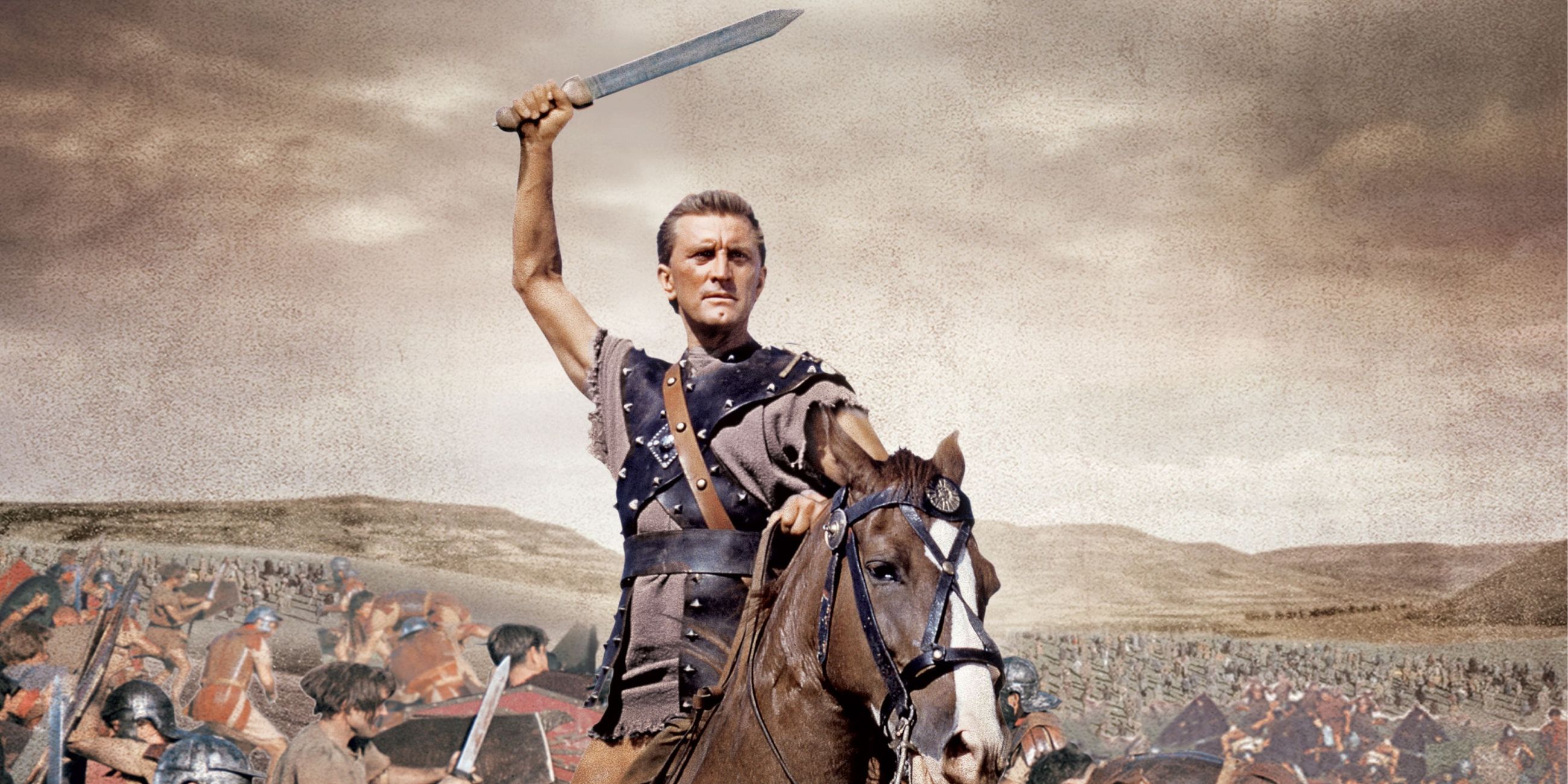
 Kirk Douglas holding a sword in the air on the poster for Spartacus (1960)Image via Universal International
 By
Luc Haasbroek
Published 18 minutes ago
Luc Haasbroek is a writer and videographer from Durban, South Africa. He has been writing professionally about pop culture for eight years. Luc's areas of interest are broad: he's just as passionate about psychology and history as he is about movies and TV. He's especially drawn to the places where these topics overlap.
Luc is also an avid producer of video essays and looks forward to expanding his writing career. When not writing, he can be found hiking, playing Dungeons & Dragons, hanging out with his cats, and doing deep dives on whatever topic happens to have captured his interest that week.
Sign in to your Collider account
follow
Follow
followed
Followed
Like
Like
Thread
Log in
Here is a fact-based summary of the story contents:
Try something different:
Show me the facts
Explain it like I’m 5
Give me a lighthearted recap
By
Luc Haasbroek
Published 18 minutes ago
Luc Haasbroek is a writer and videographer from Durban, South Africa. He has been writing professionally about pop culture for eight years. Luc's areas of interest are broad: he's just as passionate about psychology and history as he is about movies and TV. He's especially drawn to the places where these topics overlap.
Luc is also an avid producer of video essays and looks forward to expanding his writing career. When not writing, he can be found hiking, playing Dungeons & Dragons, hanging out with his cats, and doing deep dives on whatever topic happens to have captured his interest that week.
Sign in to your Collider account
follow
Follow
followed
Followed
Like
Like
Thread
Log in
Here is a fact-based summary of the story contents:
Try something different:
Show me the facts
Explain it like I’m 5
Give me a lighthearted recap
Epic movies don't just entertain but overwhelm. They swell, surge, and thunder. They speak in widescreen emotion and orchestral stakes, turning individual lives into myths and bringing history to visceral life. The epic, at its best, is cinema’s cathedral: an undertaking, built for awe, where the challenge and ambition are the point.
With this in mind, this list ranks the most rousing epic movies ever made. These are the cinematic masterworks that give you goosebumps and pull you to the edge of your seat, combining grand spectacle with big feeling. They inspire and compel you, making you feel part of something bigger, even if just for two hours, while the lights are dim and the screen is glowing.
10 ‘Braveheart’ (1995)
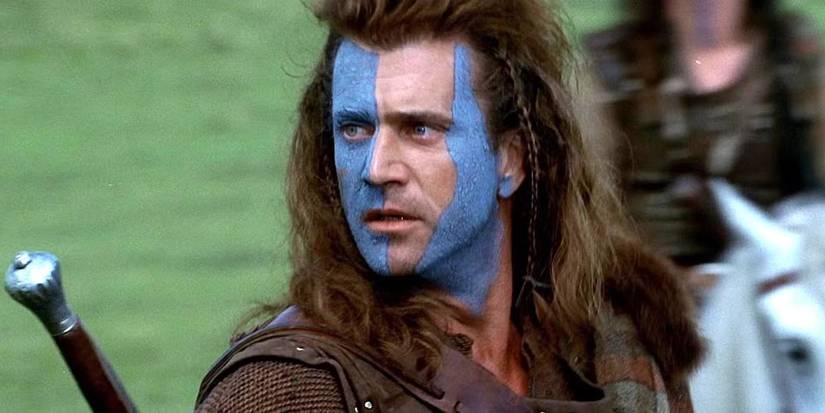 Mel Gibson with long hair and blue face paint on a battlefield in Braveheart.Image via Paramount Pictures
"They may take our lives, but they’ll never take our freedom!" It's more than a little cheesy, but Mel Gibson’s sweeping Scottish saga is also compelling in its uber-muscular way. The story focuses on William Wallace (Gibson), a humble Highlander who rises against English rule after personal tragedy ignites national fury. He rallies farmers, clans, and reluctant aristocrats with a combination of tactical brilliance and emotional fire, leading Scotland into a brutal war for independence.
All the classic epic elements are on display here. The film is built around stirring speeches, grand open-field battles filmed with muscular grit, and big themes of freedom and courage. It's very much a love letter to underdogs defying imperial powers. Some critics quibbled with the movie's historical inaccuracies, but there's no denying its massive sweep or emotional intensity. Romantic, tragic, and mythic, a melodramatic banger that wears its heart on its sleeve.
9 ‘Spartacus’ (1960)
 Kirk Douglas as SpartacusImage via Universal Pictures
"Death is the only freedom a slave knows." Another statement against imperial oppression. Stanley Kubrick’s Roman rebellion epic stars Kirk Douglas as a slave-turned-gladiator who becomes the spark for an uprising. The story charts Spartacus’ transformation from property into a leader, gathering an army of escaped slaves and marching toward a dream of freedom. Along the way, he clashes not only with Rome’s legions but with the moral burden of leadership. He must protect innocents, challenge tyranny, and face betrayal within his ranks.
The movie holds that dignity can survive chains and that sometimes, the most powerful victory is refusing to bow even in defeat. Along with the action and historical setpieces, Spartacus very much has a moral spine. The famous "I am Spartacus" is one of cinema's most affecting moments of defiance. Here, greatness is collective, and solidarity is the ultimate weapon against authoritarianism.
8 ‘Ben-Hur’ (1959)
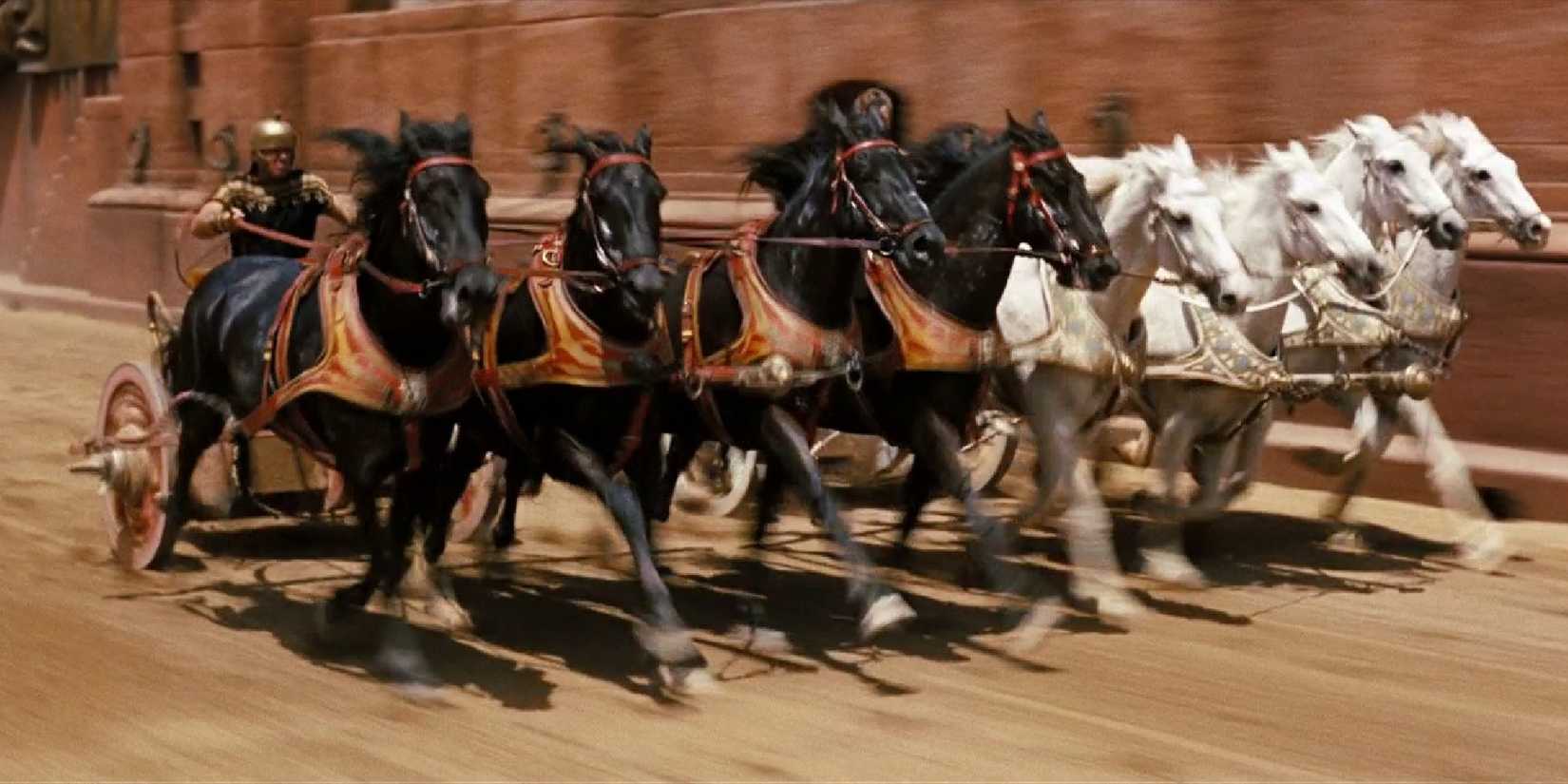 A man races a chariot pulled by eight horses in Ben-HurImage via MGM
"It goes on, Judah. The world is more than we know." William Wyler’s biblical epic follows Judah Ben-Hur (Charlton Heston), a Jewish nobleman betrayed by a Roman friend (Stephen Boyd) and sentenced to slavery. His journey becomes an odyssey of suffering, revenge, faith, and redemption, leading to that legendary chariot race, one of the most ambitious sequences of its day.
The whole movie is massive and boundary-pushing, with a mammoth budget (literally the biggest ever at that point) and colossal sets. The plot moves from palace halls to galley chains, desert exile to triumphant return. The sheer spectacle would be enough to justify a viewing, but Ben-Hur also has a moving emotional core. The protagonist's thirst for vengeance slowly bends toward forgiveness and spiritual awakening. A tale of pride humbled and freedom earned, it remains one of cinema’s most stirring portraits of inner and outer liberation.
7 ‘The Bridge on the River Kwai’ (1957)
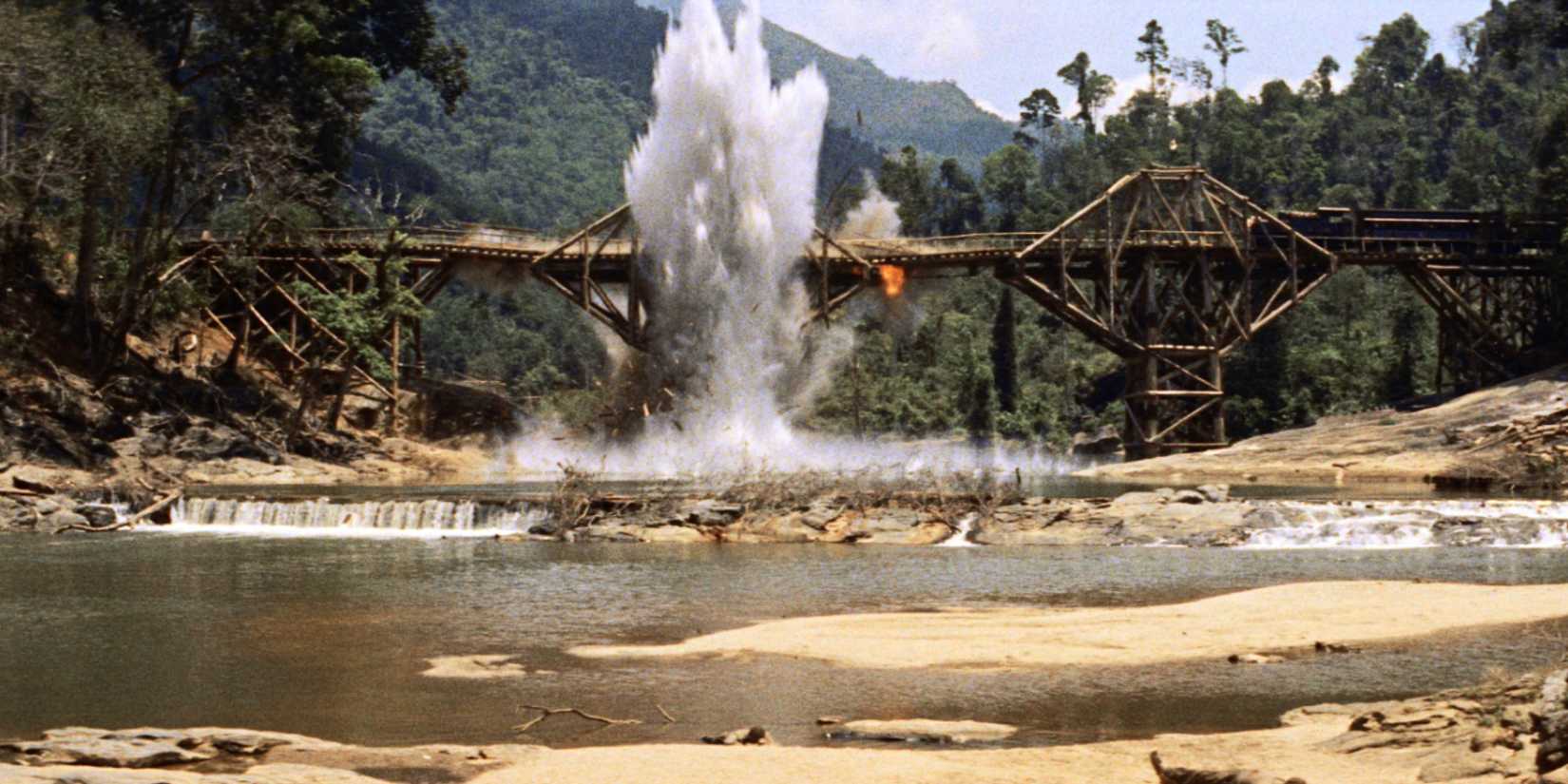 The Bridge on the River Kwai - 1957Image via Columbia Pictures
"Madness! Madness!" David Lean was the epic genre's true master, and The Bridge on the River Kwai is one of his very best efforts. Loosely inspired by real events, it explores dignity, delusion, and duty through Colonel Nicholson (Alec Guinness), a captured British officer determined to maintain discipline and pride in a Japanese POW camp. Ordered to build a railway bridge in Burma, Nicholson sees the task not as enemy labor but as a test of British resolve, leading him into a tragic fixation on proving superiority through obedience. Meanwhile, Allied commandos plot to destroy the bridge, believing its completion will aid the enemy war machine.
The plot builds toward a paradox: a monument built by prisoners becomes a symbol of shattered ego and moral blindness. Through it all, The Bridge on the River Kwai argues that, without conscience, loyalty becomes madness. It's a message that still resonates more than 60 years later.
6 ‘The Last of the Mohicans’ (1992)
 Hawkeye runs into battle with British soldiersImage via 20th Century Studios
"Stay alive. I will find you." Michael Mann seemed like something of an odd joicefor a frontier romance, but he pulled it off effortlessly, aided by a fantastic star. Set during the French and Indian War, The Last of the Mohicans revolves around Hawkeye (Daniel Day-Lewis), a white frontiersman raised by the Mohican tribe, who becomes protector and lover to Cora Munro (Madeleine Stowe), daughter of a British officer.
It's both a survival story and a spiritual journey as the couple flees through forests and ambushes, trying to escape war on all sides. Battles roar, landscapes breathe, and the film’s famous final gets the heart rate rising. Once again, the action is balanced out by layered characters and rich themes. The Last of the Mohicans is heroism fueled not by glory, but by devotion: to family, to chosen identity, to the woman he refuses to lose. As always, Day-Lewis' presence significantly elevates the proceedings.
5 ‘Gladiator’ (2000)
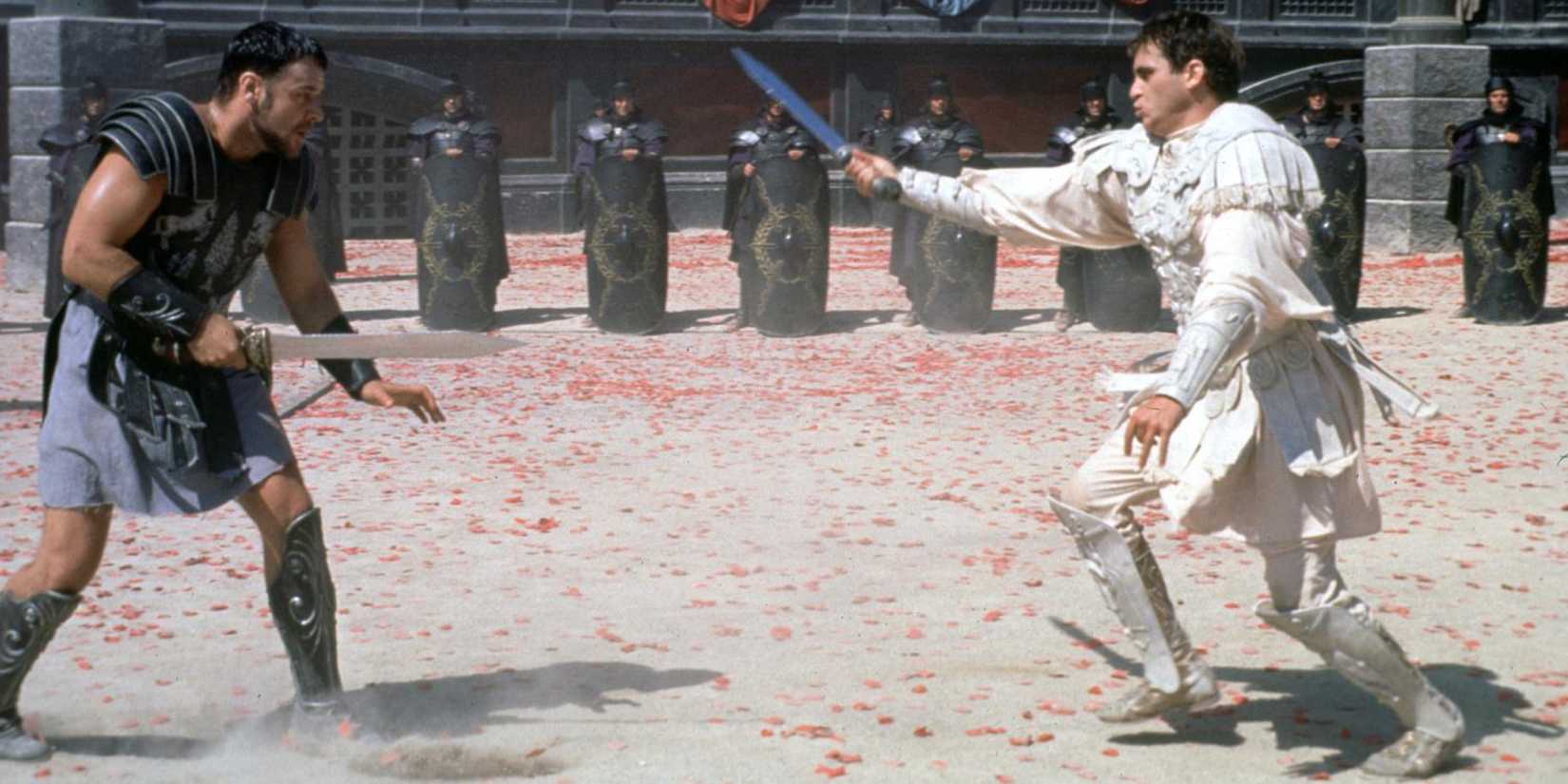 Image via Universal Pictures
"Are you not entertained?" Epic movies appeared to have run out of steam by the late '90s, but then Ridley Scott's sword-and-sandals classic very much revived it. Russell Crowe turns in a magnetic performance as Maximus, a Roman general betrayed by a jealous emperor (Joaquin Phoenix), enslaved, and forced to rise through the gladiatorial ranks. What begins as a revenge quest grows into a fight for Rome’s soul as Maximus inspires crowds, soldiers, and even senators with his integrity and strength.
The core idea is that one person's resolve can shake even the mightiest empire. The aesthetics are immersive and larger-than-life, while still feeling authentic. We get scorched battlefields, opulent palaces, and fiery Colosseum battles framed by Hans Zimmer’s soaring score. The sequel is solid but failed to reach the same heights. Rewatching the movie, one appreciates just how much of a star Crowe was at this point in his career.
4 ‘Lawrence of Arabia’ (1962)
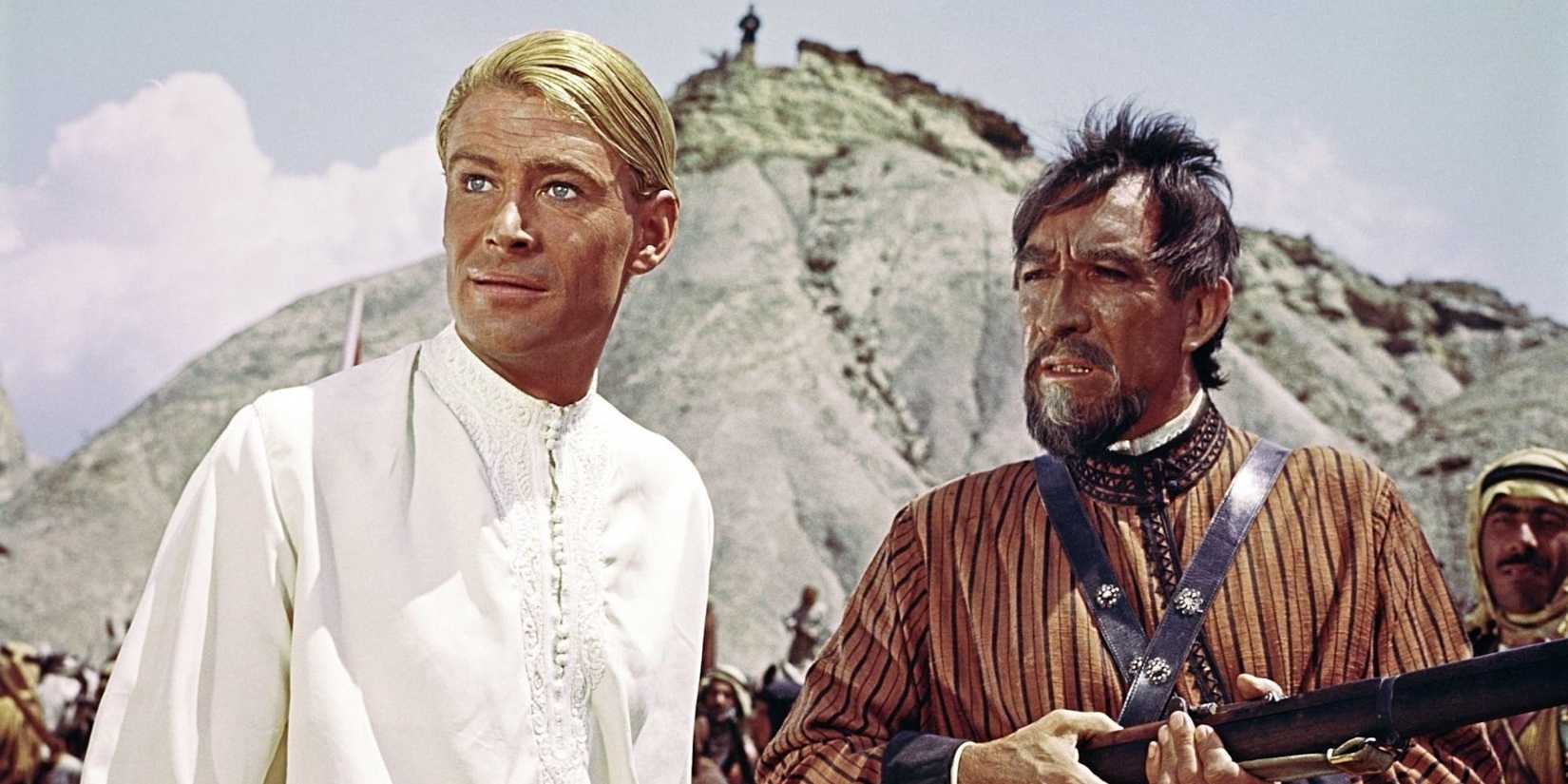 T.E. Lawrence and another man in The Lawrence of ArabiaImage via Columbia Pictures
"Nothing is written." David Lean's magnum opus. Based on a true story, this desert war epic follows T.E. Lawrence (Peter O'Toole), a British officer whose charisma and ambition lead him to unite Arab tribes against the Ottoman Empire. What begins as a tale of adventure slowly becomes a meditation on identity, pride, and the seduction of legend-making. Sweeping dunes serve as a backdrop for political chessboards, internal struggles, and impossible alliances.
The movie is more emotionally and thematically complex than one might expect for an epic from its time. Imperialism is portrayed in a negative light, and there's emotional erosion beneath the glory. Lawrence is a hero both exalted and broken by the violence he commands and the power he tastes. The desert becomes cathedral and crucible, and Lawrence emerges both titan and ghost. O'Toole is fantastic in the part, convincingly portraying the character's deep contradictions. Few actors could've handled the material so well.
3 ‘Titanic’ (1997)
"I’m the king of the world!" Leonardo DiCaprio and Kate Winslet deliver truly iconic performances here as Jack and Rose, two young passengers from opposite ends of the class divide aboard the doomed RMS Titanic. Their love story unfolds against ballroom glitter, ocean breezes, steel corridors, and rising water, a collision between personal rebellion and historical tragedy. As the ship sinks, individual choices take on operatic weight. James Cameron recreates this historical moment vividly, making us feel what it might have been like to live through the infamous sinking.
The finished product is a powerful romance-disaster hybrid, an ambitious blend of sweeping music, impossible scale, and relatable heartbreak. This combo could easily have collapsed into a total mess, but Cameron had the directorial chops to keep all these plates spinning simultaneously. He would go all-in on the CGI spectacle with Avatar, but here the human element is still very prominent. For all these reasons, Titanic still holds up today.
2 ‘The Lord of the Rings: The Return of the King’ (2003)
 Gandalf rides toward the white city of Minas Tirith in The Lord of the Rings: The Return of the KingImage via New Line Cinema
"For Frodo." The Lord of the Rings movies were a high watermark for movie fantasy that has not yet been surpassed. Sir Peter Jackson’s trilogy concludes with a symphony of courage, loyalty, and sacrifice. The plot stretches across battlefields, crumbling kingdoms, and the treacherous path to Mount Doom, where Frodo (Elijah Wood) and Sam (Sean Astin) inch toward destroying the One Ring. Meanwhile, Aragorn (Viggo Mortensen) embraces destiny, armies clash, combat, and friendships hold worlds together.
There's vulnerability beneath the victories: the doubt in Frodo’s eyes, the steadfastness in Sam’s voice, the bittersweet farewells. In other words, this movie is the Platonic ideal of the fantasy epic. Not to mention, more than two decades on, Return of the King still looks better than most blockbusters today, thanks to its focus on miniatures and makeup rather than CGI. That handcrafted approach feels way more authentic.
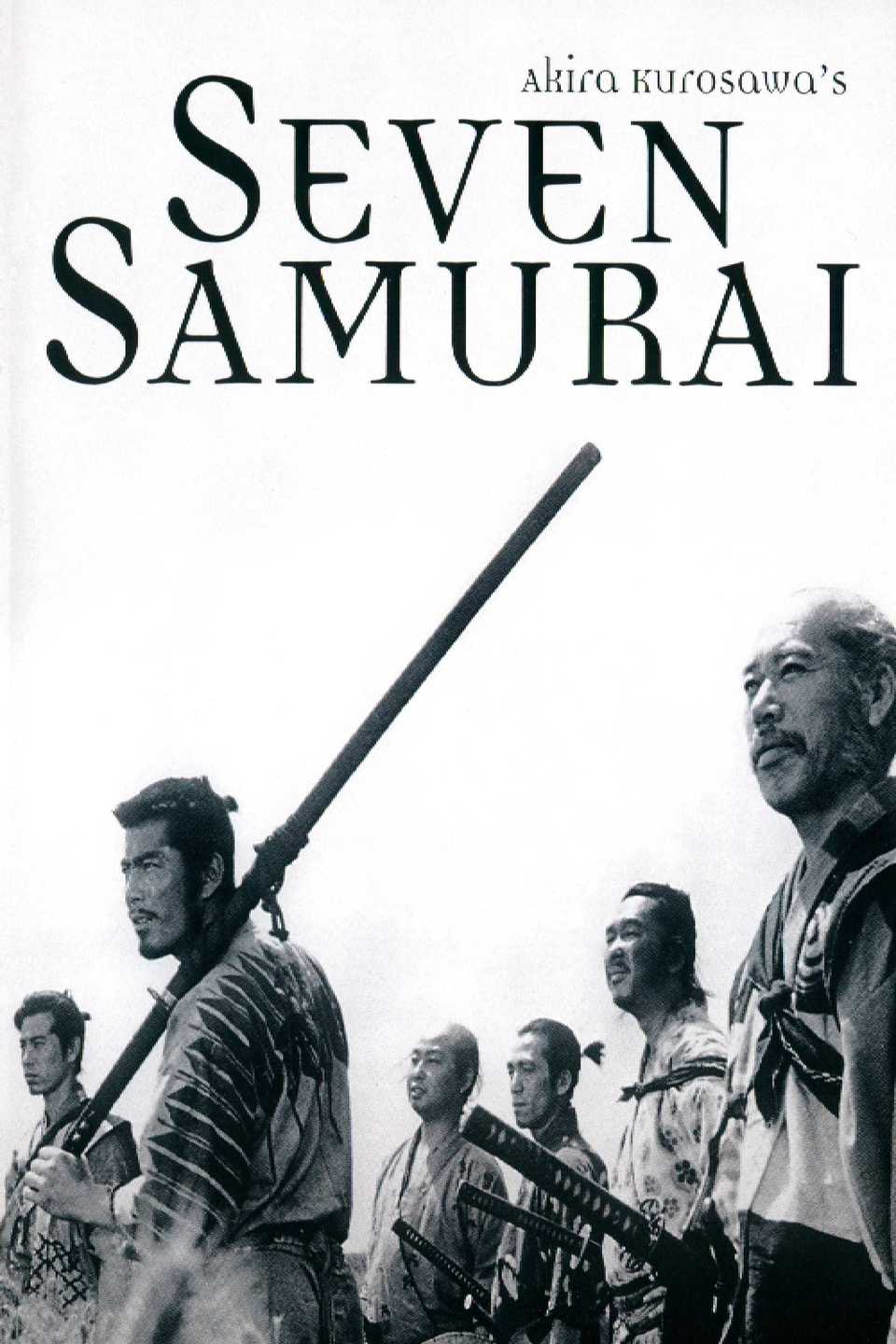
1 ‘Seven Samurai’ (1954)
 Toshiro Mifune erupts with savage glee as Kikuchyo in Seven Samurai.Image via Toho
"Once more, we survive." Akira Kurosawa’s masterpiece tells the story of a poor farming village terrorized by bandits. Desperate, they hire seven ronin to defend them, each warrior carrying wounds, philosophies, and a sense of honor. The ensuing tale is part training saga, part meditation on sacrifice. The farmers evolve, the samurai find purpose, and loyalty deepens in shared struggle. Along the way, Kurosawa treats us to thunderous battle choreography staged in rain, mud, and wind.
All in all, Seven Samurai is a fiery fusion of action, character development, and striking imagery. Few films end with triumph so heavy and bittersweet, victory shadowed by loss and honor. The plot resonated with audiences the world over, quickly inspiring countless copycats (most notably The Magnificent Seven). Not for nothing, it's frequently ranked among the greatest movies of all time. It's influenced everything from Star Wars to Sicario.
 Seven Samurai
pg-13
Action
Drama
Release Date
April 26, 1954
Cast
Toshiro Mifune, Takashi Shimura, Kamatari Fujiwara, Daisuke Katô, Yukiko Shimazaki, Isao Kimura, Minoru Chiaki
Runtime
207 Minutes
Director
Akira Kurosawa
Writers
Akira Kurosawa
Genres
Action, Drama
Powered by
Seven Samurai
pg-13
Action
Drama
Release Date
April 26, 1954
Cast
Toshiro Mifune, Takashi Shimura, Kamatari Fujiwara, Daisuke Katô, Yukiko Shimazaki, Isao Kimura, Minoru Chiaki
Runtime
207 Minutes
Director
Akira Kurosawa
Writers
Akira Kurosawa
Genres
Action, Drama
Powered by
 Expand
Collapse
Expand
Collapse
-
 Movie
Movie
-
 Spartacus
-
 Titanic
We want to hear from you! Share your opinions in the thread below and remember to keep it respectful.
Be the first to post Images Attachment(s) Please respect our community guidelines. No links, inappropriate language, or spam.Your comment has not been saved
Send confirmation emailThis thread is open for discussion.
Be the first to post your thoughts.
- Terms
- Privacy
- Feedback
 Nov 8, 2025
The 8 Worst Epic Movies of the Last 10 Years, Ranked
 3 days ago
The 10 Heaviest Movies of All Time, Ranked
 5 days ago
10 Martial Arts Movies That Are 10/10, No Notes
 4 days ago
10 Thrilling Movies Where Everybody Dies
More from our brands

The 55 Best Movies of All Time, Ranked
The 40 Best Action Adventure Movies

50 Best New Movies on Streaming to Watch Right Now
The Best Movies in Theaters Right Now


The 10 Best Historical Epics Of All Time (Number 1 Is Unrivalled)

10 Historical Epics That Are Perfect From Start to Finish

10 Saddest Movies Based on True Stories
What To Watch
 July 20, 2025
The 72 Best Movies on Netflix Right Now
Trending Now
July 20, 2025
The 72 Best Movies on Netflix Right Now
Trending Now
 America's Favorite Thanksgiving Movie Is Tearing Up the Streaming Charts
5:40
America's Favorite Thanksgiving Movie Is Tearing Up the Streaming Charts
5:40
 ‘Zootopia 2’s Jason Bateman and Ginnifer Goodwin on Nick and Judy Hopps’ Growing Relationship: “They Should Love Each Other for Exactly Who They Are”
 Marvel's Bloodiest Superhero Movie Ever Made Can't Be Stopped (and It's Free to Watch)