
- Tech
Drone Denial of Service
Comments (0) ()When you purchase through links on our site, we may earn an affiliate commission. Here’s how it works.
 (Image credit: SpaceX)
- A Chinese study shows it's possible to block out Starlink over Taiwan
- 1,000 to 2,000 drones with jamming equipment could create an 'electromagnetic shield' to do this
- Keeping such a drone operation successfully running would be far from easy, though
Chinese scientists have demonstrated how it's theoretically possible to use a large swarm of drones to block off satellite internet from Taiwan in a simulation of 'large-scale electronic warfare'.
Tom's Hardware reports that the study, as highlighted by the (paywalled) South China Morning Post (SCMP), found that plunging the whole of Taiwan into internet darkness would require around 1,000 or possibly up to 2,000 specially adapted jamming drones.
- Amazon Black Friday deals are live: here are our picks!
The study was run by the Zhejiang University & Beijing Institute of Technology, and as the SCMP explains: "Hundreds or thousands of small, synchronized jammers would need to be deployed across the sky – on drones, balloons or aircraft – forming an electromagnetic shield over the battlefield."
You may like-
 China smashes drone display world record - nearly 16,000 drones take to the sky in incredible display
-
 Taiwan warns Chinese cyberattacks are intensifying
-
 "Great Firewall in a Box" – How a massive data leak unveiled China's censorship export model
Starlink has become a focus for China since Musk's Starlink satellites were deployed to help Ukraine after it was attacked by Russia in 2022, to reestablish communications on the battlefield.
Denying Starlink in such a total way would not be an easy task, as you might imagine. Musk's satellites have clever tech on-board and, compared to a typical satellite, their collective 'mesh network' nature makes them much more difficult to block out.
The SCMP says that the Chinese scientists used real Starlink data to create a simulation of the positioning of Musk's satellites over a 12-hour timeframe. They then worked out a grid of jamming drones – using a mixture of wide and narrow-beam electronic noise-generating jammers, flying at an altitude of 12 miles (20km) – so that they successfully blocked the signal to the ground in all areas.
The conclusion was that 935 coordinated drones should create the necessary 'electromagnetic shield' to block Starlink out from Taiwan completely. However, lower-power (cheaper) drones could be used instead - deploying around 2,000 would work, according to the report.
Are you a pro? Subscribe to our newsletterContact me with news and offers from other Future brandsReceive email from us on behalf of our trusted partners or sponsorsBy submitting your information you agree to the Terms & Conditions and Privacy Policy and are aged 16 or over.Analysis: a costly endeavour to realize

Obviously mobilizing 1,000 or indeed 2,000 drones loaded with specialized jamming equipment is going to be a headache – because it's not just about that initial deployment in a shield formation, but also keeping those drones in place. That includes switching them out for replacements as needed, as they'll need to be refuelled in a sustained internet-blocking campaign that's running for some time.
It wouldn't be cheap, and it wouldn't be easy to manage logistically, but China clearly has the wherewithal to achieve this feat, marking a possible new way to leverage technological warfare. The study does rely on some assumptions, including ideal conditions for the drones to operate, while a real-world deployment can end up far from ideal.
And, of course, the targeted island being could take action against these drones. Taiwan has anti-drone equipment, but the jamming drones will be 12 miles in the sky, so taking down a lot of them would not be trivial. It might be costly to field such a drone swarm, but it would also be costly to break this blockade.
At any rate, it isn't comforting that China is flexing technological warfare muscles in this way, and in conjunction with China's internet cable-cutting capabilities, as Tom's Hardware points out, the furrowed brows of those potentially threatened may be multiplying.
 The best computers for all budgetsOur top picks, based on real-world testing and comparisons
➡️ Read our full guide to the best computers1. Best Windows: Dell Tower Plus2. Best Mac: Apple Mac mini M43. Best Mac AIO:Apple iMac 24-inch (M4)
Follow TechRadar on Google News and add us as a preferred source to get our expert news, reviews, and opinion in your feeds. Make sure to click the Follow button!
And of course you can also follow TechRadar on TikTok for news, reviews, unboxings in video form, and get regular updates from us on WhatsApp too.
Darren AllanDarren is a freelancer writing news and features for TechRadar (and occasionally T3) across a broad range of computing topics including CPUs, GPUs, various other hardware, VPNs, antivirus and more. He has written about tech for the best part of three decades, and writes books in his spare time (his debut novel - 'I Know What You Did Last Supper' - was published by Hachette UK in 2013).
You must confirm your public display name before commenting
Please logout and then login again, you will then be prompted to enter your display name.
Logout Read more
China smashes drone display world record - nearly 16,000 drones take to the sky in incredible display
Taiwan warns Chinese cyberattacks are intensifying
"Great Firewall in a Box" – How a massive data leak unveiled China's censorship export model
 Disasters, shutdowns, and cable damage galore - Cloudflare study reveals what's really been behind all the recent Internet outages
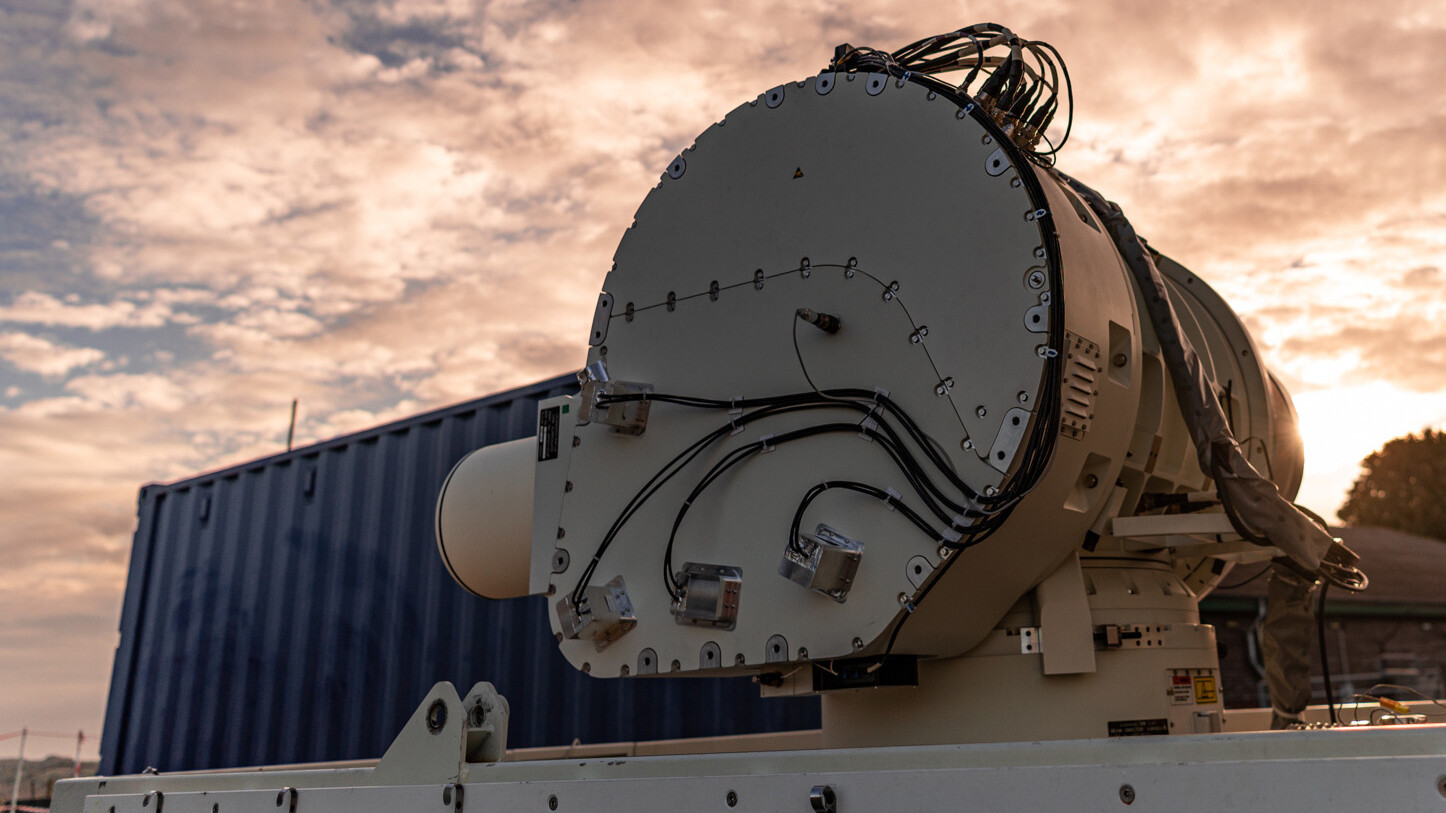 New DragonFire laser shoots down high-speed drones with incredible accuracy
 China's Project Stargate rival is pushing new data centers across the country - and swallowing up farmland to do so
Latest in Tech
New DragonFire laser shoots down high-speed drones with incredible accuracy
China's Project Stargate rival is pushing new data centers across the country - and swallowing up farmland to do so
Latest in Tech
New DragonFire laser shoots down high-speed drones with incredible accuracy
 ICYMI: the 7 biggest tech stories of the week, from Google's AirDrop surprise to Gemini 3
 ICYMI: the week's 7 biggest tech stories from iPhone Pockets to Steam's new hardware
 ICYMI: the week's 7 biggest tech stories from IKEA's 21 new smart home gadgets to our Samsung Galaxy XR review
 Engage! The Lego Star Trek Enterprise NCC-1701-D model is here, and it is spectacular
 ICYMI: the 7 biggest tech stories of the week, from Samsung's tri-fold to a robot for your household chores
Latest in News
Scary Chinese sim shows swarm of drones blocking Starlink out over Taiwan
ICYMI: the 7 biggest tech stories of the week, from Samsung's tri-fold to a robot for your household chores
Latest in News
Scary Chinese sim shows swarm of drones blocking Starlink out over Taiwan
 Android-powered desktop PCs are coming – and I think they'll be exciting
 Poco’s new flagship phone has a mini Bose subwoofer for 2.1-channel audio – and I hope I’m not near one on the bus
 Chat Control: EU lawmakers finally agree on the voluntary scanning of your private chats
 How to watch Sidelined 2: Intercepted on Tubi (it's free)
 The world's first 360-degree camera drone just got an on-sale date
LATEST ARTICLES
The world's first 360-degree camera drone just got an on-sale date
LATEST ARTICLES- 1Did Intel's next big thing in workstations just leak? Ahead of Granite Rapids launch, report claims this is what's next from troubled chipmaker
- 2Can Starlink be blocked? Scary Chinese simulation shows 1,000 drones can jam satellite internet over an island as large as Taiwan
- 3Top Linux PC maker drops plan for SnapdragonX Elite-powered notebook - says hardware was "less suitable than expected."
- 4I spent a week playing with the RedMagic 11 Pro - it brings liquid refreshment to gaming phones
- 5New macOS malware chain could cause a major security headache - here's what we know

