
 By
Emedo Ashibeze
Published 23 minutes ago
Emedo Ashibeze is a tenured journalist specializing in the entertainment industry. Before joining ScreenRant in 2025. he wrote for several major publications, including GameRant.
Sign in to your ScreenRant account
Summary
Generate a summary of this story
follow
Follow
followed
Followed
Like
Like
Thread
Log in
Here is a fact-based summary of the story contents:
Try something different:
Show me the facts
Explain it like I’m 5
Give me a lighthearted recap
By
Emedo Ashibeze
Published 23 minutes ago
Emedo Ashibeze is a tenured journalist specializing in the entertainment industry. Before joining ScreenRant in 2025. he wrote for several major publications, including GameRant.
Sign in to your ScreenRant account
Summary
Generate a summary of this story
follow
Follow
followed
Followed
Like
Like
Thread
Log in
Here is a fact-based summary of the story contents:
Try something different:
Show me the facts
Explain it like I’m 5
Give me a lighthearted recap
Creating a truly compelling anime series requires a delicate balance of world-building, animation, and character dynamics that must resonate with diverse audiences. While many shows successfully capture lightning in a bottle with gripping plots and stunning visuals, a single poorly written character can act as a narrative anchor, dragging the entire production down into mediocrity.
These figures often embody the worst excesses of anime tropes, ranging from ear-piercing comic relief to problematic behaviours that shatter the viewer's immersion in the story's profound moments. When a protagonist is insufferable or a side character exists solely to annoy, even the highest-budget animation cannot mask audiences' frustration.
Nina Einstein - Code Geass
 Nina Einstein looks startled in Code Geass.
In Code Geass, Nina Einstein begins as a timid student at Ashford Academy before spiralling into a radicalised xenophobe obsessed with Princess Euphemia. Though the series does go into racist/colonialist/political themes, Nina’s enthusiasm to exemplify them goes too far, especially when that is all her character offers to the narrative.
Her brilliant mind eventually births the F.L.E.I.J.A. warhead, a weapon of mass destruction that she creates solely out of spite against the Japanese people. Erratic and irrational, her character embodies the problematic elements that undermined the show’s attempt at nuanced political commentary.
In a show defined by calculated strategy, Nina operates on irrational emotion, making her presence both jarring and frustrating. Her eventual survival and lack of significant punishment for her war crimes feel even less justifiable, leaving viewers questioning why such a polarising figure was given so much screen time.
Minoru Mineta - My Hero Academia
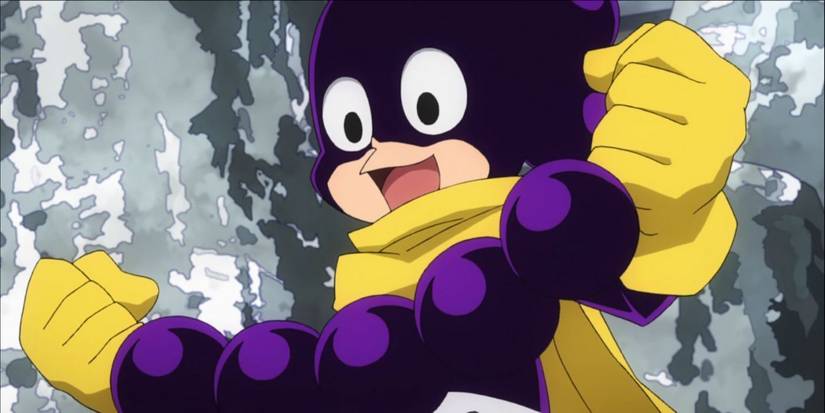
Anyone can tell that Minoru Mineta is introduced in My Hero Academia as comic relief, a debauchee whose behaviour provides lowbrow humour against a backdrop of heroics. His antics revolve around lecherous attempts to spy on or grope female classmates, and these scenes are repeatedly played for laughs.
Over time, this repetition hardens into an uncomfortable running gag that not only makes him intolerable but also undercuts the show’s profound exploration of heroism and trauma. Too often, his comedic framing fails to engage meaningfully with consent or boundaries, reducing obviously tense moments to cheap punchlines.
Unfortunately, the real culprit behind Mineta is the story’s reward structure, which regularly stages his behaviour without any sustained reprimands. This, for the sake of the series's reputation, signals tolerance rather than correction, eroding trust in the narrative’s moral seriousness. Ultimately, when the show asks viewers to invest emotionally in sacrifices and losses, Mineta’s ongoing comic beats simply feel tone-deaf.
Chizuru Mizuhara - Rent A Girlfriend

Rent A Girlfriend’s Chizuru Mizuhara works as a top-rated rental girlfriend, hiding her true abrasive personality behind a facade of perfection to fund her acting dreams. Rather than the positive developments that make great characters, Chizuru’s character progressively deteriorates throughout the series, going from the sympathetic lead to Kazuya’s active manipulator.
She strings him along while accepting all his sacrifices without realising their heavily one-sided relationship, creating a toxic dynamic between the pair that spills over into the story’s overall pace. The truth is, at its core, the series struggles heavily with narrative redundancy, and unfortunately, Chizuru is the primary culprit in the narrative's stagnation.
Her refusal to communicate clearly or set boundaries exploits Kazuya’s feelings and financial resources for hundreds of chapters. She perpetuates the misunderstandings to maintain the status quo, transforming what could be a compelling romance into an endless loop of indecision that exhausts the audience's patience.
Happosai - Ranma ½

Happosai is the ancient, diminutive founder of Anything Goes Martial Arts in the Ranma ½ series and the master of both Genma and Soun. Despite his immense combat prowess, he dedicates his golden years to stealing women's lingerie and harassing the local populace.
In the series, he is the seemingly invincible force of chaos who arrives solely to torment the cast and disrupt their daily lives. This character embodies the worst aspects of Rumiko Takahashi’s reliance on the "lecherous old man" trope, and his immense power prevents him from ever facing the consequences of his actions, no matter how uncomfortable they are.
As a result, his episodes are repetitive and drain the fun from the series, replacing the charming martial arts romance with mean-spirited antics that stop the plot dead in its tracks. In a nutshell, for everything good about Ranma ½, Happosai is the sore thumb that always sticks out.
Tamaki Kotatsu - Fire Force

Tamaki Kotatsu is a skilled Third Generation pyrokinetic known for her "Nekomata" ability, which manifests as fiery cat tails that immediately make her the target of the show’s excessive attempt at fan service. Her narrative role is dominated by the "Lucky Lecher Lure," a supernatural clumsiness that forces her into compromising, scantily clad situations regardless of the context.
Nonetheless, what makes Tamaki so terrible for the series is not her presence but the emphasis placed on it. To her detriment, the show’s insistence on stripping her during life-or-death battles consistently undermines her character development and trivialises the stakes at play, regardless of the situation.
The fan service, combined with her innate clumsiness, eventually stigmatises her, reducing her to a stale, unnecessary addition to the cast. Viewers trying to enjoy the dark fantasy action are constantly pulled out of the experience by these intrusive gags, which are frequent enough to become uncomfortable.
Arajin Tomoshibi - Bucchigiri?!

Main characters that are as grating and as annoying as Bucchigiri?!’s Arajin Tomoshibi are very few and far between in all of anime. Being the story’s central focus, Arajin returns to his hometown, hoping to find romance, only to be dragged into a conflict between warring delinquent gangs.
His motivations are shallow, driven almost exclusively by a desperate desire to lose his virginity rather than loyalty or justice. On the face of it, he is intended to be the humanising catalyst to widen the story’s emotional range beyond its action emphasis.
Unfortunately, his role is lost due to his erratic behavioural tendencies. Lapsing between tone-breaking self-absorption and immature priorities, Arajin’s actions tend to undermine narrative intent rather than the opposite. Even worse, the story rewards this with light plot progression that ultimately weakens the overall emotional stakes, leaving viewers no chance to invest emotionally.
Ren Yamai - Komi Can’t Communicate

The main antagonist of Komi Can’t Communicate, Ren Yamai, is a popular classmate of Shouko Komi, who harbours an obsessive, terrifying obsession with the silent beauty. From her introduction, she presents herself as refined but hides a violent, yandere personality that drives her to threaten anyone who gets too close to her idol.
This includes kidnapping the male lead, Tadano, and threatening to bury him in the mountains. Plainly put, Yamai’s character crosses the line from eccentric comedy to genuine criminality, making her presence deeply uncomfortable. Her obsession with Komi is predatory rather than endearing, and her violent threats towards Tadano, while played for laughs, are actually genuinely disturbing.
Being a rom-com series, Yamai faces no story repercussions for her felonies. Nevertheless, her constant interference in the wholesome central romance makes her a screeching, unwanted distraction in a show about gentle connection.
Zenitsu Agatsuma - Demon Slayer: Kimetsu no Yaiba
 Demon-Slayer-Zenitsu-Screaming
Zenitsu Agatsuma is a Demon Slayer who mastered the Thunder Breathing style despite his paralysing fear of monsters. Arguably one of anime’s most obnoxious characters. When awake, he is a shrieking coward who harasses women and begs for protection, which quickly grows tiresome as the story progresses. However, unconsciousness triggers his muscle memory, allowing him to fight with blinding speed.
Aside from his personality flaws, the auditory assault of his loud antics is a significant problem for the show, if not the only one. His hysteria dominates the audio track, turning tense exploration scenes into grating endurance tests. On balance of things, while his combat highlights are spectacular, the ratio of whining to fighting is skewed heavily toward the former.
Additionally, the show’s decision to constantly place him in scenes where his exaggerated fear interrupts and undermines tension does not help his reputation. Thus, though his character evolution has been worthy of note in the story, his constant comic interjections mostly feel like an avoidable distraction.
Shinji Ikari - Neon Genesis Evangelion

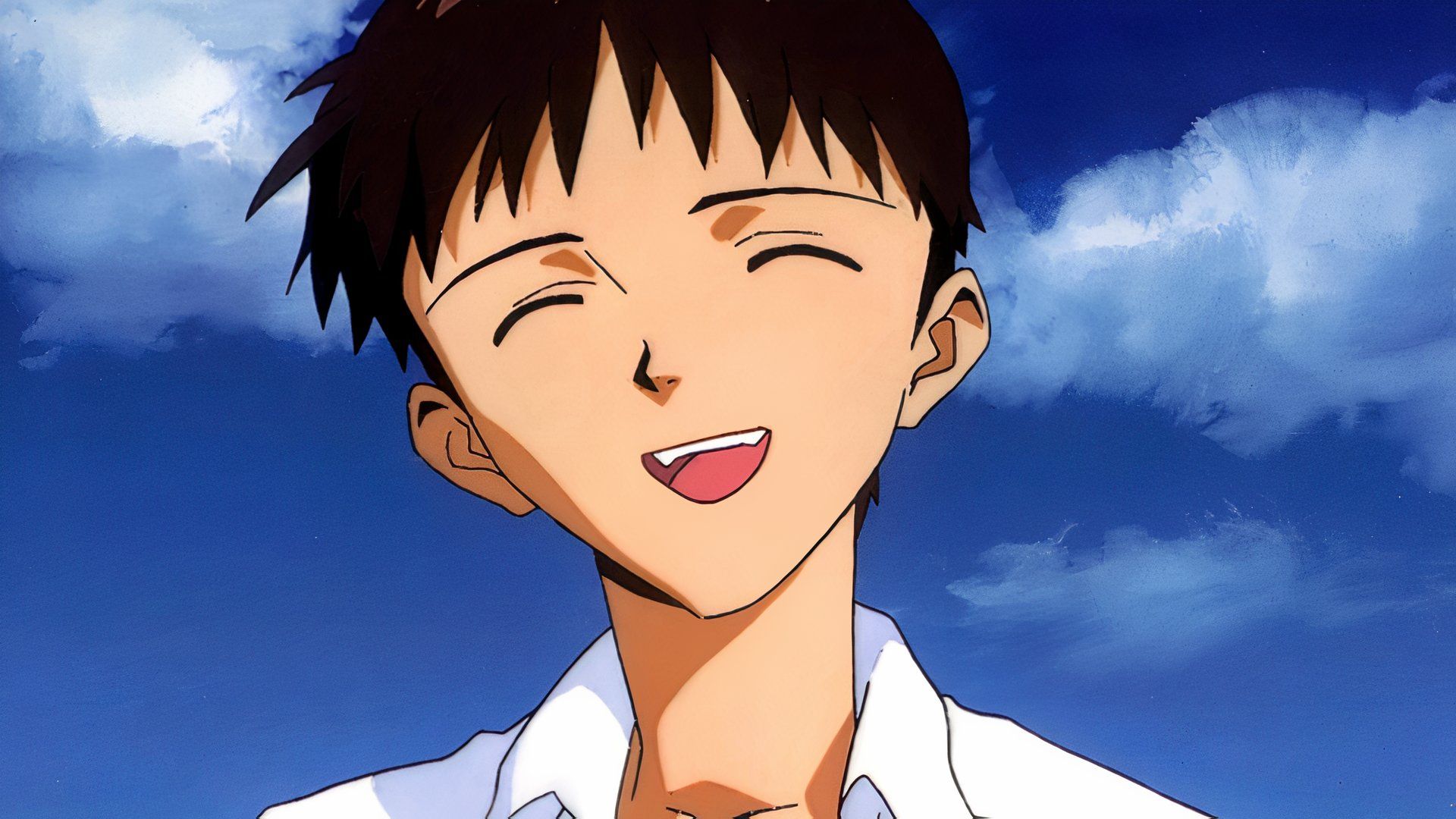
The Third Child and main character of the Evangelion franchise, Shinji Ikari, is a fourteen-year-old boy summoned by his estranged father to pilot the bio-machine Evangelion Unit-01 against the invading Angels. Plagued by deep-seated abandonment issues and depression, he takes on the responsibility out of a desperate need for validation that makes him simultaneously realistic and frustrating to watch.
His journey is one of psychological deconstruction, characterised by reluctance, screaming, and a grating lack of initiative. Hence, while Shinji is a realistic depiction of trauma, his passivity makes him an incredibly frustrating but necessary piece of the story.
His constant refusal to get into the robot and his paralysing indecision can feel agonisingly slow to watch. Viewers expecting a proactive hero are met with a character who spends episodes in a catatonic state, rendering the narrative an agonising psychological study that demands immense emotional labour to endure.
Sakura Haruno - Naruto
 Sakura Haruno rubs her head in confusion in Naruto
When Naruto first aired, Sakura Haruno was easily one of anime’s most hated characters, serving as Team 7’s incompetent anchor. Ironically, though, while her tattered reputation was no doubt earned, her shinobi capabilities were not the foremost reason. Her obsessive infatuation with Sasuke Uchiha, a fixation that defines her early motivations, is responsible for it.
As the series progresses, she grows into a powerful healer, aiming to stand on equal footing with Naruto and Sasuke. However, before the progress, Sakura’s early depictions of a lack of narrative agency compared to her teammates, coupled with her inability to not do something stupid around Sasuke, made her too much of a non-option for any meaningful impact.
For large swaths of the story, she is relegated to the sidelines, always crying to Naruto to solve the problems she cannot handle. Her enduring love for Sasuke, despite his attempts to kill her, undermines her self-respect and character growth so much that it becomes ingrained in her. As a result, it’s nearly impossible to see her any other way.
-
 Anime
Anime
We want to hear from you! Share your opinions in the thread below and remember to keep it respectful.
Be the first to post Images Attachment(s) Please respect our community guidelines. No links, inappropriate language, or spam.Your comment has not been saved
Send confirmation emailThis thread is open for discussion.
Be the first to post your thoughts.
- Terms
- Privacy
- Feedback
 18 hours ago
10 Mystery Movies You Need To Be A Genius To Understand Properly
 21 hours ago
Hollywood Rebooting 2 Iconic '80s Movies That Haven't Aged Well Is Either A Blessing Or A Curse
 19 hours ago
8 Best New & Trending Shows to Watch This Week on Every Major Streaming Platform (Nov 24–30, 2025)
 18 hours ago
One Piece Season 3 Casts Two Major Villains As Filming Begins
More from our brands

The 50 Saddest Anime That Will Make You Cry

The Best Harem Anime Of All Time (April 2025)
The 40 Best High School Anime, Ranked
The 35 Darkest Anime That Only Get Darker

22 Best Anime Male Characters With Brown Hair

42 Greatest R-Rated Adult Anime Series of All Time

The Greatest Romance Anime Of All Time, Ranked (April 2025)
Trending Now 20 Years Later, This Song Still Holds The Key To Chris Brown's Paradox
 Stranger Things Season 5 Has Already Made Netflix History
 New Pokémon Card Trademark Hints At Massive 30th Anniversary Set