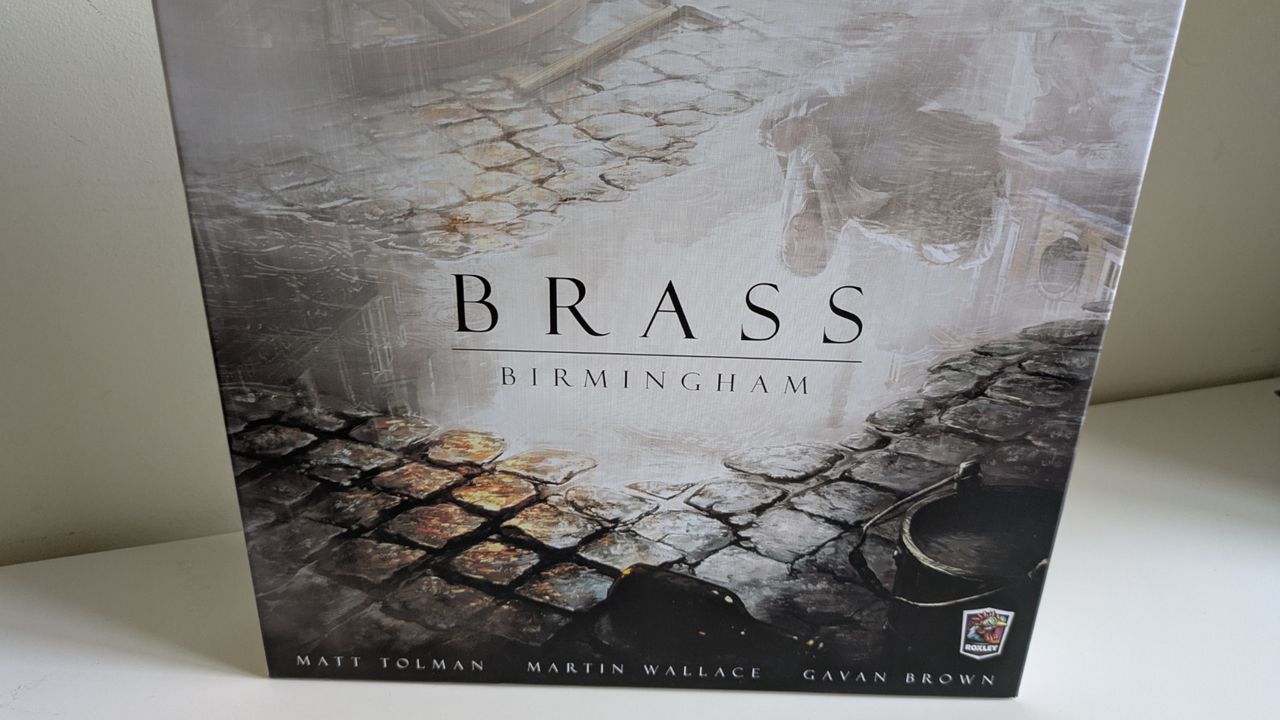
GamesRadar+ Verdict
Brass: Birmingham is a gem amongst heavyweight strategy games, a unique brain-burner that balances economics and interaction, if you can cope with its steep learning curve and challenges.
$79.99 at Amazon $79.99 at Newegg Pros- +
Unusual balance of very demanding strategy and interdependent interaction
- +
Circular resource requirements ensure there’s no obvious path to victory
- +
Looks and plays like a real economic and historical simulation, not an abstract
- -
Hard to learn, and requires repeat plays to properly get to grips with
- -
-High skill ceiling: largely uninterested in helping weaker players
- Best Disney gifts 2025, recommended by a mega-fan
Why you can trust GamesRadar+ Our experts review games, movies and tech over countless hours, so you can choose the best for you. Find out more about our reviews policy.
Jump to:- Features & design
- Gameplay
- Should you buy
- How we tested
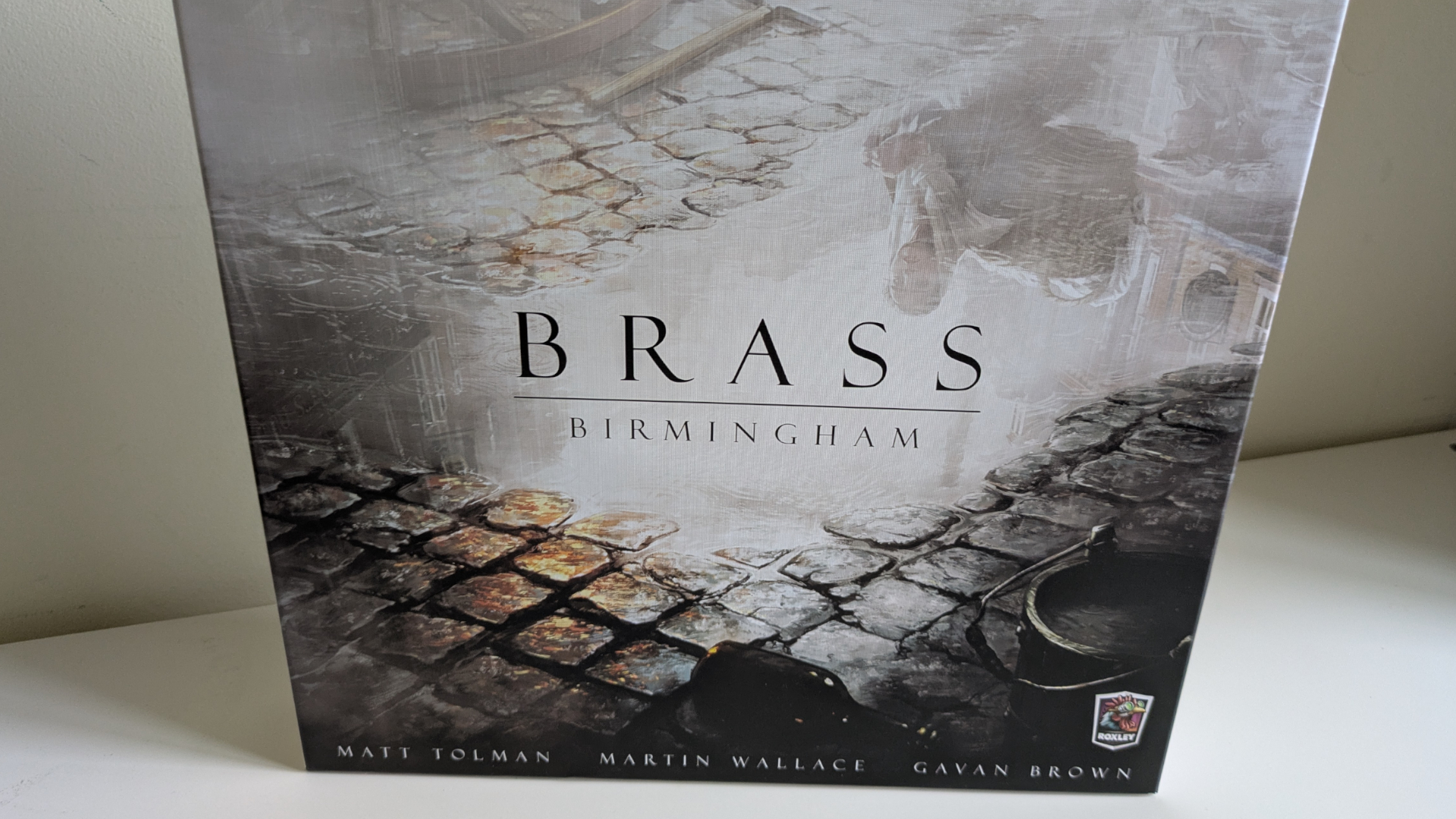
Martin Wallace is a chameleon designer, whose work spans fantasy adventure to heavy economic simulation. His 2007 title 'Brass' is at the latter end of the spectrum and became one of his most renowned designs until, in 2018, publisher Roxley got the rights and reworked the mechanics. The original was retitled Brass: Lancashire and their new version, Brass: Birmingham, was released. The stepchild has gone on to outstrip the parent game in popularity and acclaim, so: is it worth the hype on community forums as one of the best board games ever made?
Brass: Birmingham features & design
Swipe to scroll horizontallyPrice
$79.99 / £79.99
Ages
14+
Game type
Strategy/economic
Players
2-4
Lasts
60-120mins
Complexity
High
Designers
Matt Tolman, Martin Wallace, Gavan Brown
Publisher
Roxley
Play if you enjoy
Twilight Imperium, Terraforming Mars, 7 Wonders
- Lovely artwork, with a 2-sided board so you can choose your preferred aesthetic
- Lots of cardboard tokens which are functional, but a pain to set up and will wear quickly
- Rulebook isn't very clear
Brass: Birmingham whisks us back to the soot and chimney-stacks of the industrial revolution in 1700s-1800s Britain. Players must build and develop a business empire trading in everything from cotton to coal, capitalizing on market demands to earn the most points.
One thing Roxley did with both versions of Brass was give them an astonishing makeover. The original was ugly and functional. The new versions are detailed and beautiful. The main board and player boards are two-sided but both are mechanically identical: you just get to choose which you think is prettier, from the rural detail of the "day" side or the luminous contrasts of the "night" side. The board is divided into color-coded regions to help those unfamiliar with the geography of the English midlands, which it depicts, to find their way around.
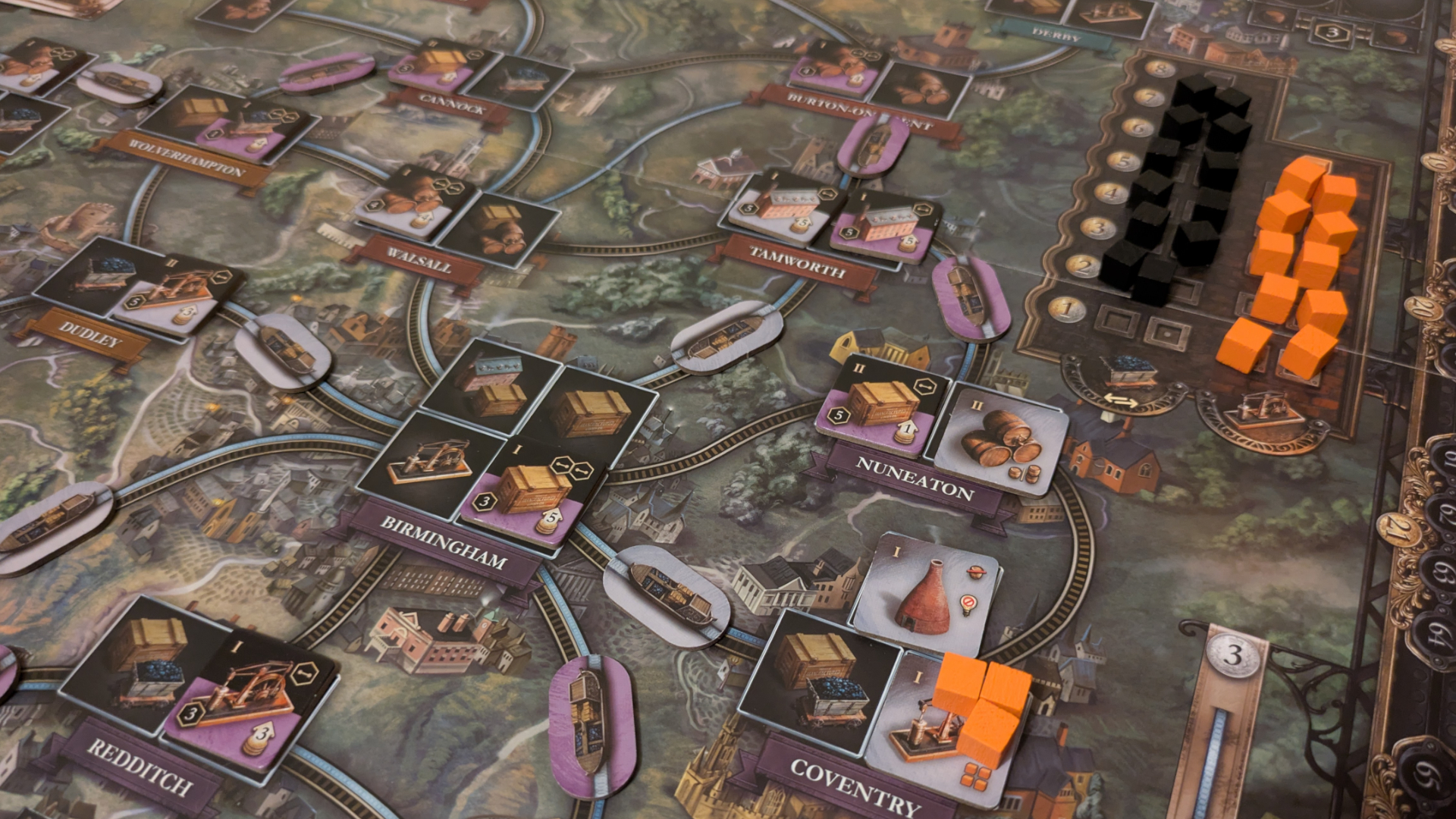
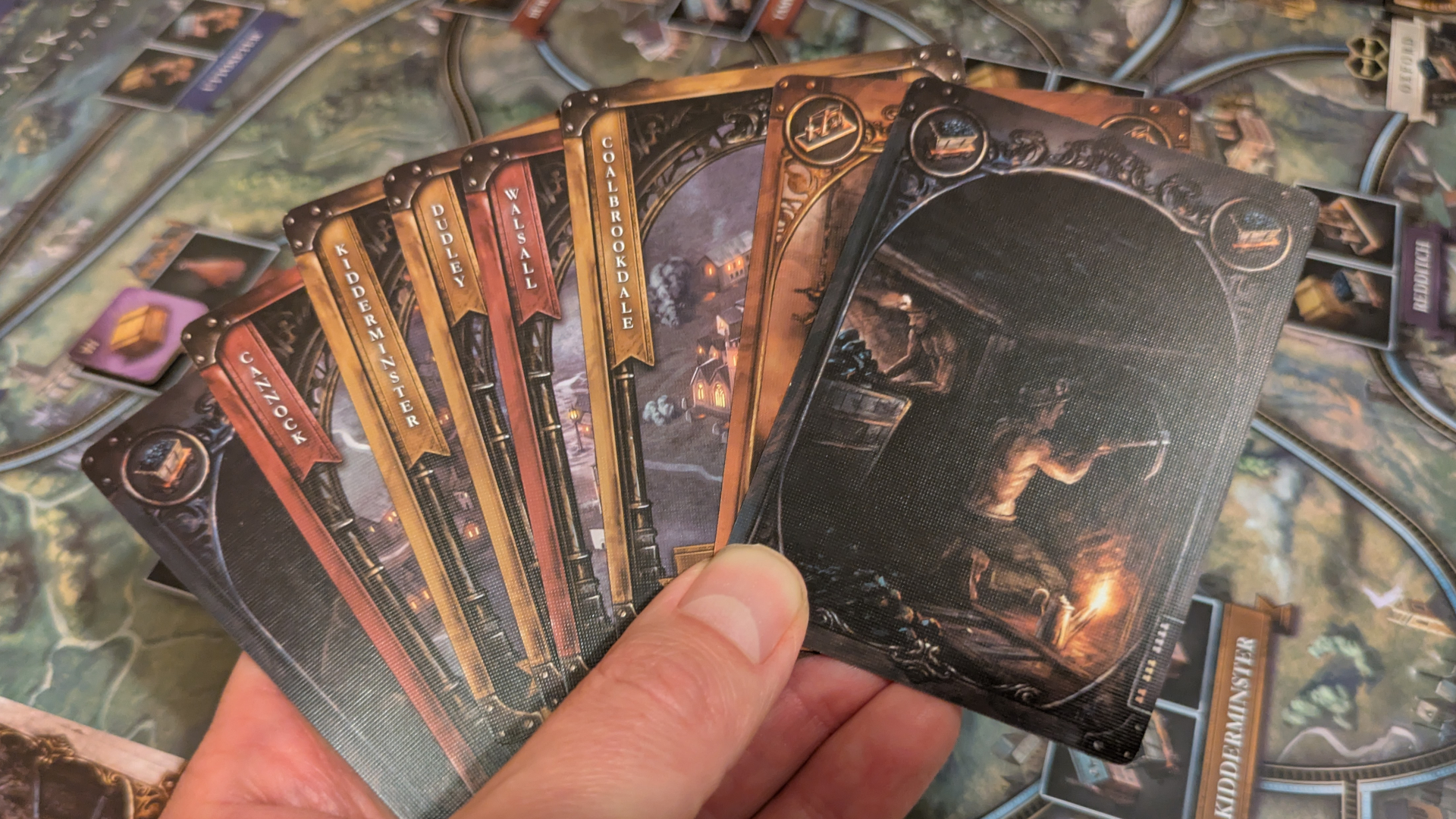
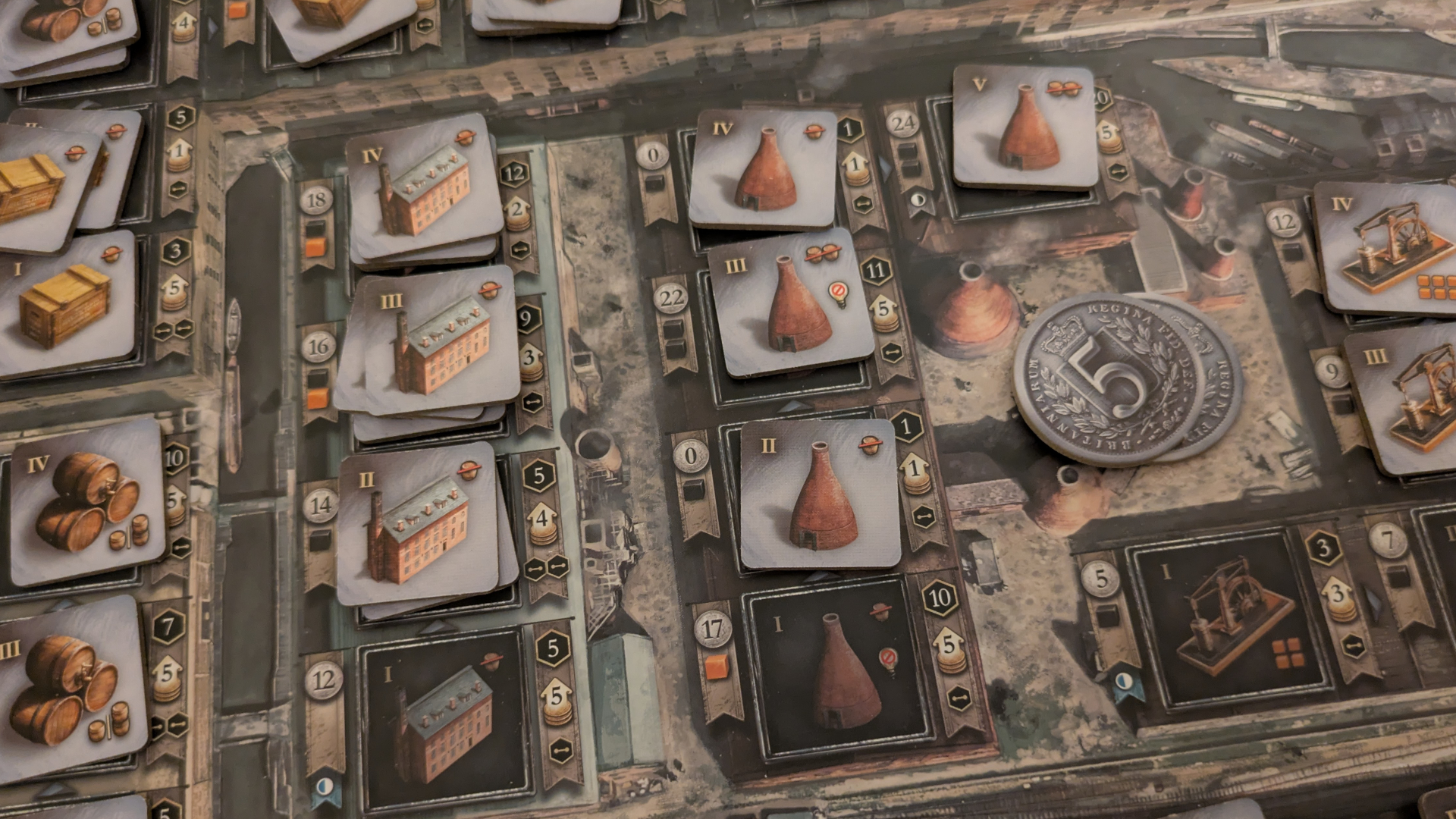
Aside from this, there’s not a whole lot to Brass: Birmingham. The critical weight of this title is belied by its slim box. Each player color gets a sheet of identical punch-out building tokens, and some markers. There’s also a pool of money tokens. These are all functional, although they’ll get handled a lot and so will wear quickly. Finally, there’s a deck of cards. Here, the lovely art in the game is allowed to shine again, depicting the heat of industrial-era Britain, framed in clear yet pleasing graphic design.
One thing that’s worth noting is that while the rulebook is attractive and interesting, fronted with some historical background and laid out in the same neat graphical style as the cards, it’s not terribly clear. Brass: Birmingham is fairly complex and has a weird, unfamiliar flow. Tutorial videos are your friend here. It also takes a while to set up as each player has to sort and stack their building tokens, most of which won’t actually get used.
Gameplay
- You’re both competing with & relying on other players, creating fascinating interactions
- Building & scoring requires a maze of money & resources, with no easy way in
- Game flips halfway through, which is clumsy to navigate but unlocks new strategies
Like a lot of Wallace’s economic designs, Brass: Birmingham has a circular structure of dependencies which lie at the heart of its strategic appeal, but make it quite hard to teach and internalize. Your goal is to gain points by selling the produce of industries such as textile mills and coal mines. First, however, you must build them. Doing so requires a card with a matching city or industry, some cash and, generally, a mixture of three resources: iron, coal and beer.
The trouble is that you start with only cash and none of the other three. Coal is the most troublesome to come by because it’s heavy and requires transport links – initially canal boats, later trains – between where you want to build and a source of coal. This can either be off-map, in which case you can buy it from a generic market that gets more expensive as coal becomes scarce, or you can take it directly from a built coal mine, either yours or another player’s.
Sign up to the GamesRadar+ NewsletterContact me with news and offers from other Future brandsReceive email from us on behalf of our trusted partners or sponsorsBy submitting your information you agree to the Terms & Conditions and Privacy Policy and are aged 16 or over.Iron can likewise be bought off-map or from a built ironworks owned by any player, but it’s required in lighter loads and so needs no transport network. Beer, oddest of all, can either be taken from a built brewery or there’s a very limited off-map supply to which you’ll need a transport connection and which nets you a small bonus into the bargain. Building transport links require you to discard a card and pay a modest fee.
Lightening the load
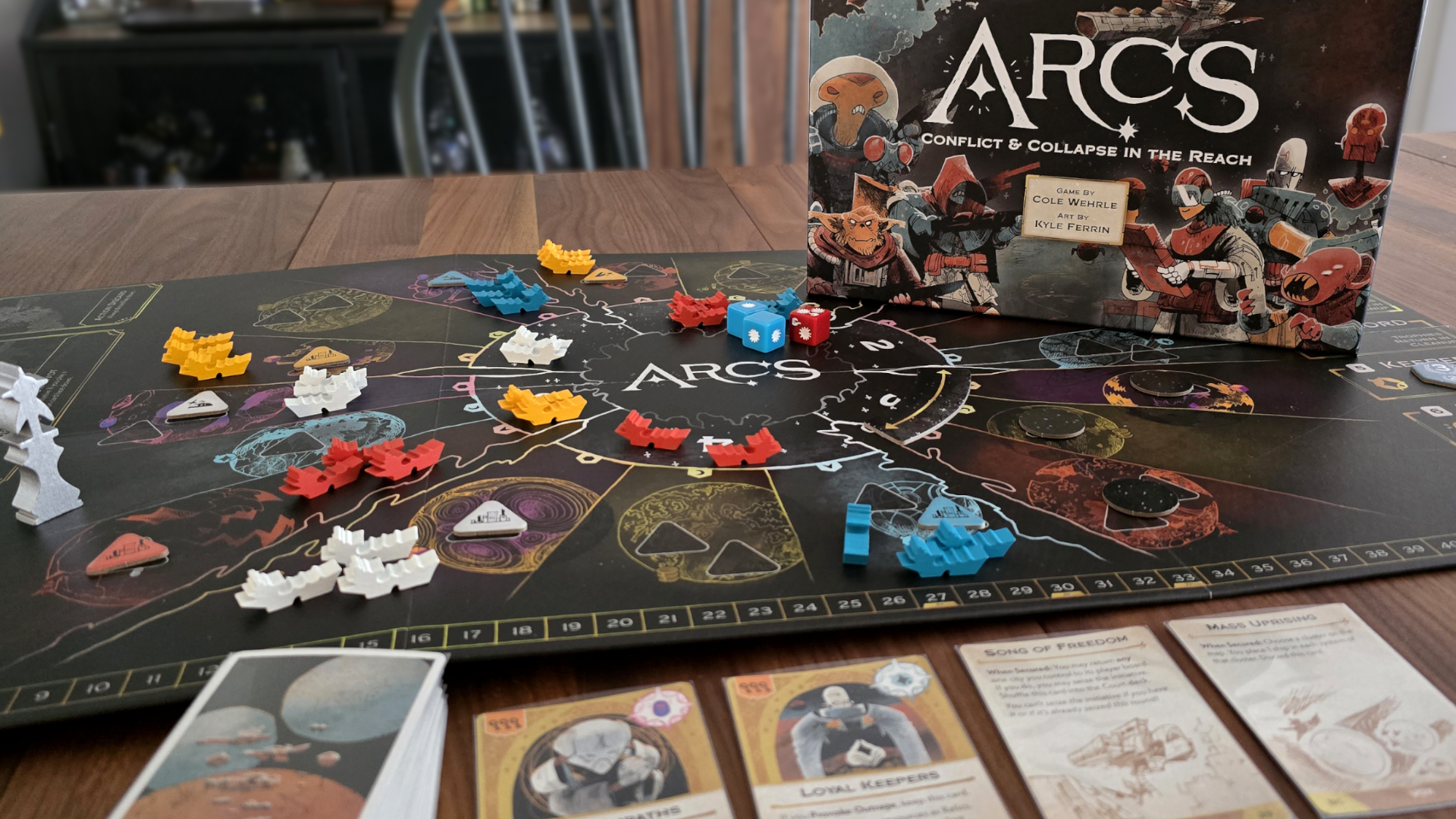
If this sounds a little too intense, a great mid-weight strategy game is Arcs. The sci-fi epic from the developers of Root (another fantastic strategy board game) is much more accessible but still has plenty to get your teeth into.
Immediately, you can see how interdependent this all is. Your hand of cards will limit your choices, and the juiciest places to build are in the center, away from coal. But if you want to build anything valuable, you’ll need to connect to coal sources, and you’ll almost certainly run out of money before you can do so. You can, and will, take loans as one of your two actions each turn, but doing so not only puts you behind in the ridiculously tight action economy, but reduces your income. There’s no way to square this circle: you have to feel your way into building your empire with nuance, experience, and judgement.
To get money or points from an industry, you need to flip it. For mines, breweries, and ironworks this is relatively simple; they must be empty of the supply cubes placed on them when they’re built. These give you a modest boost, while the real points come from flipping more profitable industries like cotton mills, potteries, and manufacturing. To do this they need to be connected off-map to a merchant that accepts that kind of good, which is randomized during setup.
This lays the second foundational plank of the appeal of Brass: Birmingham. You will need to use other player’s resources, creating a weird and fascinating parasocial situation in which you must take cubes from other player’s buildings, but are loath to do so because it helps them score. You will also use their transport links – owning a link only allows you to build adjacent, any player can use it to connect to coal or a merchant. So you’re all willing each other to build the links you collectively need, a bizarre tragedy of the commons situation that’s very unusual in board gaming.
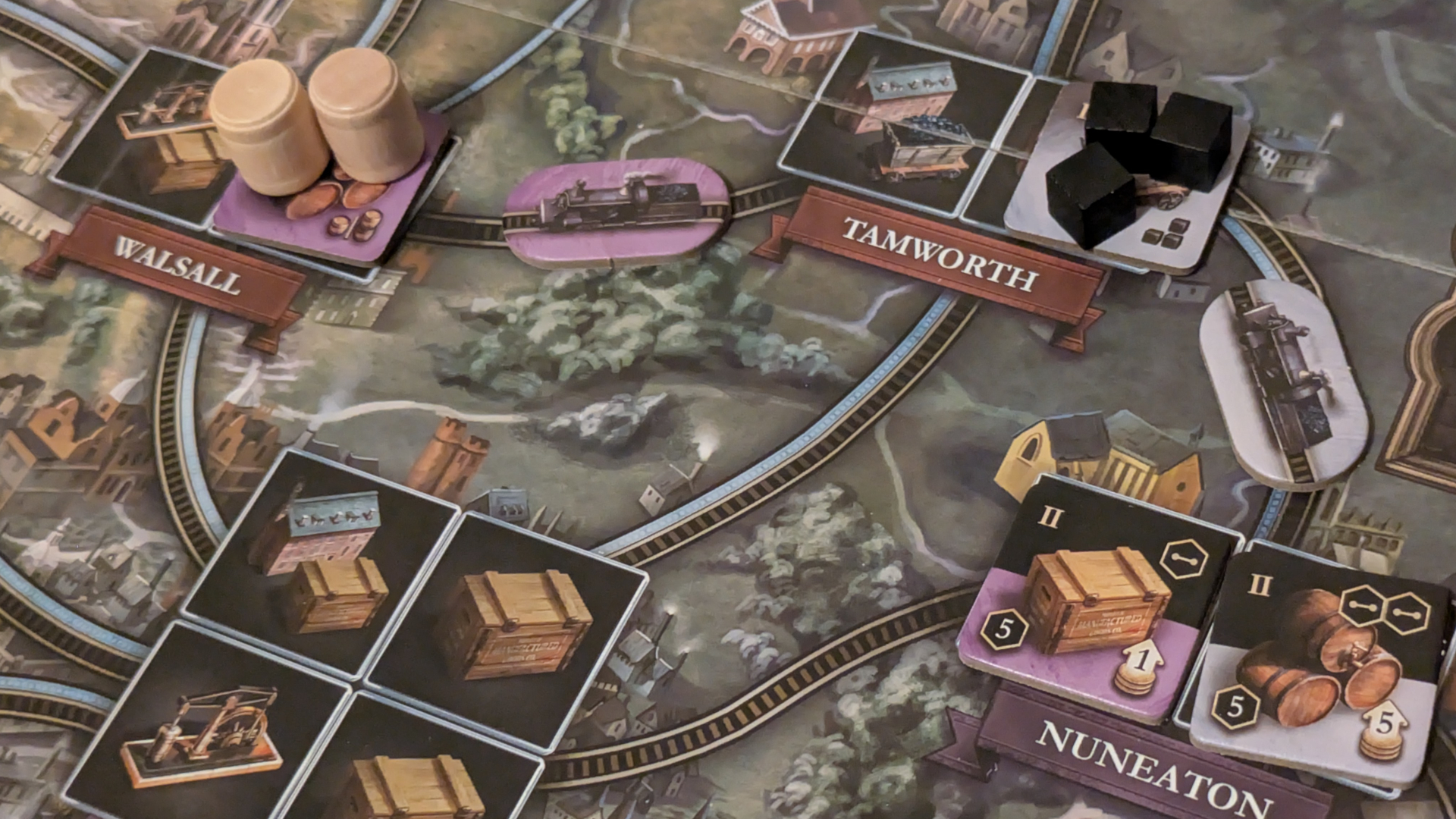
When you combine this mutual but paradoxically competitive interdependence, it’s a Gordian knot to unravel, only you have no sword, merely your wits and a few cardboard quid in your pocket. It’s more interactive than a lot of heavyweight strategy games and, in doing so, leans on its limited social aspects to ensure every game is different. It does, however, take some getting to grips with, and experienced or skilled players will crush neophytes mercilessly every time.
There are various additional wrinkles to the strategy. Buildings get better as you buy tiles off your player mat and get them on the board, but you can skip steps in this progression with the develop action, for example. Most notable is the way the game flips between canals and rail halfway through. Obsolete buildings and links are wiped off the board, at a stroke forcing players to restart their empires and opening access to places they were previously locked out of. Rail links are more expensive to build but also more desirable, making it easier to make those all-important networks. Anticipating this, trying to leave some trace of your initial efforts to restart from, is yet another singular strategic aspect of this game’s design.
The flip from canals to rails is also, of course, a mirror of the historical development of the region. And you can see this concern for history scattered throughout the design. The canal and rail links mirror their geographical counterparts. The markets for coal and iron create a realistic, if basic, simulacrum of the supply and demand of an actual economy. It’s not a simulation by any stretch, but to find any nods to an actual theme in a heavyweight strategy game is rare, and it’s an extra pleasure to appreciate as you play.
Should you buy Brass: Birmingham?
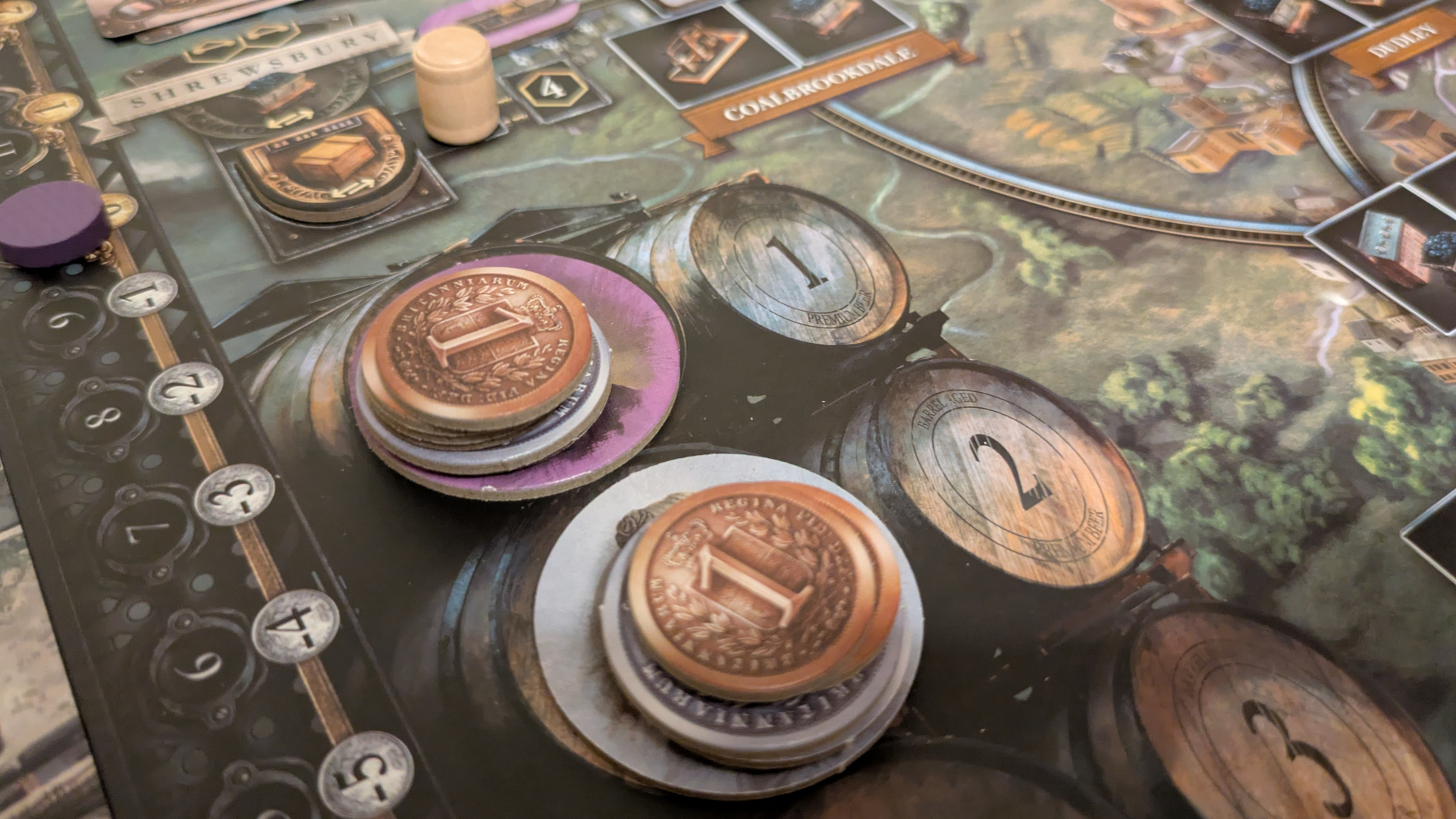
Before we get to a final conclusion, we should briefly compare this game with its predecessor, Brass: Lancashire. The key difference in how the original feels is that it is absolutely merciless in both player interaction and economic strategy. You can rapidly get sidelined by either, and have no hope of catching up. For some players, that sense of very intense competition is a net positive. Most, however, will prefer the slightly smoother edges of the Birmingham version.
Given the critical and commercial success of this game, it’s clearly very appealing. But it’s important to realize that it’s not for everyone. It’s pretty complicated and obtuse, for starters, so it’s only worth considering if you’re happy to commit to the learning time and repeat plays required. It’s also very unforgiving, so you need to be comfortable with the fact that better players will win almost every time. Finally, although it has more interaction than most of its heavyweight peers, it won’t satisfy people who want head-to-head action and zero-sum strategy. If you’re happy with all that, you’re golden: this is an absorbing and original design that plays like nothing else out there.
Ratings
Swipe to scroll horizontallyCriteria
Notes
Score
Game mechanics
A unique blend of strategic challenge, player interaction and historical detail that sacrifices nothing.
5/5
Accessibility
Complexity and unfamiliar game flow are awkward, and the murky colors can be hard to differentiate.
2/5
Replayability
Each game will develop its own sense of networks and endpoints, but the core mechanics will, eventually, come to feel a bit dry.
4/5
Setup and pack-down
The board will become very busy with tokens and icons by the time you're finished, giving you a lot to organize.
3/5
Component quality
The artwork is lovely, but the cards and tiles are likely to wear quickly.
4/5
Buy it if...
✅ You want a deep strategy game with social aspectsMany of the heaviest strategy games feel like multi-player solitaire, but in Brass: Birmingham you’ll be directly reliant on other players... even when you don’t want to be!
✅ You’re interested in history, but not warfareMost games that aim to be historical simulations are wargames based on military conflict. Brass: Birmingham has enough historical detail to satisfy, but no guns.
Don't buy it if...
❌ You want party-game fun or a relaxing diversionFor many, a game is something they can quickly and easily have a few laughs over with some friends. This game is... not like that. At all.
❌ You can’t commit the time needed to learn and playThere are a lot of medium-weight strategy games that are relatively easy to grasp out of the box and still offer plenty of challenge and variety. If you want the extra depth of Brass: Birmingham, you’ll need to commit time and effort to it.
How we tested Brass: Birmingham
This review was conducted using a sample provided by the publisher.
Our reviewer was already familiar with this game before settling in for their full critique, so refamiliarized themselves with the rules after receiving the review sample and proceeded to test it in practice games. This, combined with their prior experience, helped provide a broader overview of Brass: Birmingham's systems and its longevity in particular.
For a better understanding of our process, check this guide to how we test board games or the full GamesRadar+ reviews policy.
Want more recommendations? Be sure to drop in on the best card games or the best 2-player board games.
Brass: Birmingham: Price Comparison

 $79.99View
 $79.99ViewWe check over 250 million products every day for the best pricespowered by
  CATEGORIES
Tabletop Gaming
CATEGORIES
Tabletop Gaming
 Matt ThrowerSocial Links Navigation
Matt is a freelance writer specialising in board games and tabletop. With over a decade of reviews under his belt, he has racked up credits including IGN, Dicebreaker, T3, and The Guardian.
You must confirm your public display name before commenting
Please logout and then login again, you will then be prompted to enter your display name.
Logout Back To Top Read more Vantage review: "A masterclass in narrative and sandbox gameplay"
 Wingspan review: "One of the greats"
 Splendor Duel review: "A superior game in almost every regard"
 Fame & Fable review: "Pairs gentle strategic fun with tempting press-your-luck mechanics"
 Life in Reterra review: "I can see it becoming a modern classic"
 Everdell review: "This is the perfect cozy board game for Fall"
Latest in Board Games
Everdell review: "This is the perfect cozy board game for Fall"
Latest in Board Games
 I review board games for a living, and I think these ones need to be on everyone's shelf for Thanksgiving
 I was on the fence about buying the Skyrim board game, but this Lightning deal is really worth watching
 This enthralling team board game is perfect for playing with family this Thanksgiving
 "Absolutely incredible" and "so unsettling": Warhammer fans have strong opinions on 2025 World Championship reveals
 Spooktacular review: "This is the perfect family board game for Halloween"
 I'm obsessed with the Traitors so can't wait for this new Warhammer 40K hidden role board game
Latest in Reviews
I'm obsessed with the Traitors so can't wait for this new Warhammer 40K hidden role board game
Latest in Reviews
 Fans think this is the best strategy board game ever made, and I have to admit that they've got a point
 Wake Up Dead Man: A Knives Out Mystery review: "Brings Knives Out back to its roots for a sequel that's almost on a par with the original"
 Constance review: "If Hollow Knight: Silksong seems too daunting, this wonderful paint powered adventure should do nicely"
 Kirby Air Riders review: "This racer is also equal parts fighting game, minigame collection, and roguelike – and I'm shocked at how well that works"
 The Analogue 3D solves my biggest issues with the original N64, and it sets a new bar for retro console remakes
 Morsels review: "The Binding of Isaac style roguelike shooting gets somehow grosser, but struggles to set itself apart"
GAME REVIEWSMOVIE REVIEWSTV REVIEWS
Morsels review: "The Binding of Isaac style roguelike shooting gets somehow grosser, but struggles to set itself apart"
GAME REVIEWSMOVIE REVIEWSTV REVIEWS- 1Constance review: "If Hollow Knight: Silksong seems too daunting, this wonderful paint powered adventure should do nicely"
- 2This enthralling team board game is perfect for playing with family this Thanksgiving
- 3Kirby Air Riders review: "This racer is also equal parts fighting game, minigame collection, and roguelike – and I'm shocked at how well that works"
- 4Demonschool review: "This Persona-inspired RPG is full of fun, flair, and ready to chomp away at your free time"
- 5Morsels review: "The Binding of Isaac style roguelike shooting gets somehow grosser, but struggles to set itself apart"
- 1Wake Up Dead Man: A Knives Out Mystery review: "Brings Knives Out back to its roots for a sequel that's almost on a par with the original"
- 2Wicked: For Good review: "Builds to an incredibly cathartic conclusion, but isn't quite as captivating as Part 1"
- 3The Running Man review: "Some fun action and Glen Powell's star power aren't enough to energize this disappointing Stephen King adaptation"
- 4Predator: Badlands review: "Die-hard fans may be disappointed, but as a blockbuster action-adventure, Badlands kills it"
- 5Chainsaw Man – The Movie: Reze Arc review "Storytelling just as compelling as the chainsaws, devils, and visually excessive fight scenes"
 1Pluribus season 1 review: "Easily one of the year's best dramas"
- 2The Witcher season 4 review: "The Henry Cavill-less fourth season is the best yet"
- 3IT: Welcome to Derry review: "A supremely confident step back into the history of Stephen King's cursed town and killer clown"
- 4Splinter Cell: Deathwatch review: "A pale imitation of the long-dormant stealth franchise"
- 5Marvel Zombies review: "A fun expansion of the What If episode with delightful MCU Easter eggs and truly gross R-rated kills"