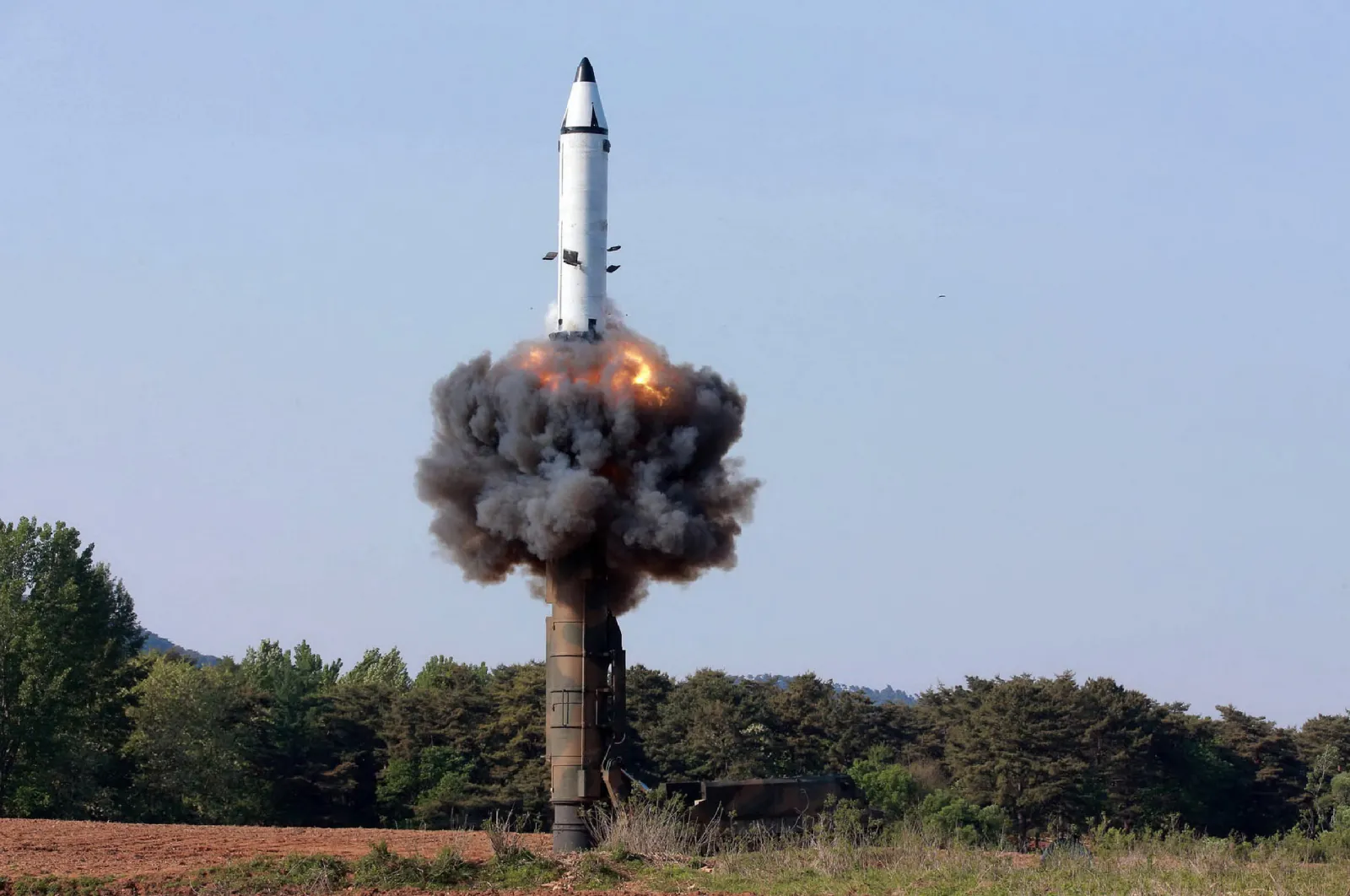
“Russia’s testing, and China’s testing, but they don’t talk about it,” was President Donald Trump’s bold claim to CBS News about the U.S. adversaries’ nuclear weapons. China rejected this, but its growing atomic arsenal and attitude toward it could be a brake on Russia’s flirtation with nuclear war.
“China is very reluctant to play a nuclear brinkmanship game, and that certainly has a calming effect on, and restrains, Russia,” said Ukrainian historian Serhii Plokhy, whose latest book, The Nuclear Age, charts the atomic weapons race.
 ...
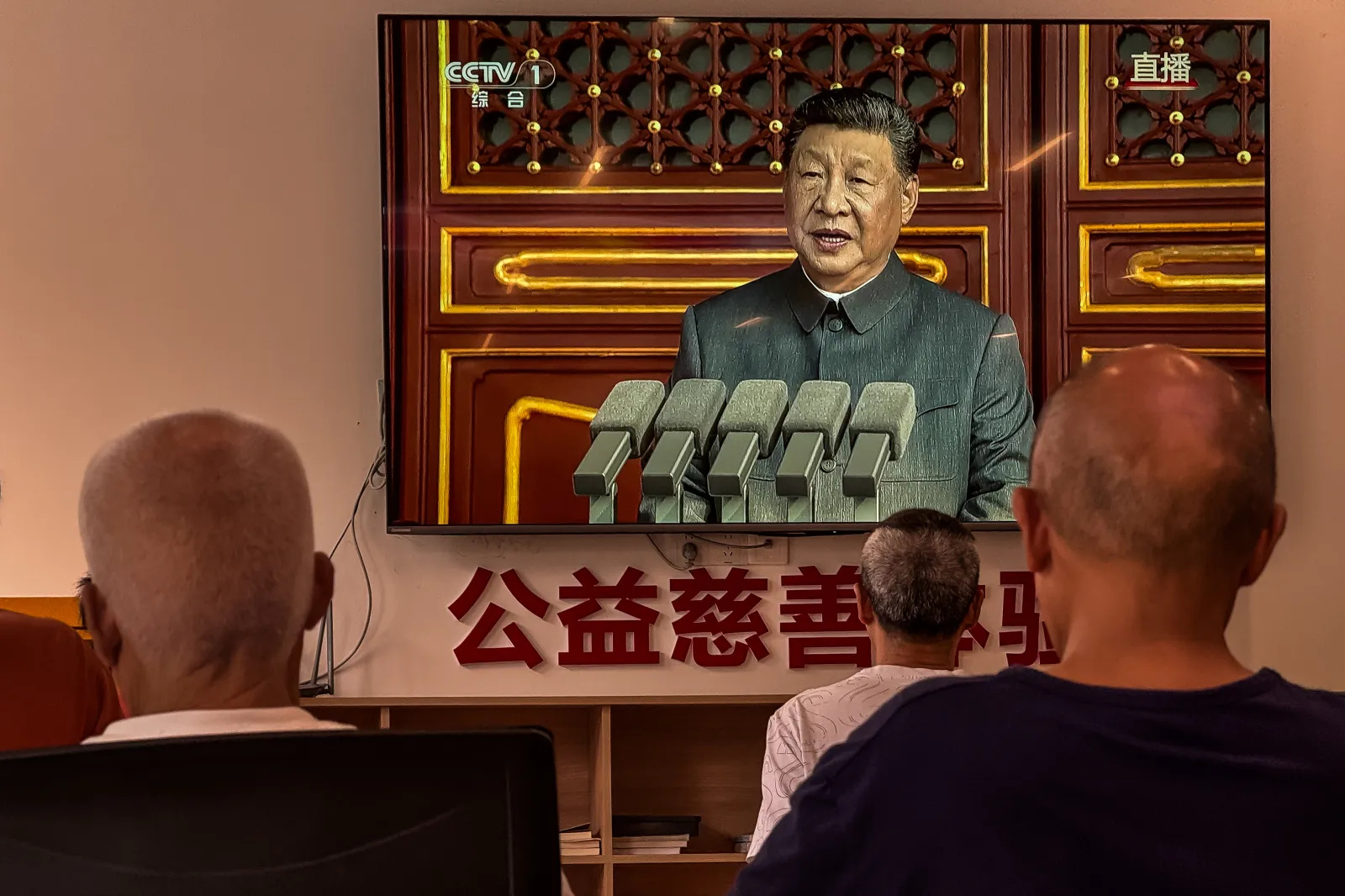
...Beijing is officially neutral on President Vladimir Putin’s war in Ukraine but positive in its role as Moscow’s chief economic partner since Russia invaded its neighbor on February 24, 2022, with trade between the countries swelling to record levels. As they tout their “no limits” partnership, one boundary remains for China’s leader Xi Jinping when it comes to breaking the “nuclear taboo” on weapons, warning Putin against their use, according to reports later backed by former Secretary of State Antony Blinken.
“I expect China to continue to build up its arsenal and then hold others back from using nuclear weapons,” Plokhy said, “because this is not in China’s interest.”
Liu Pengyu, a spokesperson for the Chinese Embassy in the U.S., told Newsweek: “As a permanent member of the U.N. Security Council and a responsible nuclear-weapon state, China has always adhered to the path of peaceful development, pursued a no-first-use policy on nuclear weapons, upheld a self-defense nuclear strategy, and consistently maintained its nuclear forces at the minimum level required for national security, while also abiding by its commitment to a moratorium on nuclear testing.
“China will work with all parties to jointly safeguard the authority of the Comprehensive Nuclear-Test-Ban Treaty and uphold the international nuclear disarmament and non-proliferation regime.” Newsweek reached out to the Russian Foreign Ministry for comment.
Kremlin Saber-Rattling
Analysts often said that battlefield nukes, known as tactical weapons, offered little strategic advantage for Putin in Ukraine. But in 2022, Moscow’s nuclear saber-rattling was still so alarming to Washington that then CIA Director Bill Burns later said there was “genuine risk” of the Kremlin’s “red lines” being crossed. “The U.S. and the West fell victim to Russia’s bluff,” said Plokhy. He believes that former President Joe Biden’s administration at the time had overestimated the nuclear threats of Putin that were amplified by his officials and propagandists.
Plokhy noted that under the Trump administration, no one talks about red lines, which was the theme of the Biden administration, whom critics said gave Kyiv enough weapons not to lose against Russia but not enough to win. “The Russians were put in their place by the reminder that they’re not the only nuclear power and the consensus in the world that still exists against breaking the taboo on nuclear weapon use that came into existence in 1945,” Plokhy said.
Russia’s withdrawal from Kherson and Kharkiv three years ago prompted peak fears that Putin would consider using nuclear weapons to wrest back the initiative and coincided with China’s own nuclear buildup.
 ...
...“China has been concerned about Russia being more risk-taking than Beijing feels comfortable with,” Tong Zhao, senior fellow with the Nuclear Policy Program and Carnegie China, told Newsweek. “Putin’s willingness to risk nuclear conflict contradicts Chinese interest, and this was true in 2022, and I think it will remain true for the future,” he said. “China fundamentally doesn’t trust Russia’s crisis decision-making. Oftentimes, Russia appears to be too adventurous or too risk-taking in strategic decisions.”
“China has a very self-righteous view about its own capability to avoid actual nuclear use,” he added. This is because China emphasizes the importance of nuclear signaling to achieve coercive benefit, but it has trust in its own capability to avoid crossing the nuclear threshold, he said. “I’m not sure it has the same level of trust towards Russia’s nuclear saber-rattling.”
Timothy Heath, a senior international defense researcher at the U.S.-based RAND Corporation, said China opposes Putin’s nuclear threats since it doesn’t view Russia’s use of such weapons as justified. Moscow may have always presented the Ukraine conflict as a proxy war with NATO, which has armed Kyiv—but the alliance is not formally attacking Russia. Also, Ukraine surrendered its nuclear weapons under the 1994 Budapest Memorandum in exchange for international security assurances—which Putin rode roughshod over when he annexed Crimea in 2014 and launched a full-scale invasion in 2022.
“From China’s point of view, nuclear weapon use is justified when a country is struck or is about to be struck by nuclear weapons—Russia faces no such threat,” Heath told Newsweek.
China’s Ministry of National Defense reiterated its nuclear policy after the nation’s Victory Day military parade on September 3. This included maintaining limited nuclear deterrence, a no-first use principle and not using, or threatening to use, nuclear weapons against countries and regions without nuclear weapons.
China’s nuclear buildup is aimed at deterring other countries such as the U.S. from using nuclear weapons against China, “thus from Beijing’s point of view, there is no contradiction between China’s nuclear buildup and its opposition to Russia’s threats to use nuclear weapons,” Heath said. While he does not think China’s nuclear triad lessens the threat from Russia, he expects both countries will maintain robust nuclear weapons inventories to deter the U.S. “Nuclear weapons remain the ultimate deterrent, and Moscow and Beijing understand this well,” he added.
China’s Five-Year Plan
Trump said in an October 30 post on Truth Social that China “is a distant third” in terms of nuclear weapons, behind the U.S. and Russia, but predicted that it “will be even within five years.” This is likely a nod to the proposed five-year plan endorsed that month by the ruling Communist Party’s Central Committee, which pledged to expand its nuclear arsenal to narrow the gap with the U.S. and Russia.
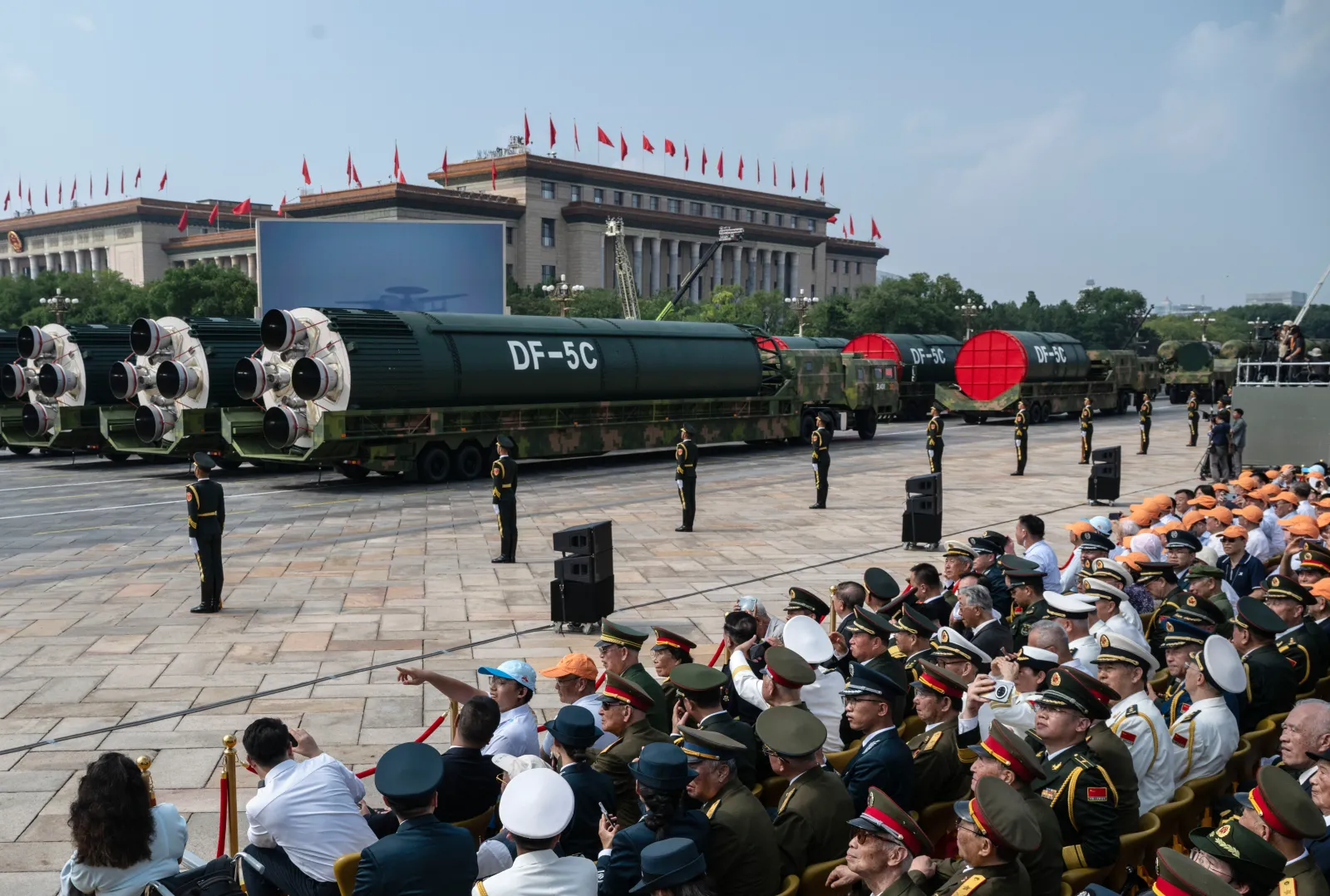 ...
...Beijing’s arsenal stands at 600 nuclear warheads, according to the Stockholm International Peace Research Institute, which noted an addition of around 100 new warheads per year since 2023. The stockpile of the U.S. is 5,177 and Russia around 5,500. While China could have over 1,000 nuclear weapons by 2030, according to U.S. Department of Defense estimates, that’s far from achieving parity with its rivals, as Trump suggested.
“That’s why China turned down President Trump’s suggestion earlier this year that China should join the U.S.-Russia nuclear disarmament talks,” Zhiqun Zhu, professor of political science and international relations at Bucknell University, Lewisburg, told Newsweek. “China does not consider itself in the same league of nuclear powers as the U.S. and Russia.”
China’s motive for developing its nuclear weapons capability is also different to Moscow’s, according to Ryan Brobst, deputy director of the Center on Military and Political Power at the Foundation for Defense of Democracies, a Washington, D.C.-based think tank. “Russia is seeking to overturn the world structure, whereas China is trying to co-opt it,” he told Newsweek. “China has generally been a more cautious nuclear power than Russia, and it speaks to the way that the two powers are approaching their role in the world.
“China would see the use of nuclear weapons as greatly destabilizing,” he added. “China is definitely trying to signal that its nuclear arsenal is growing and maturing, but that’s different than wanting another country to actually use nuclear weapons.”
Expanding Arsenal
China is a signatory to the Nuclear Non-Proliferation Treaty but is the only one among the five recognized nuclear powers actively expanding its arsenal. The Center for Strategic and International Studies think tank noted that after five years of secrecy, China’s Victory Day parade revealed its full nuclear triad and five nuclear capabilities that can all reach the continental United States.
This expanding nuclear arsenal, reportedly housed by three new intercontinental ballistic missile silo fields, includes land-based missiles and dual-capable systems, like the DF-26. “Beijing has its own strategic interests to advance, including over the Taiwan Strait, and it certainly doesn’t want to be dragged by another nuclear conflict, initiated by another country, [to] which China would need to devote resources to manage,” said Zhao Nuclear from the Policy Program and Carnegie China.
“Putin’s willingness to risk nuclear conflict contradicts Chinese interest, and this was true in 2022, and I think it will remain true for the future,” he added. Muddying the waters are Putin’s unconfirmed claims about the Burevestnik missile, tested in October, which he has described as “unmatched in the world.” Putin also touted the Poseidon nuclear-powered underwater drone that can deliver a nuclear warhead at a time when Trump had been teasing a summit in Budapest with the Russian leader, later canceled, to end the war.
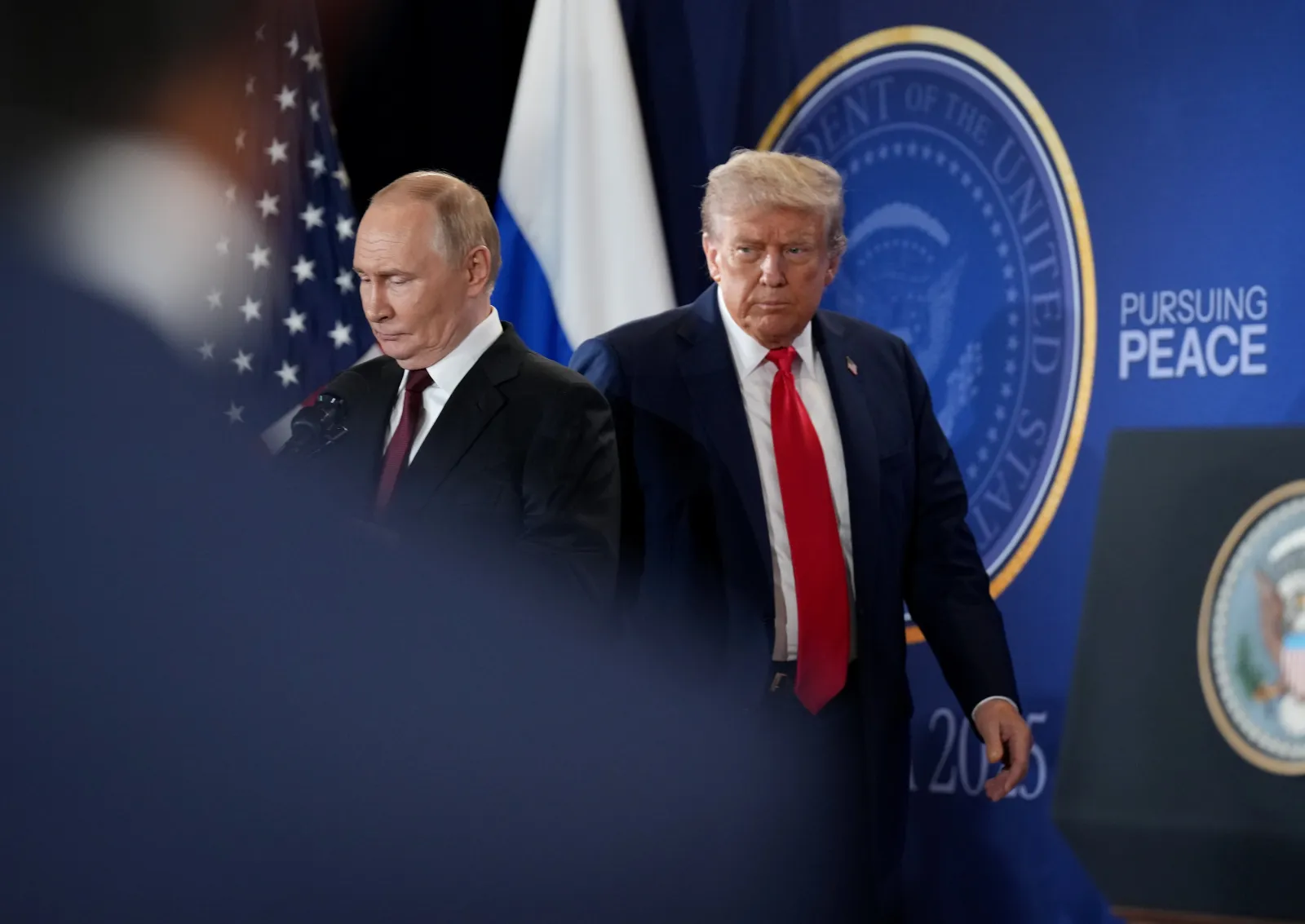 ...
...In his Truth Social post, Trump announced that “Because of other countries testing programs, I have instructed the Department of War to start testing our Nuclear Weapons on an equal basis.”
Russia conducted its last test in 1990, the U.S. in 1992 and China in 1996, with North Korea the only country to light the nuclear fuse this century, most recently in 2017, cementing its pariah status.
Trump did not clarify if tests would be full-scale explosive ones breaking a decades-long moratorium and pointing to a reprise of the Cold War suspicions that had previously brought adversaries to the brink of World War Three.
Liu, from the Chinese Embassy, said in his statement that China hopes the U.S. “will earnestly abide by its obligations under the Comprehensive Nuclear-Test-Ban Treaty” and “take concrete actions to safeguard the international nuclear disarmament and non-proliferation regime.”
Zhu, from Bucknell University, said Beijing continues to oppose the use or threat to use nuclear weapons and supports nuclear disarmaments. “However, Trump’s decision to resume nuclear tests may complicate the situation, with both Russia and China likely to resume their nuclear tests too,” he said.
The China-Russia partnership may be presented as “no limits” but it may have a time limit. Just a decade ago, Russia was wargaming nuclear war scenarios against China, according to documents leaked to the Financial Times in 2024.
“I consider China, in terms of non-use of nuclear weapons, to be a positive force, at least for the next 10 to 15 years,” said Ukrainian historian Plokhy.
Request Reprint & LicensingSubmit CorrectionView Editorial & AI Guidelines Add Newsweek as a preferred source on Google to see more of our trusted coverage when you search.
Recommended For You
 NewsSNAP Benefits Map Shows How Many People Face Being Removed in Each State4 min read
 PoliticsOther Republicans Could Resign Following Marjorie Taylor Greene—reports3 min read
 PoliticsState Democrats Extend Influence Over Party Amid Turmoil in DC7 min read
 PoliticsErika Kirk Says Turning Point Would Support a Vance 2028 Presidential Bid5 min read
 WorldRepublican Says US ‘About to Go In’ to Venezuela, With Oil a Key Reason4 min read
 PoliticsZohran Mamdani Reveals ‘Weirdest’ Thing He Saw at White House4 min read
Trending
 MoneyNew ‘Cash Law’ Could Change Grocery Store Rules3 min read
 SnowfallWinter Storm Warning Issued As 25 Inches of Snow To Strike5 min read
 U.S. Economy‘Mass Blackout’ Starts Today: What to Know3 min read
 Home PricesPrice Correction ‘Worse Than 2008’ Coming To US Housing Market—Analyst5 min read
 National Weather ServiceWinter Storm Alert Issued as 12 Inches of Snow Set To Hit3 min read