 ...
...“I find the whole conversation about how it started not just interesting, but necessary.”
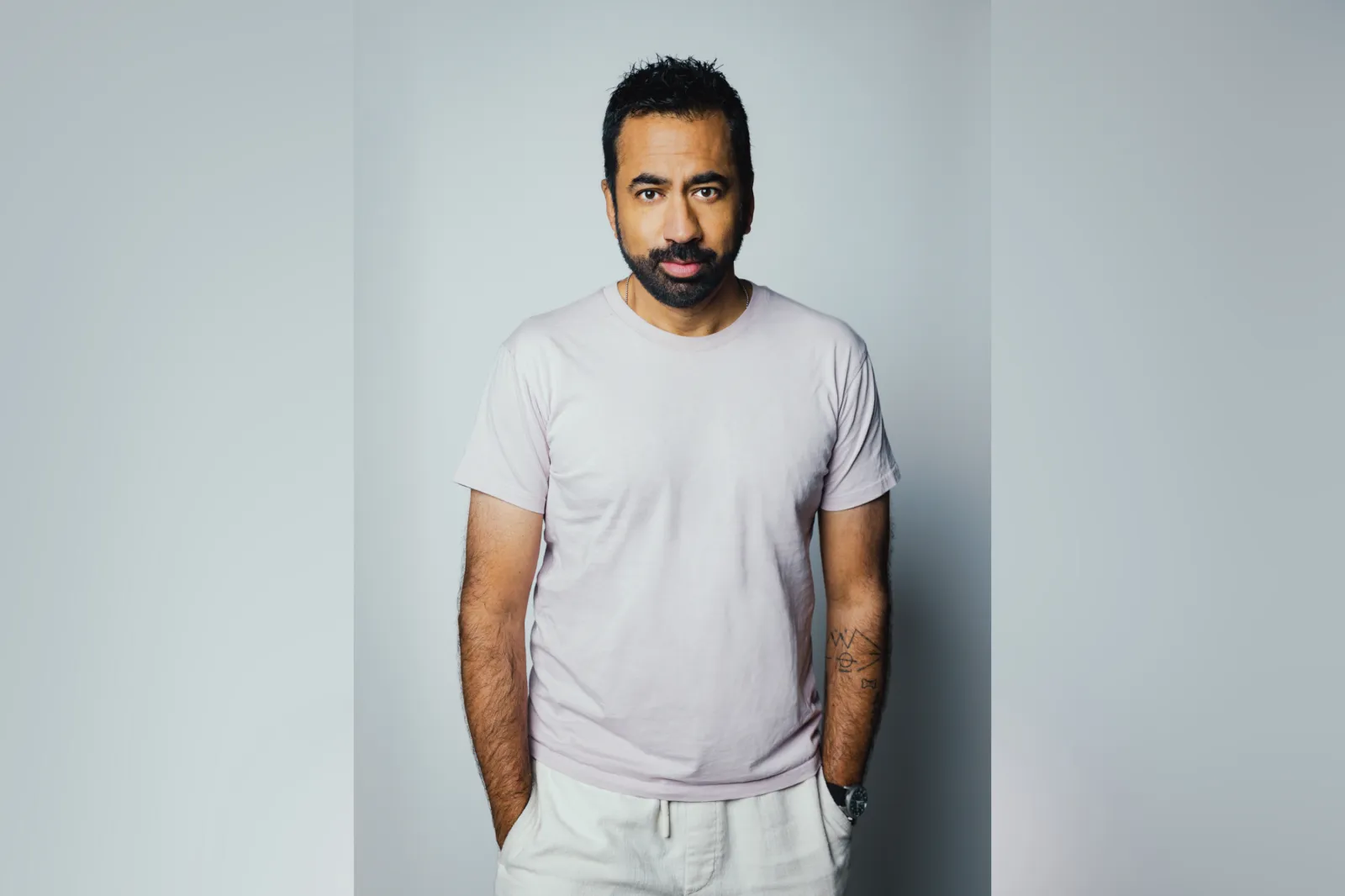
Initially, Kal Penn was hesitant to do a podcast because “every actor has a podcast.” Fortunately for us, he created Here We Go Again, focused on why history keeps repeating itself. “I loved the fact that you could talk about history repeating itself through pop culture, through politics. But it’s not a political podcast by any means.” That said, Penn, an actor who took a break from Hollywood to work in the Obama administration, still very much has a foot in advocacy. “If you wanna go through the death spiral of social media and make yourself anxious,” go for it, he says, but he’s not going to join. Instead, he’s going to invite people to “come knock on doors...it’s gonna move the needle on real conversations.” And one thing fans continue to discuss is their love for his Harold & Kumar franchise. Recounting a time he ran into political adviser Karl Rove and found out he was a fan, Penn realized, “as long as we stay truthful to the characters, the hope is that as polarized as this world is, we can still make a movie for everybody.”
SUBSCRIBE TO THE PARTING SHOT WITH H. ALAN SCOTT ON APPLE PODCASTS OR SPOTIFY AND WATCH ON YOUTUBE
Editor's Note: This conversation has been edited and condensed for publication.
So I actually just interviewed Ed Helms about SNAFU. You being on his network of podcasts just feels like a great fit.
Yeah, that's how it's been feeling developing it and getting it up and running, too. I've been a huge fan of Ed's for a while, he was in one of the Harold and Kumar with us. I just think the world of him. And I like that he is both funny, inquisitive, uplifting, kind of all at the same time. And I had held off on doing my own podcast because part of it was just like super self-conscious about the fact that every actor has a podcast. Unless I have a real hook of something that feels authentic to me, I was like, I don't wanna do it just to do it. And there's so many great podcasts, obviously, that are out there. So when we started talking about this idea, I loved the fact that you could talk about history repeating itself through pop culture, through politics. But it's not a political podcast by any means. I find institutions really curious. I'm fascinated by them. And when institutional memory goes away, I'm also fascinated by that. I mean, look, I'm an actor. I moved out to L.A. in college. Hollywood 20 years ago was so completely different than it is now in terms of the content it's making and all of that. And I think that was one of the things that initially made me so fascinated by it. So to work with Ed and that whole team on something that is storytelling, that's an arc, like our first episode, our first guest was Bill Nye, and the topic was the space race. And so the arc there was, the space race in the '80s was because of the Soviet Union in the U.S. and competition. The space race today seems to be between billionaires. So what changed? How has that evolved? And then what can we expect for the future? We had Pete Buttigieg on, and this was probably like the least political podcast he's done. He's also a friend, very gracious of him to come on. But the fun thing about having somebody who was the former transportation secretary on is yes, we did talk about infrastructure, which is not, I think, what we called the episode, because it's such a horrific thing to sell somebody on.
It’s not sexy. Although, I would listen to it.
Me too. The nerdy part of me, too, but in making it palatable, it's like, okay, you talk about when Eisenhower, when the U.S. invested in bridges and highways and all of this.
He created the highway system. It's fascinating.
Exactly, yes, yes. But then, also what I love about doing this podcast is I completely selfishly can ask pet peeve questions of people. So I'm like, "Pete, you were transportation secretary, how come when your plane is actually early, they make you wait for like 30 minutes for a gate, and the captain will say something like, ‘Well, the folks on the ground just didn't know that we were coming in early.’" Yes, they did. They knew exactly where we were the entire time. That's how this works. So how come there's no gate? And there is an answer to that. So he obviously knew the answer to this and walked us through what it was, but that's the other joy of this, is that it's not serious. And I think the hope is that the listener leaves an episode with an understanding of an in-depth conversation with an expert on a particular topic. And also recognizing where we fit in to all of this. It's not preachy, it doesn't end with like, "Here's how you can get involved." But you just feel a little more educated and a little bit more uplifted.
One of my favorite things about this podcast is that connection to history, and the connection it has to modern times. For example, we’re talking about health care right now in this country. I think back to when President Johnson signed Medicare into law. Getting rid of Medicare would be a very hard thing to do these days, because it’s become an expected thing in our lives.
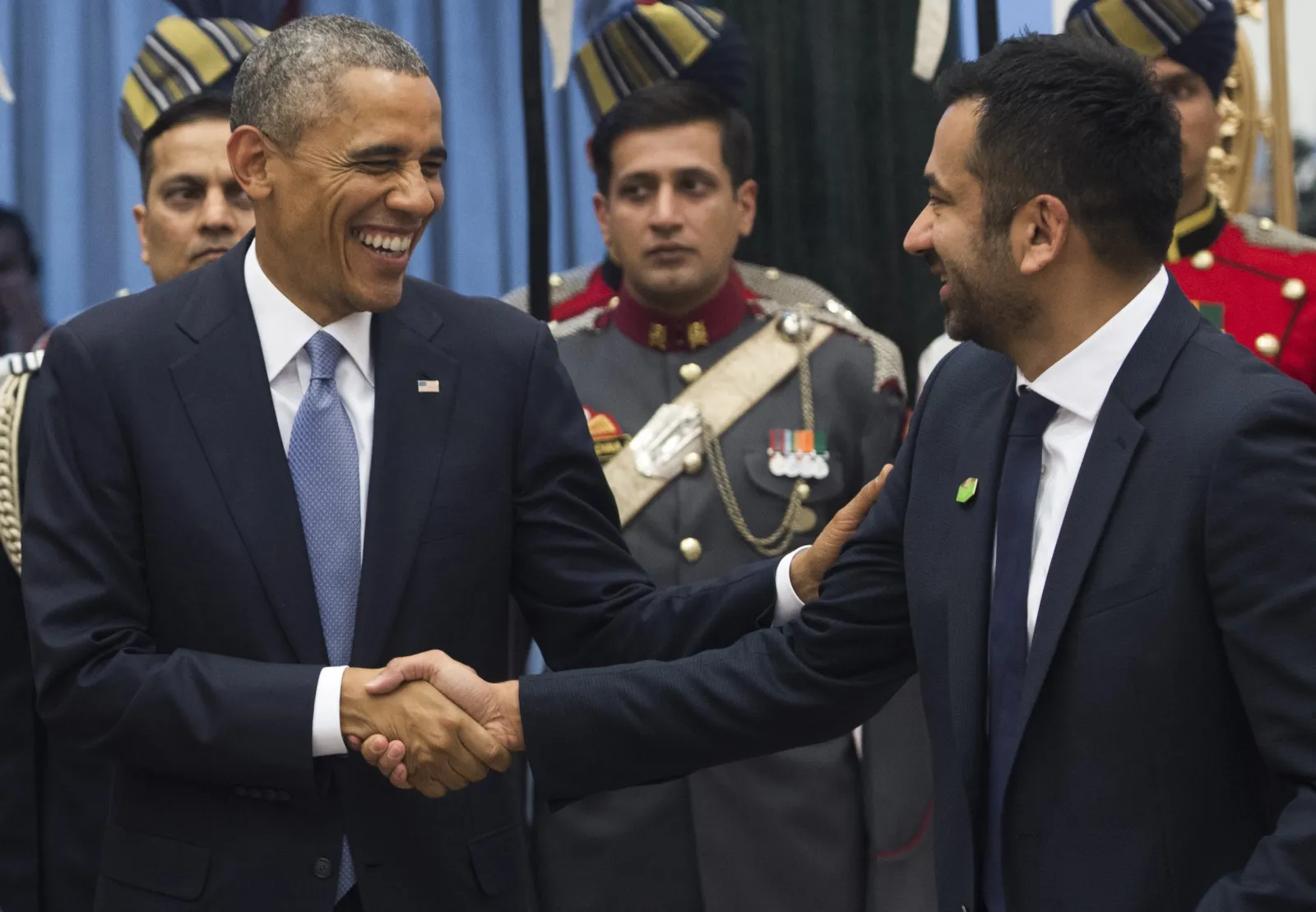
Yeah, 100 percent. Look, anytime something in politics or business is codified in a way that makes it—I'll never say that you can't ever repeal certain big things, because it's a crazy time we live in—but yeah, when you have something that people rely on that's steadfast, I find the whole conversation about how it started not just interesting, but necessary for us to remember why we have this, and then also how can you build on it? When you look at the good things that are still possible in business, in finance, in government, whatever it is, there's precedent for things. And to look at it and say, here's how stuff works, I think is a positive. I'll give you another example that's actually like, it has nothing to do with my podcast, but I'm always mindful of it since we look both back, present, and forward in all our topics, is, I'm a pretty left-leaning guy, not that that comes up in our episodes really, but when people today, a lot of these young kids today, will say things like, "Oh, Obama's such a disappointment. He's such a moderate, blah, blah blah." To me, that means that that was a progressive administration that worked. If through a 2025 lens, you're looking back and saying that the things he did were moderate by today's standards, that means they were effective. Could he have gotten more of a lot of the things that those of us on the left would have probably wanted? Yeah, of course. But there's no magic time machine, right? If you're 20 years old and you grew up with things like the Affordable Care Act and the repeal of Don't Ask, Don't Tell and marriage equality—not that that was him, but under his presidency it happened—those are all things that are just normal to you. So that means that the goalposts have moved, and they should always be moving if we're having honest conversations about the trajectory of things.
 ...
...An example of this is, a couple years, I had cancer. I got it right before the Affordable Care Act became law. If the ACA hadn’t passed, my pre-existing condition would have prevented me from getting insurance. That’s just one example of how these laws that become historical benchmarks have very real impacts on people's lives.
It's great. And those are the stories I remember when I was at the White House, when we were working on the Affordable Care Act, and it was one of those things where the national media, especially cable news, they would run stories that are a little bit sensational or whatever. It's all talking head stuff, right? For cable news. But it was local news where the story that you just told was happening all across the country and local news affiliates, the nightly news, where they [would] interview people who said, this person has this particular medical condition and here's how this bill would help. And that really moved mountains because it showed people this is not just something that a bunch of dudes in suits are arguing about on CNN. It's something that affects, intimately affects, people in our own communities. These interviews are like outside of the school that you know or the grocery store. And I still feel like those are some of the more pivotal ways of getting things done is [through] those personal stories.
I suspect you’re a little like me in that I’m the friend in my friend group everybody comes to to be like, “Can they do that?” And sometimes it’s annoying. For example, everyone is asking me if Trump can run for a third time, and I’m like, “GUYS! Did you listen in civics class?” It feels a little bit like a conversation to distract from other, more important news. Do you get angry with stupidity from people you love?
Oh, you knew the answer to this when you asked. Yes, I do, and I think you probably have the same perspective on this because of what we do for a living, that those types of conversations are obviously a phenomenal distraction, a purposeful distraction. Our friends in the media, and I'm not slamming it because we both work in it happily, but there's a difference between a legitimate article and a clickbaity, scary article so that they can sell ad space and pay our salaries. That's just the reality of it. And I've gotten to the point where it's very hard to not get angry at your friends when they do all this. But I just very simply have stopped responding with anything that takes the bait and I'm just like, "Hey, here’s an event that you can do. Here's a friend who's running for office if you wanna come knock on doors with us. It's not a thing I'm putting on social media. It's an official event." It's just like a thing that I've decided I'm gonna do in my life because it's gonna move the needle on real conversations. If you wanna go through the death spiral of social media and make yourself anxious and then have two glasses of wine with a Xanax in order to sleep, be my guest, but my way of going about it is a little bit different, and you're welcome to come join.
What are some areas of history or things that history repeating itself that you're either currently exploring or eager to explore?
There are two that stand out. We did an episode, we haven't dropped it yet, but with my friend Alok Vaid-Menon, they’re a fantastic stand-up comedian artist. And it's about gender and gender roles, and they know so much on the history of this and also where we are now. It was such a light, fun conversation about fashion, about insecurity, about who we are as a society. And I am not the expert with these guests, right? So, when the guests talk about the past and they're usually the ones living the present and they are leaders in where things are going to the future. So with Alok, for example, they were just telling me about the past, but also talking very eloquently through and through what's happening now and also getting rid of the distraction part of things and into where we're going. We did one that I'm equally excited about with Lilly Singh. And Lilly was the first, I might be getting some of this wrong, but I believe Lilly was the first woman of color with her own late-night show when she took over that slot, right? She's great, she's so funny. The conversation with her was about how she was one of the original YouTube content creators. So, when YouTube exploded, she really rose this meteoric rise with the characters that she was doing. And she started doing them in her parents' basement in Toronto, and then now has her own company. And the conversation with her was about, okay, things started digitally. She is a woman of color with these characters that no network executive would have given her a show to do, so, she did it on her own. The technology changed. We had YouTube. And then she segued from that to doing her own late-night show to having a movie come out and now as network TV is almost fully dead, especially in the late night space, she's going back to a lot of digital content. And so the things evolved. But the conversation with her then is about the past, how she got to this place. What's happened since, why go back to doing digital content, the control that you have over it, the point of view that you can share that's your own. And in her case, too, it was timely. I mean, all of the conversations around [Jimmy] Kimmel and [Stephen] Colbert's cancelation and what that was like for her as a woman who was doing this show during COVID. They didn't properly, the network didn't properly invest in her. Resources or writer's rooms, at least in what I say not properly, at a commensurate level to other men in that space. So none of these conversations are, none of our guests have been like, "Woe is me, I've had it so hard." They're just sharing the struggles that they've gone through to get the success that they have. And so we see like, oh, these are things that thankfully would never happen again, or in the case of Lilly’s conversation, she just wrote this phenomenal movie called Doin' It, a great comedy that's out right now, and even talking to her about the way that the industry didn't necessarily know what to do with that film and what a labor of love it is for her to get it off the table. It's those types of connections that I've been really fascinated to explore. And it's just funny. Like, Alok is a stand-up comedian, so when they do an interview, we've been friends for years, but it's such a funny and uplifting conversation.
The conversations around technology are fascinating to me. Like, people were afraid of television at one time. Eventually we got bored of that and tuned to the internet. We get bored of whatever new technology comes to move on to the next thing. Yet we still have this outrage at change.
I have a good friend, she's my old neighbor, lives here in New York [City]. She's 104 years old. Her name is Beulah. She is a retired actor. And some of her early stuff was theater, radio, that kind of stuff. And explaining to her what a podcast is, I basically found myself saying, "It's like I have my own radio show, except you can listen to it on your phone." And it was just like such an underwhelming description. She was like, "All right, well, I don't know why you would want to do that. But all right. I love it." But you're right. As things change and come around, we have growing pains with them. I mean, look, I think a necessary scary freak-out thing is how AI impacts all these things, but yes, of course, technological changes. Even look at the last just couple years, it used to be that like, "Oh, there's amazing content on streamers." And streamers really are the reason that there's so much diversity in content, not just racial, ethnic , etc., but like the types of shows that you can watch and the international content. But then they've gone from like, "Cool, I'll subscribe to this. I'll get rid of my cable." And now it's like, "Oh, we're also gonna have ads on Hulu and Netflix." So this is TV! It's just TV now. [laughs]
Looking back to history, is there a moment in history that this current political moment that we're heading toward with the midterm elections reminds you of?
I'm thankfully young enough and not enough of a history buff myself to not have a good frame of reference for that. But what I will say is, I think this last couple of weeks, you saw Democrats around the country sweep, and it's a range of Democrats. You have somebody like a Democratic Socialist like Zohran [Mamdani] in New York, but then you also have far more conservative Democrats who won. So in many ways, I feel like it's a clear referendum on the Trump administration and Republicans and the fact that people's needs aren't being addressed. That said, we're talking on a day when Chuck Schumer and the Democrats have for some insane reason agreed to flush all of their political capital down the toilet and say that, "Yeah, we'll agree to get nothing out of a government shutdown deal"’ So I don't know, what I see is a huge generational shift, not just on the left, but also the right. But for our purposes, we were talking to the left. Huge generational shift. You have a Chuck Schumer, a Hakeem Jeffries, Nancy Pelosi is retiring. And I'm not trying to throw them under the bus, but it's just so clear that they're completely out of touch with younger voters. I think it's probably a moment where my hope is that you'll see a shift where there's more capable leadership and people who are in the pipeline who have started paying their dues or just at the beginning of many of their careers. So, I'm curious to see where that all ends, but it is definitely a wild time, even for folks who don't pay attention to politics.
While we might be polarized, one thing that polarization inspires is different types of people to run for office. And so like, this is probably the most chaotic we've been in U.S. history, at least modern U.S. history, but I think you're seeing that in some candidates, on both sides of the aisle, there’s diversity in beliefs.
Yes, and it is very cool to see. I mean, objectively, if you're a fan of politics, you can look at people on the right and see these candidates and be like, "Wow, this is a direct response to somebody not feeling like their current Republican rep is representing them properly." Take the Hakeem example. I've been reading a bunch about how he might have a primary challenger, this guy, Chi Ossé, who's in the New York City Council, who I think is fantastic. I haven't spoken to him about whether he's running or not, but I've just, from the little things that show up on social media, I'm like, "Oh, that would be such a great matchup." And that's happening all across the country. You're right. It is hopeful. And this is why I'm saying, [when] you were asking about what happens when friends ask dumb en- of-the-world questions. And these are great examples of them. Like just go knock on doors for an afternoon for the candidate of your choice. It doesn't have to be in a sexy election.
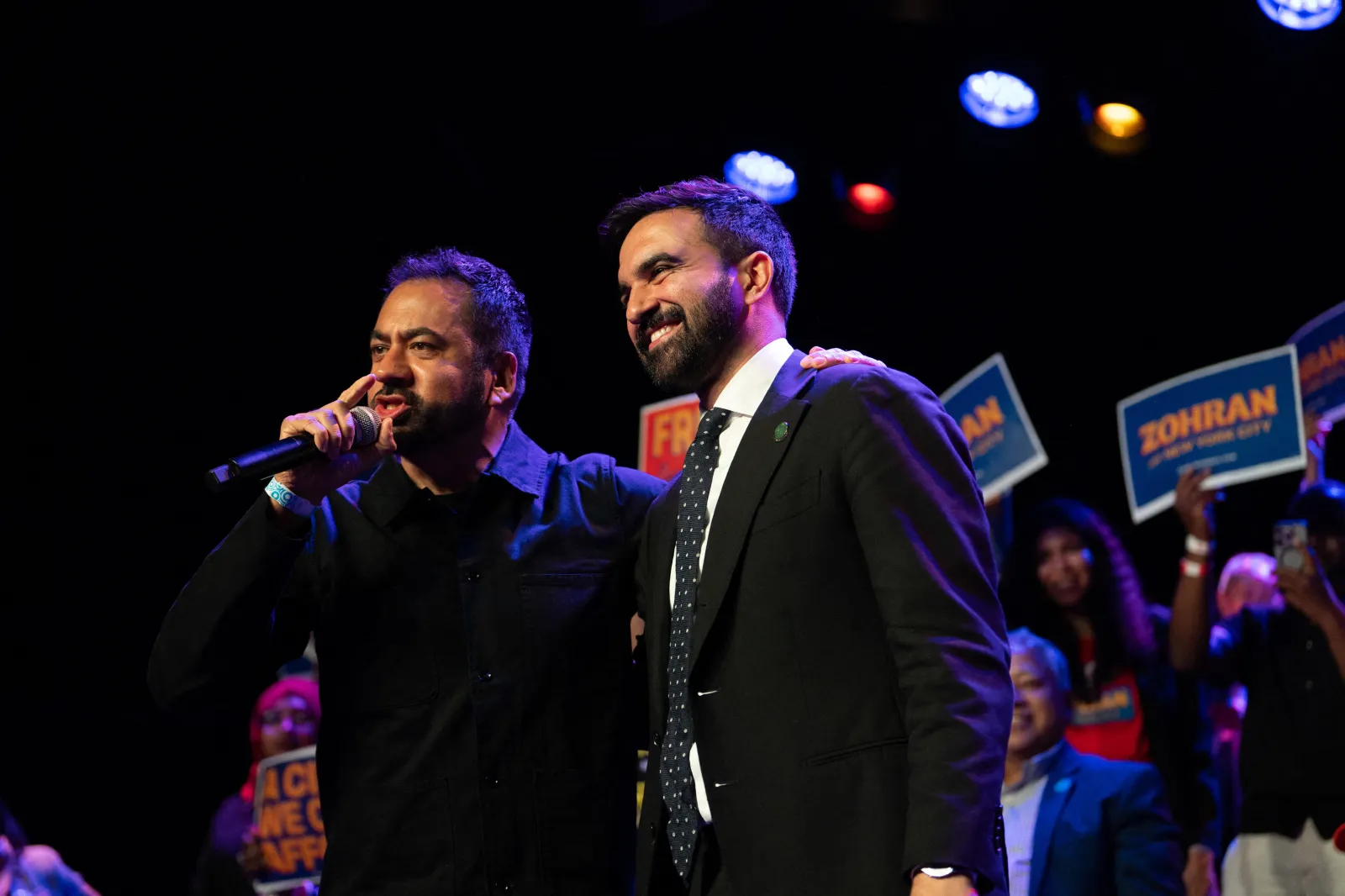 ...
...In fact, it should be in the unsexy elections. It should be for the local elections. That’s where everything happens. I mean, the other thing that that makes me angry people being like, "Zohran 2032." And politics aside, he can’t do that. It’s simple civics.
He wasn't born in the country. Also, I don't know if you get this, too. But this happened when I was working for Obama and it's also happened recently with Zohran, who I've known since he was 14 years old, so I'm heavily biased here, and I helped him out with his state assembly stuff and his work with the taxi workers. Very proud of him. But it was only this last week when I posted some stuff from election night that I had friends texting me, "Aw bro, you're so lucky that you got to work on that campaign." I’m like, "What? Go back through your texts three years ago, I asked you if you wanted to come to a coffee fundraiser I was doing for his state assembly race and you said, 'no.'" Just cause you read about it and you like the guy now, which is great—and he needs a lot of support as he moves forward—but like go find the 10 other people who you align with and just go help them out for an afternoon, you know?
Speaking of Zohran, one thing I find fascinating is how he won, by the amount he won by, despite some of the backlash he received from Jewish voters, particularly what he’s said about Israel. In the past, that would be an immediate end of campaign event, but it wasn’t in 2025. How do you think he did it?
Yeah, I mean, look, I think it's probably a little too early to speculate how that affects everything broadly, but I think one of the things he did a great job at was coalition building from the very beginning. And loud voices always get a lot of attention, and I'm not trying to minimize that, but he also had an incredible amount of support from the Jewish community as well, especially on the progressive wing. And so, there was a lot of what you see in politics as like getting validation from your friends in different communities as well. But I just think he was genuine. He wanted to meet people where they are. I mean, he’s been like this since he was 14. He's never scared to have a conversation with anybody who might disagree with him. He's willing to listen. One of the first things he did in deciding to run for mayor was talking to Trump voters in New York City and saying, "What made you go and vote for Donald Trump?" From these communities, what convinced you that he had a plan and had your best interest in mind. And that's just kind of the basic work that a lot of people don't do. And it's going to sound cliche now that he's the mayor-elect, but like, this is a guy who clearly loves his city. Also, that gives you the perspective that most people are not single-issue voters. The affordability crisis is very real. I always laugh when I hear people say, "Well, we got to move to Connecticut." You know who's not talking about the luxury of getting that second house and moving to Connecticut? The people who are going to benefit from the free bus pilot program. Yes, exactly. So it's as if we're not even having the same conversation. But to answer your question, I just think it's a combination of coalition building really addressing the needs of working New Yorkers and giving folks a reason to show up.
Well, and I would add to that too, similar to Pete Buttigieg going on Fox News. There is this level of, I'm going to meet you where you're at, no matter where you’re at, and not going to give you the typical spin that you're used to getting.
It's very refreshing, and the bullsh** meter was so obvious, I think also because of the other candidates who were running against him. Do you remember that crowded debate where the question was like, "Oh, where would you visit first if you were mayor?" And everybody said Israel. And Zohran is like, I" wouldn't go anywhere. I'm mayor of New York City." But then also, because he knew what he was kind of being baited, he said, also, I just want to be clear, my commitment is to Jewish New Yorkers. I will meet Jewish New Yorkers here in New York. I'm not going to take a trip to Israel as the mayor of New York City that ignores our own New Yorkers, right? So,even that simple thing was very, very worth looking at.
Well, my last question for you, and it's a fun one: when I think of the legacy of Harold and Kumar, I think to myself, wouldn't it be fun if they went to the White House? Especially now!
I love these characters, and the opportunity to have done those three movies so much that I would consider myself lucky if I was a hundred years old doing Harold and Kumar 58. So, they could go anywhere as far as I'm concerned. Kumar is way cooler than I will ever be. It’s a joy to play him. There's conversations around a fourth movie, the writers have a deal, and I think they're trying to work through the mechanics. So hopefully we end up being able to make a fourth movie. I don't know where they go, but what I love about all three movies, they’re three totally different movies, but they're all a satire and there are jokes within jokes. Jon Hurwitz and Hayden Schlossberg, really talented guys who created the franchise and wrote all three movies, always craft layer on layer on layers. The second movie we had a wonderful comedian named James Adomian who played George Bush. And a couple months after Harold and Kumar Escape from Guantanamo Bay comes out, I was in D.C., Bush was still president. And I ran into Karl Rove, who was one of Bush's senior advisers. And I went up to him, because in my head I was like, "Oh, you'll piss off so many of your friends if you get a selfie with this guy." So I go, "Mr. Rove, can I take a picture with you? My name is...," and he goes, "Kal Penn, I know exactly who you are. You're hilarious." And I was like, "What?" And the look on my face must have given it away. He goes "What, am I not supposed to find you funny?" I'm like, "No, no. What have you seen?" He goes, "Well, Harold and Kumar Escape From Guantanamo Bay just came out." I'm, like, "You've seen Harold and Kumar Escape from Guatanamo Bay?" He goes, "Yeah, was I not supposed to find that funny?" Let me just tell you. We have our personal politics, obviously. But the whole goal of these movies is to make everybody laugh. And if you knew that that was satire, and if you and people at the Bush White House could just laugh at it because it's a dumb, fun, stoner comedy that, I want these movies to be movies that you can watch with your crazy uncle at Thanksgiving. And so getting that validation from Karl Rove that he was a Harold and Kumar fan was so wonderful. And I know there are gonna be people listening to this whose like blood is boiling because of the politics of all of this. But I'm just saying from the artistic perspective, the way you asked that question, that is my answer, that like, as long as we stay truthful to the characters, the hope is that as polarized as this world is, we can still make a movie for everybody.
Request Reprint & LicensingSubmit CorrectionView Editorial & AI Guidelines Add Newsweek as a preferred source on Google to see more of our trusted coverage when you search.
Recommended For You
 Entertainment‘Wicked’ Writer Confirms Glinda Is Getting Her Own Spin-Off3 min read
 NewsTaylor Swift’s Disney Documentary Release Could Be Blocked by Aileen Cannon4 min read
 Reality TVThe Church of Satan Calls Lisa Barlow a ‘Clout Chaser’3 min read
 Celebrity NewsPublic Standing in Respect for Princess Kate Compared to Meghan Online4 min read
 EssaysThe Story of Walt Disney’s Biggest Gamble: Disneyland6 min read
 TVLandman Season 2 Episode 3 – Release Date, How To Watch2 min read
Trending
 MoneyNew ‘Cash Law’ Could Change Grocery Store Rules3 min read
 SnowfallWinter Storm Warning Issued As 25 Inches of Snow To Strike5 min read
 U.S. Economy‘Mass Blackout’ Starts Today: What to Know3 min read
 Home PricesPrice Correction ‘Worse Than 2008’ Coming To US Housing Market—Analyst5 min read
 National Weather ServiceWinter Storm Alert Issued as 12 Inches of Snow Set To Hit3 min read