![Read an Excerpt From a New Making-Of Book Chronicling the History of the Fast & Furious Franchise [Exclusive]](https://static0.colliderimages.com/wordpress/wp-content/uploads/2025/10/f9-the-fast-saga-vin-diesel.jpg)
 Vin Diesel Driving in The Fast and Furious.Image via Universal Pictures
 By
Adam Blevins
Published 23 minutes ago
Adam Blevins began working in the entertainment industry in 2022 as a Staff Writer for Agents of Fandom, where he progressed to Senior Editor and interviewed talent from Marvel Studios, House of the Dragon, and Planet of the Apes. He joined Collider as a News Author in April 2024, was promoted to a Senior position in December 2024, and has written over 3,000 articles for the site, including exclusives relating to Avengers: Doomsday, The Penguin, Star Wars: Skeleton Crew, and more. He primarily writes about the latest box office numbers and the hottest movies and TV shows on streaming, while also covering superhero and sci-fi news. He has completed a set visit for The Chosen and even has several months of experience writing Gaming Features at ScreenRant. You can find him on X, LinkedIn, and Muckrack.
Sign in to your Collider account
Summary
Generate a summary of this story
follow
Follow
followed
Followed
Like
Like
Thread
Log in
Here is a fact-based summary of the story contents:
Try something different:
Show me the facts
Explain it like I’m 5
Give me a lighthearted recap
By
Adam Blevins
Published 23 minutes ago
Adam Blevins began working in the entertainment industry in 2022 as a Staff Writer for Agents of Fandom, where he progressed to Senior Editor and interviewed talent from Marvel Studios, House of the Dragon, and Planet of the Apes. He joined Collider as a News Author in April 2024, was promoted to a Senior position in December 2024, and has written over 3,000 articles for the site, including exclusives relating to Avengers: Doomsday, The Penguin, Star Wars: Skeleton Crew, and more. He primarily writes about the latest box office numbers and the hottest movies and TV shows on streaming, while also covering superhero and sci-fi news. He has completed a set visit for The Chosen and even has several months of experience writing Gaming Features at ScreenRant. You can find him on X, LinkedIn, and Muckrack.
Sign in to your Collider account
Summary
Generate a summary of this story
follow
Follow
followed
Followed
Like
Like
Thread
Log in
Here is a fact-based summary of the story contents:
Try something different:
Show me the facts
Explain it like I’m 5
Give me a lighthearted recap
With eleven movies under its belt, the Fast & Furious franchise is full of some of the biggest action blockbusters the world has ever seen. Whether it’s landmark entries like Furious 7 or offshoots like Hobbs & Shaw, no action franchise has delivered entertaining action hits for as long as Fast & Furious. The Globe film critic Barry Hertz has taken it upon himself to chronicle the history of the franchise in a new book, titled Welcome to the Family: The Explosive Story Behind Fast & Furious, the Blockbusters that Supercharged the World. Collider is happy to partner with Hertz to exclusively preview a new excerpt from the book, which can be found below, along with the book’s cover.
Hertz’s expansive book is composed of nearly 200 interviews with cast and crew members from the 11-film series, and it provides an “unauthorized” look at the franchise ahead of its 25th anniversary next year. The book also features tons of never-before-reported details, including a look inside the feud between Vin Diesel and Dwayne Johnson. It also dives into why Justin Lin left the production of Fast X, and unknown fight-scene politics between Vin Diesel, Dwayne Johnson, and Jason Statham.
The Fast & Furious franchise kicked off in 2001 with The Fast and the Furious, which was more of a racing movie than a true action blockbuster. The franchise has evolved over the years with the addition of massive stars like Statham and Johnson, but it has steadfastly centered around the story of Dom Toretto and his family. The most recent franchise installment, Fast X, released in 2023, and things are set to come to a head in Fast X: Part 2, which will be the final movie in the series. It hasn’t exactly been smooth sailing for Fast X: Part 2 as the franchise races towards the finish line, but Diesel has confirmed that the final movie is happening, one way or another.
Read an Excerpt From 'Welcome to the Family: The Explosive Story Behind Fast & Furious, the Blockbusters that Supercharged the World'
 The cover of Welcome to the Family: The Explosive Story Behind Fast & Furious, the Blockbusters that Supercharged the worldImage via Grand Centeral
Below you can find a full, uncut excerpt from the book detailing the behind-the-scenes turmoil of The Fast and the Furious: Tokyo Drift. It details how Diesel’s last-second cameo came together, director Justin Lin’s reservations about making the movie, and more.
Yet these hiccups are the inevitable result of a storyteller who is testing his limits. While John Singleton’s 2 Fast suffered from extreme studio oversight—the micromanaged result of making a do-or-die follow-up under a time crunch—Cohen had been able to escape corporate scrutiny because no one had expected his film to be anything but a cheap and forgettable B movie. In its own way, Tokyo Drift was given the same benefit of such half attention. Universal’s expectations were low, allowing the opportunities to be high.
And despite Lin’s misgivings about the racial elements of Cohen’s first film, the two filmmakers—separated by generation, background, and approach—are spiritually aligned in at least a few crucial ways. They are both fascinated by and able to speak the language of youth culture in ways that feel genuine instead of opportunistic. It also cannot be a purely cosmic coincidence that Cohen made his directorial bones with the Bruce Lee biopic Dragon, while Lin would follow up Tokyo Drift with Finishing the Game, a mockumentary about the martial arts icon’s final movie, Game of Death. But beyond the directors’ fascination with Bruce Lee—with Asian culture in general—there is a shared pioneering spirit: They push, they fight, they win.
And then there’s that ending.
/////////////////////
Today, Diesel’s last-minute appearance at the end of Tokyo Drift is the stuff of Hollywood legend—the cameo that saved not only a single movie but an entire studio’s multibillion-dollar franchise fortune. But the reality of putting together the finale is less tall-tale legend and more an example of the Hollywood Butterfly Effect: If one person hadn’t flapped their wings in exactly the right way, the fabric of our block-buster reality today would look a whole lot different.
When Universal initially test-screened the movie in early 2006, its final minutes were spent not with Dom but with Sean, Neela, Twinkie, and Earl as they toasted Han’s memory atop the cliffs outside Tokyo. Agreeing to go their separate ways, the characters hopped into their cars to take one last drift. Cut to black, roll credits.
It wasn’t working. Test-screen responses kept coming back generally praising the film, especially the character of Han, but slamming the ending, which felt like a downer. And if it was a Fast & Furious movie, where were Dom and Brian? Going over the audience feedback one day, Lin and his editors, Raskin and Matsumoto, sat in the cutting room struggling to figure out their next steps.
That was when Raskin threw out a crazy idea. “I suggested, seventy-five percent joking, ‘What if there’s a big race, and we see Sean is getting ready. And then a car pulls up beside him, the window rolls down, and it’s Vin Diesel!’” Raskin recalls with a chuckle. “I’m not saying this was a good idea. We were never going to get Vin—it was very clear that he wanted nothing to do with these movies anymore. We all laughed about it, and that was that.”
But then Lin came back the next day; he couldn’t stop thinking about Raskin’s idea. And now he had a way to tie Han into it: What if Han and Dom were old friends and Toretto showed up in Japan to pay his respects? Not only would that stitch Tokyo Drift into the larger Fast-verse, it’d also push Han farther into the larger mythology. (It also echoed Chris Morgan’s original Fast 3 pitch, in which Dom heads to Tokyo to save a friend.) But having the idea and figuring out a way to convince Diesel to participate were two very different things.
At Universal, negotiations between the studio and the actor were fraught. Diesel felt that he was entitled to a huge payday to return, even for a cameo, and while executives were eager to have him back, there remained hurt feelings over how the 2 Fast talks had played out. The first Fast movie had made Diesel a star, and the feeling around town was that the actor should be more grateful, especially given how he was struggling outside the walled garden of Fast. While xXx had been a solid hit that had outgrossed 2 Fast worldwide, Diesel once again balked at the sequel options that Joe Roth’s Revolution Studios presented for that series. In a bizarre case of Hollywood déjà vu, Diesel would watch another one of his nascent franchises passed off to a different actor (in this case, Ice Cube). Meanwhile, the sequel that Diesel did agree to star in, The Chronicles of Riddick, fell on its face at the box office.
With neither Diesel’s more dramatic work (Find Me Guilty) nor his comedic efforts (The Pacifier) getting critical or box-office traction, the actor was in a tight spot. Still, he wouldn’t budge. What he could not have counted on, though, was the Tokyo Drift team’s unrelenting, almost comically maniacal determination to get what they wanted; specifically, the damn-the-consequences commitment of Universal’s Kirschenbaum. The executive, who had joined the studio as director of development in 2001 before rising through the ranks, had formed an attached-at-the-hip relationship with Lin early during the production of Tokyo Drift. A natural raconteur, Kirsch exuded a contagious sense of wild-eyed optimism both in the boardroom and on the set, balancing Lin’s more serious pragmatism. He could be a joker who tested the corporate limits, too. One day, he showed up to the office in a button-down shirt open to his navel, a giant red, green, and yellow marijuana-leaf pendant hanging down his chest. Before his coworkers could ask him what the hell he was wearing, Kirsch jumped on the punch line, saying something along the lines of “Oh, shit, my bad. I was called for jury duty this morning, and I knew that they weren’t going to put a guy looking like this up there.”
All of which was what led Kirsch to one day break onto Diesel’s property.
According to several sources on the production, Kirsch managed to convince various Universal departments—including marketing, which held the keys to the cash kingdom—to contribute to a lump-sum payment that would secure Diesel’s participation in Tokyo Drift, a “prince’s ransom,” as some called it. But the star was refusing to take a meeting or even watch a rough cut of the film. Fed up with the star’s runaround, Kirsch drove up to Diesel’s LA home unannounced—a check in one hand, a copy of the movie in the other—and rang the buzzer at the front gate. After no one answered, Kirsch did what any sensible Hollywood executive would do: He hopped the gate, ran up to the door, and convinced the shocked Diesel to let him in to make his case. Security dogs nipping at Kirsch’s heel might also have been present, depending on whom you talk to.
The gambit worked. Kirsch got Diesel to agree to a sit-down with Lin, during which the star and director realized that they clicked on a deep level. Lin’s idea for connecting Dom and Han dovetailed perfectly with Diesel’s love of complex, almost Byzantine mythology, which he had developed from his lifelong love of Dungeons & Dragons. After four hours spent chatting by Diesel’s pool, the star and director mapped out the franchise’s path all the way to the end of Fast & Furious 6.
Of course, Diesel still wanted the money—and some nonfinancial commitments. For starters, he demanded a producer credit on any Fast movies going forward. Plus, he wanted Universal to give his production company, One Race Films, which he ran with his sister, Samantha Vincent, the rights to the Riddick character. It was a deal.
Just six weeks out from Tokyo Drift’s June 16, 2006, release date, Lin and his team—still recovering from a brutal postproduction process, which included one final marathon session in the editing suite that started on a Saturday morning and didn’t end till the following Thursday—put together a two-day shoot in LA to add the new Diesel-filled ending.
The first day consisted of filming extras partying in what’s meant to be the same Tokyo garage where the movie’s first drift race took place. The second day was all about Diesel, with Dom appearing for a few seconds while driving a 1970 Plymouth Road Runner, telling Sean that he had come to Tokyo to pay his respects to his old friend Han, “who was like family.” Raskin and Matsumoto edited the footage quickly, with the new version test-screening less than a week after it was shot. “That last scene comes on, the camera dollies over to see who’s behind the wheel of this car, and the audience explodes like I’ve never seen,” says Raskin. “No one was expecting it. You could feel the excitement in the room. The test score numbers leapt up like twenty points.”
Universal executives were thrilled, too, even though the studio’s business affairs people wanted to kill themselves given the financial strings that came attached with Diesel’s participation, which they now had to untangle. “It was a visceral and emotional response—and it goes back to the feeling of that first movie, which we felt way back during that first research screening. It’s lightning in a bottle,” says Universal’s Marc Shmuger, who was now cochairman of the studio, Snider having departed for DreamWorks in early 2006. “Vin’s presence, with that music . . . ‘alchemy’ is the word that I keep returning to.”
Predictably, given the franchise’s history, the reviews were middling. And the North American box office was barely there with just $62 million, half of what 2 Fast had earned. But the fans who did go to the theater—and then later obsessively rewatched the film on cable and DVD—were not only thrilled by Diesel’s appearance but also received a tantalizing taste of what a Justin Lin movie could do. Just as Rob Cohen’s first film had turned a generation of American kids on to import and tuner car culture, Tokyo Drift opened the world that much wider; Hollywood’s summer movies could be globalized.
For the first time, a Fast movie earned more abroad than at home, with Lin’s film taking in a global box-office haul of $95 million, pushing it past profitability. Lin’s internationally minded vision was being embraced—and just as Hollywood would soon turn to foreign markets more than ever.
But Lin and his new Fast family were just getting started.
After directing Tokyo Drift, Lin later returned to direct Fast & Furious (2009), Fast Five (2011), and Fast & Furious 6 (2013). He took a few years off before returning to the franchise in 2021 with F9: The Fast Saga, but Louis Leterrier has taken the directorial reins for the most recent and upcoming installments after Lin backed out of directing Fast X.
Check out the exclusive excerpt and cover above and stay tuned to Collider for more updates and coverage of the Fast & Furious franchise. You can pick up Welcome to the Family: The Explosive Story Behind Fast & Furious, the Blockbusters that Supercharged the World at local retailers and online today.
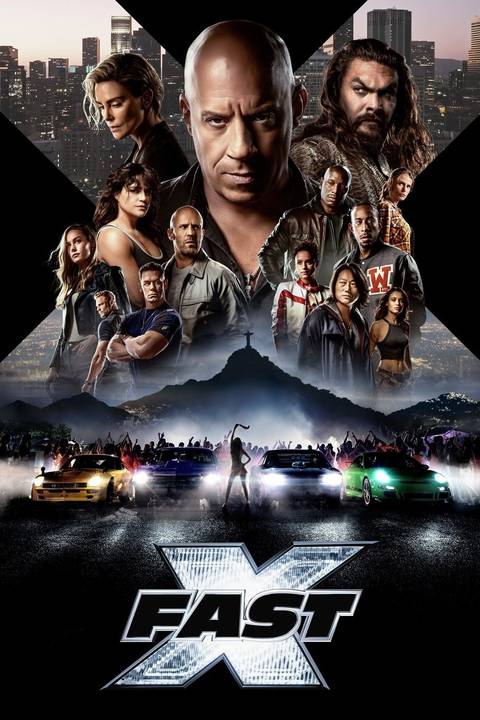
Fast X
Like PG-13 Action Crime Thriller Adventure Mystery Release Date May 19, 2023 Runtime 142 minutes Director Louis Leterrier Writers Justin Lin, Dan Mazeau Producers Jeff Kirschenbaum, Neal H. Moritz, Vin Diesel, Samantha Vincent Prequel(s) Fast & Furious, 2 Fast 2 Furious, The Fast and the Furious: Tokyo Drift, The Fast and the Furious, Fast 5, Fast & Furious 6, Furious 7, Fast and Furious 8, F9: The Fast Saga1 Sequel(s) Fast and Furious 11, Fast & Furious 12 Franchise(s) Fast and FuriousCast
See All-
 Vin Diesel
Dominic Toretto
Vin Diesel
Dominic Toretto
-
 Michelle Rodriguez
Letty Ortiz
Michelle Rodriguez
Letty Ortiz
 Expand
Collapse
Expand
Collapse
-
 Fast and Furious
-
 Vin Diesel
We want to hear from you! Share your opinions in the thread below and remember to keep it respectful.
Be the first to post Images Attachment(s) Please respect our community guidelines. No links, inappropriate language, or spam.Your comment has not been saved
Send confirmation emailThis thread is open for discussion.
Be the first to post your thoughts.
- Terms
- Privacy
- Feedback
 59 minutes ago
‘Stranger Things’ Creators Reveal the Fate of Their Upcoming Spin-Off Before Their Move to Paramount
 2 hours ago
First Teaser for ABC's 'Scrubs' Reboot Reunites the Staff of Sacred Heart Hospital
 3 hours ago
Benedict Cumberbatch Is a Dad Destroyed By Grief in New 'The Thing With Feathers' Sneak Peek [Exclusive]
 4 hours ago
Get a First Look at the New ‘Legend of Vox Machina’ Graphic Novel About the Briarwoods’ Rise to Power [Exclusive]
More from our brands

50 Best New Movies on Streaming to Watch Right Now
42 Greatest R-Rated Adult Anime Series of All Time

The 25 Best Anime From The 90s, Ranked
The Best Anime Movies On Crunchyroll, Ranked


It's Officially the End of an Era for The Fast & The Furious

Why Vin Diesel Wasn’t in 2 Fast 2 Furious


Fast & Furious Would’ve Been A Very Different Franchise If This 19-Year-Old Movie Hadn’t Flopped
What To Watch
 July 20, 2025
The 72 Best Movies on Netflix Right Now
Trending Now
July 20, 2025
The 72 Best Movies on Netflix Right Now
Trending Now
 Get a First Look at One of WWE’s Biggest Stars in Star Trek Spin-Off ‘Starfleet Academy’ [Exclusive]
 Jason Statham’s Surprise Sleeper Hit Finally Returns to Streaming Ahead of the Sequel
 Glen Powell Prunes the Family Tree in Darkly Comedic First Trailer for His New A24 Thriller