- News
- World
- Americas
- US Crime News
Rhonda Marie Fisher’s murder in April 1987 in Denver, Colorado, went unsolved for nearly 40 years
Io Dodds in San FranciscoThursday 04 December 2025 01:25 GMT
 CloseCold case of woman’s murder in seaside town solved after 20 years due to DNA found on cigarette butt
The latest headlines from our reporters across the US sent straight to your inbox each weekday
Your briefing on the latest headlines from across the US
Your briefing on the latest headlines from across the US
Email*SIGN UPI would like to be emailed about offers, events and updates from The Independent. Read our Privacy notice
For nearly four decades, the murder of 30-year-old Rhonda Marie Fisher in the foothills outside Denver went unsolved.
A passing motorist had discovered Fisher's body on April 1, 1987, at the bottom of an embankment in rural Douglas County, south of the Colorado capital. Yet despite suspects, the killer was never found.
Now Douglas County police say they have identified the culprit as “one of Colorado's most prolific serial killers”, based on 38-year-old DNA evidence from the inside of a paper bag.
The county sheriff's office announced Wednesday that cold case investigators had found a match with convicted murderer Vincent Darrell Groves, who is believed responsible for at least 12 homicides and possibly more than 20.
Groves targeted numerous women between 1978 and 1988, both before and after a five-year sentence for second-degree murder. He was finally put away for good in 1990, only to die of liver failure in prison in 1996.
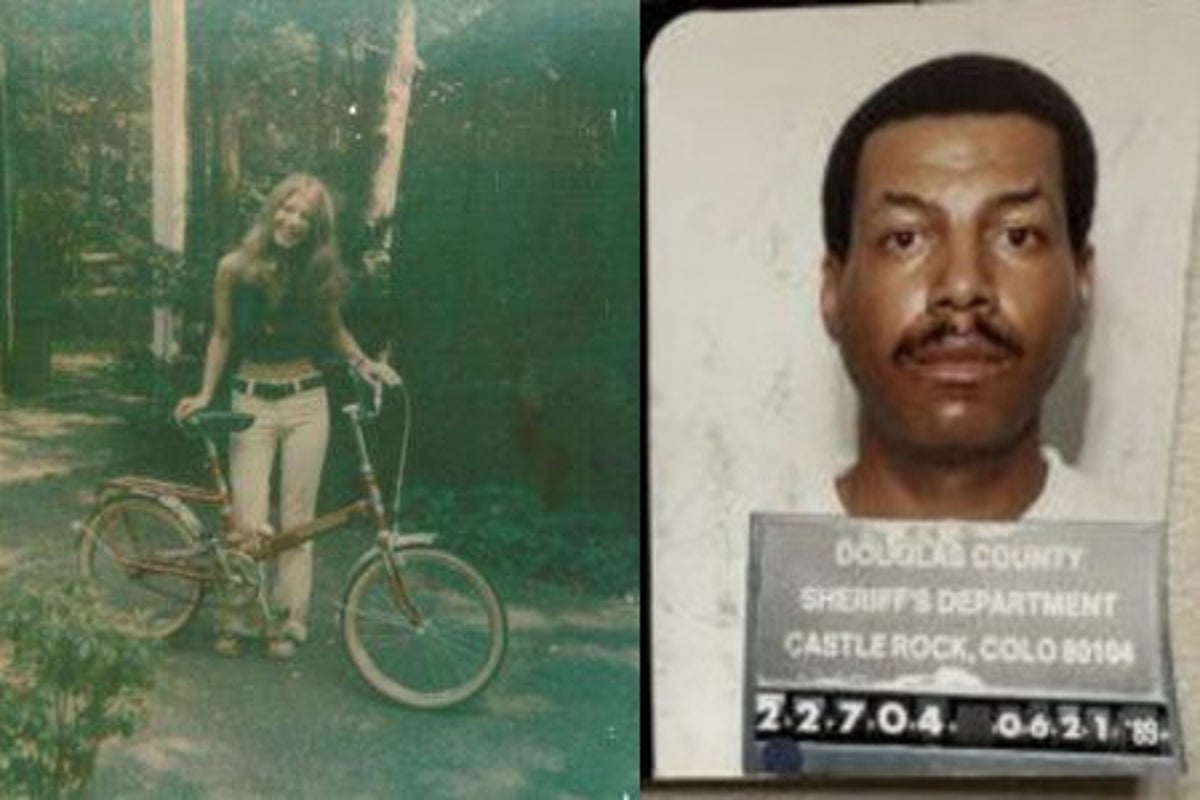
 Left: Rhonda Marie Fisher. Right: Vincent Groves (Douglas County Sheriff's Office)
"While Vincent Groves cannot be held accountable in a court of law, we hope this long-awaited resolution brings answers and a measure of peace to Rhonda Fisher’s family and friends," said Douglas County Sheriff Darren Weekly.
"This case is a testament to our commitment to pursue justice for every victim — no matter how much time has passed."
According to police, Fisher was last seen in urban Denver the night before her death, walking north on Monaco St towards Leetsdale Dr. Her body showed signs of sexual assault and strangulation.
Investigators initially suspected one of several acquaintances whom she'd stayed with during the past few weeks, but ultimately cleared them of suspicion. Probes of multiple known killers found no connection, as did a new round of DNA testing in 2017.
But early this year, the sheriff's office Cold Case Unit reopened the case. According to local broadcaster 9NEWS, the new investigators realized that one piece of evidence had never been tested: the paper bags placed over Fisher's hands by the original coroner at the crime scene, which were intended to preserve her body for later analysis.
"DNA was not a science that was being focused on or even known in 1987," one Douglas County detective told 9NEWS. "It was very, very new, and the coroner wouldn't have been doing it for that purpose, but thankfully they did."
The DNA on the inside of the paper bags matched that of Vincent Groves, who had been found guilty of second-degree murder in 1982, only to be released on parole in 1987.
Within a month, he attempted to murder a sex worker and soon became a prolific strangler of young women. He was finally imprisoned for life in 1990, in what sheriffs say was one of "the earliest successful uses of DNA evidence in Colorado courts."
"Obtaining a viable DNA profile from paper bags nearly four decades old is exceptionally rare and underscores the extraordinary value of meticulous evidence preservation and periodic forensic reevaluation," the sheriff's office said.