- News
- World
- Americas
The education minister has hailed the move as a ‘cultural change’
Ap CorrespondentWednesday 03 December 2025 16:17 GMT
 CloseRelated: Mother of murdered teen calls on phone companies to do more to protect school children
The latest headlines from our reporters across the US sent straight to your inbox each weekday
Your briefing on the latest headlines from across the US
Your briefing on the latest headlines from across the US
Email*SIGN UPI would like to be emailed about offers, events and updates from The Independent. Read our Privacy notice
Chile has officially banned the use of mobile phones and other smart devices in elementary and middle school classrooms, a move set to take effect next year.
The South American nation becomes the latest to impose such restrictions on young students, aiming to mitigate the detrimental effects of smartphone use and reduce classroom distractions.
The step aligns Chile with other countries, including France, Brazil, Hungary, the Netherlands, and China, which have implemented various levels of smartphone restrictions in schools.
Education Minister Nicolás Cataldo hailed the decision on social media, saying: "We are advancing a cultural change for children and adolescents who today, more than ever, need to see each other’s faces again, socialize during recess, and regain concentration to further boost learning."
The ban, initially approved in principle by the Senate earlier this year, saw its final amendments passed by a vote in Chile's lower house of Congress late Tuesday.
After a debate, lawmakers overwhelmingly endorsed the updated legislation banning smartphone use during class hours, except during emergencies and for educational and other purposes specified under the law.
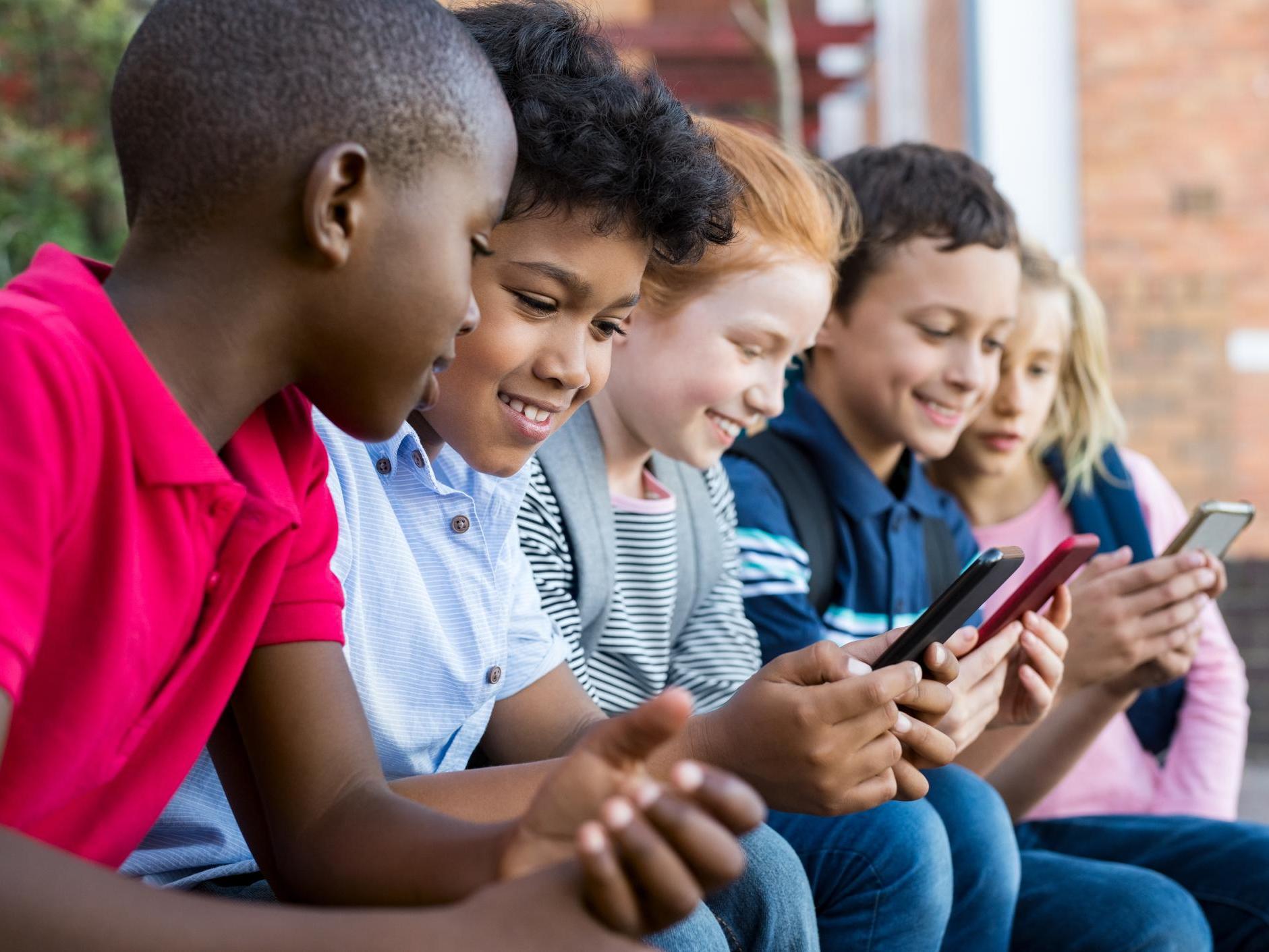 The country’s education minister says children need to socialize during recess (Getty Images/iStockphoto)
The bill must be signed by President Gabriel Boric before taking effect nationwide at the start of the 2026 school year.
In response to rising concerns about young people and their mental health, parents and teachers in Chile have lobbied for such a law for years, arguing that the use of smartphones impairs students’ learning and emotional development.
A school in the capital, Santiago, this year launched a successful pilot program that blocks cellphone signals.
More than half of all Chilean students reported digital devices disrupting their learning, according to the most recent international study by the Organization for Economic Cooperation and Development, which evaluates student academic performance.
Recommended Teenager joins legal action to get phones banned in schools across England
 Another state bans cellphones in schools over social media fears
 No TikTok, no Instagram: Chilean school blocks phones as students rediscover real-world connections
Phone ban has ‘potential benefits’
A study in the UK said a phone ban offers “potential benefits” for school performance and pupil attainment, as well as children’s wellbeing.
An analysis – which looked at the responses from 162 secondary schools in England – suggested a “clear correlation” between an effective phone ban and better school performance.
Children at schools with an effective ban achieved exam results that were one to two grades higher compared with children at schools with “laxer policies”, the study suggested.
Secondary schools with an effective ban were more than twice as likely to be rated outstanding by the school regulator as the national average.