 By Amir DaftariShareNewsweek is a Trust Project member
From above, Benin City in southern Nigeria tells a striking story as forests and farmland give way to sprawling neighborhoods, laterite roads and industrial zones.
In just four decades, the city has swelled, growing from about 350,000 residents in 1980 to more than 2 million today—making it one of Africa's fastest-growing secondary cities.
Satellite imagery captures the scale and speed of this urban boom, providing a rare window into how the continent's urban landscape is evolving and what life looks like on the ground in rapidly expanding cities.
Newsweek has contacted Nigeria's Foreign Ministry for comment via email.
Why It Matters
Nigeria—Africa's most populous nation, with almost 240 million residents—is experiencing urban growth that few countries can match. While Lagos dominates headlines as a megacity of 17 million, secondary cities such as Benin are quietly becoming engines of economic activity, innovation and migration.
These cities are shaping regional economies, providing jobs and attracting young populations, but they also face intense pressures on housing, transportation and public services. Rapid urbanization can strain water and sanitation systems, increase flood and heat risks, and drive the growth of informal settlements. Tracking and managing these changes is critical not only for Nigeria's future but also as a model for urban planning across Africa, where secondary cities are projected to see some of the fastest growth in the world.
What To Know
These smaller cities often experience faster growth rates than their larger counterparts, reshaping regional economies, straining infrastructure and testing governments' capacity to provide essential services. Understanding their expansion is crucial for urban planners, environmental scientists and policymakers trying to manage rapid population growth sustainably.

 ...
...Benin City's growth has been driven by multiple factors. Rural-to-urban migration brought residents seeking employment in industry, government and services. The University of Benin draws tens of thousands of students, contributing to a younger and more mobile population. The city also serves as a production hub for sand, rubber and aluminum, while hosting state government offices that anchor its administrative and political importance.
Satellite imagery shows the transformation in striking detail. Landsat 7 captured the city in 2002, when it was home to about 1 million residents. Large patches of farmland, savanna and forest remained intact. By 2025, Landsat 9 imagery showed almost double the developed land area, with more than 650 square kilometers of previously vegetated land converted to urban uses. Laterite roads, characteristic of early-stage infrastructure, thread through the city, while remaining lowland forests provide a stark green contrast.
History of Benin City
Beneath Benin City's modern growth lies a rich historical legacy. The city was once the heart of the Kingdom of Benin, a powerful precolonial state known for its sophisticated governance and monumental earthworks. It was also famous for its intricately crafted plaques, sculptures and ceremonial objects, collectively known as the Benin Bronzes.
In 1897, British forces looted the bronzes and burned the royal palace, sending the artifacts to museums across Europe and America. In recent years, institutions—including the Horniman Museum, the University of Aberdeen, Cambridge's Jesus College, the Smithsonian, and several German and Dutch museums—have returned or pledged to return them. Today, Benin City's growth unfolds alongside the revival of its cultural heritage, linking centuries-old artistry to its modern identity.
 ...
...What Happens Next
As Benin City continues its rapid growth, satellite monitoring will remain crucial for urban planning, infrastructure management and environmental oversight. By combining decades of imagery with modern mapping techniques, researchers and policymakers can help the city grow sustainably while preserving its rich cultural heritage and preparing for the next wave of urban expansion.
Request Reprint & LicensingSubmit CorrectionView Editorial & AI Guidelines Add Newsweek as a preferred source on Google to see more of our trusted coverage when you search.
Recommended For You
 U.S.Half of Gen Z Wants Crypto For Christmas3 min read
 For MembersNewsUncommon Knowledge: Will Trump Accounts Pay Off?6 min read
 NewsIRS Issues Update on Trump Accounts3 min read
 NewsMalaysia Relaunches Hunt for Missing MH370 Flight: What To Know3 min read
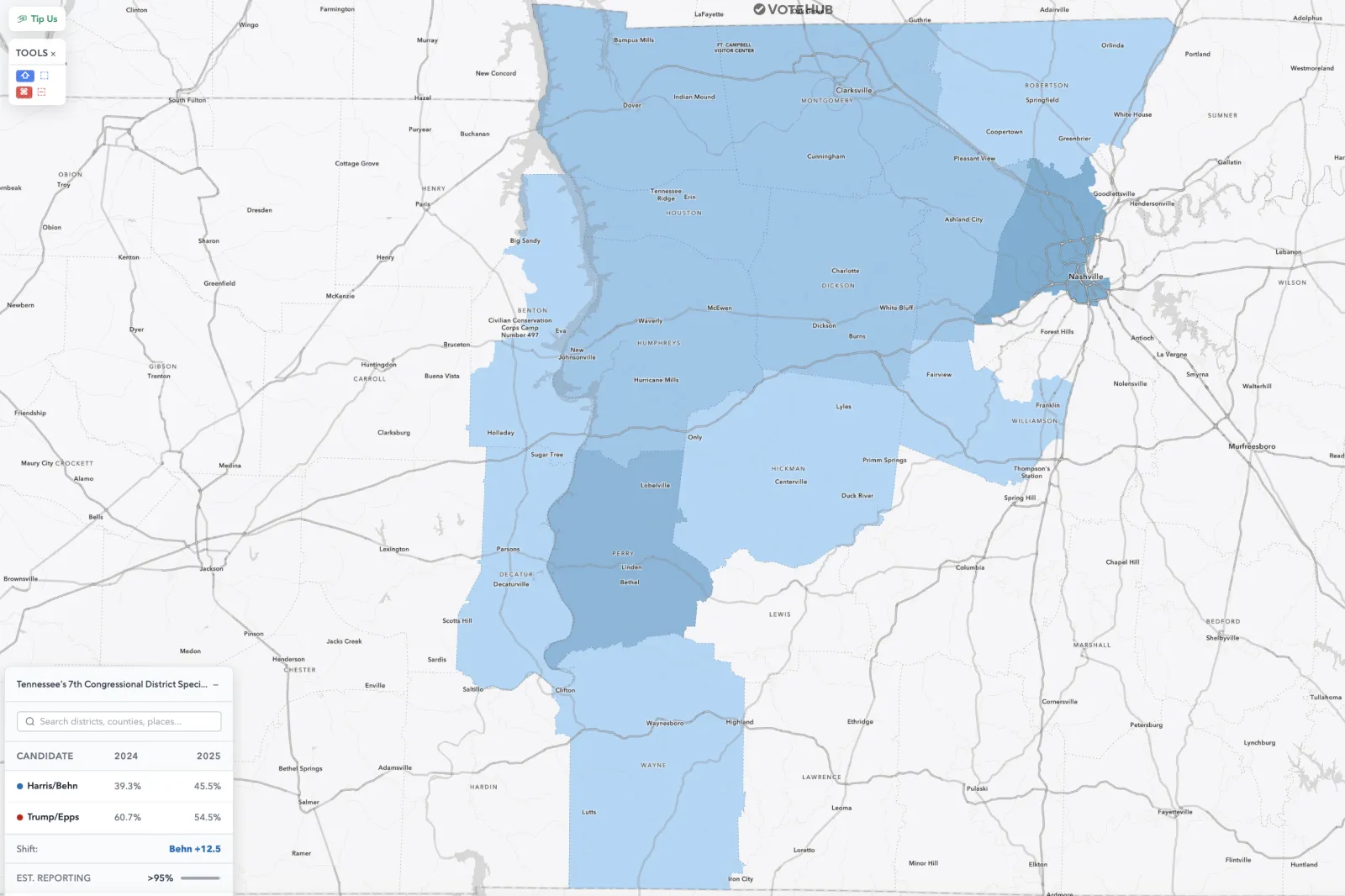 NewsTennessee Election Map Shows Huge Voter Shift From Trump to Democrats4 min read
 NewsExclusive: Democrat Targets Trump’s $175B Immigration Funds for Housing7 min read
Related Podcasts
Top Stories
NewsExclusive: Democrat Targets Trump’s $175B Immigration Funds for Housing7 min readFor MembersNewsUncommon Knowledge: Will Trump Accounts Pay Off?6 min read NewsUkraine War Live Updates: Russia Says No ‘Compromise’ Peace Deal Reached2 min read
 PoliticsDemocrat Says Trump Admin’s ‘Absurd’ Actions Will Help ICE Bill Succeed6 min read
 OpinionHas President Trump Ushered in an Era of Peace in the Middle East? Newsweek Contributors Debate6 min read
 U.S.Exclusive: Melania Trump’s Immigration Lawyer Responds to New Citizenship Bill5 min read
Trending
 WeatherList of Schools Closed Tuesday as Snowstorm Hits4 min read
 TennesseeTennessee Special Election: Behn Teases Another Run After Losing to Van Epps2 min read
 Winter StormWinter Storm Warning As 12 Inches of Snow To Hit: ‘Delay All Travel’3 min read
 ViralCat Arrives at Vet for Neuter, Staff Not Ready for What’s in the Carrier3 min read
 CitizenshipCitizenship Requirements to Change For Millions of Americans Under New Bill4 min read
Opinion
 OpinionLebanon 2.0—Shepherding the Path to Peace | Opinion4 min read
 OpinionThe Cost of Detaining Immigrants Working Legally | Opinion5 min read
 OpinionProsecuting Congress for Stating the Law: An Impeachable Offense | Opinion4 min read
 For MembersOpinionConventional Wisdom: Trump Pardons Former Honduran President3 min read
 OpinionRand Paul: My Proposal Will Improve Health Care and Lower Costs | Opinion4 min read