- News
- World
- Europe
As Moscow becomes more bullish in its hybrid warfare tactics to provoke Nato, James C. Reynolds looks at how both armies and economies compare
Wednesday 03 December 2025 10:37 GMTComments
 CloseIf Europe wants war, Russia is ready, says Putin
On The Ground newsletter: Get a weekly dispatch from our international correspondents
Get a weekly dispatch from our international correspondents
Get a weekly international news dispatch
Email*SIGN UPI would like to be emailed about offers, events and updates from The Independent. Read our Privacy notice
Vladimir Putin issued Europe with a chilling threat on Tuesday, warning that Russia was not only “ready” for war on the continent but could prosecute it with such force that there would be “nobody left to negotiate peace with” when he was finished.
Amid desperate talks to end the war in Ukraine, the Russian president said that he was not looking for another conflict - but that he would not hesitate to strike if provoked by Kyiv’s European backers.
Putin’s army has been acting “surgically” in Ukraine, he claimed. It would not exercise the same restraint in the case of a confrontation with Nato, he said.
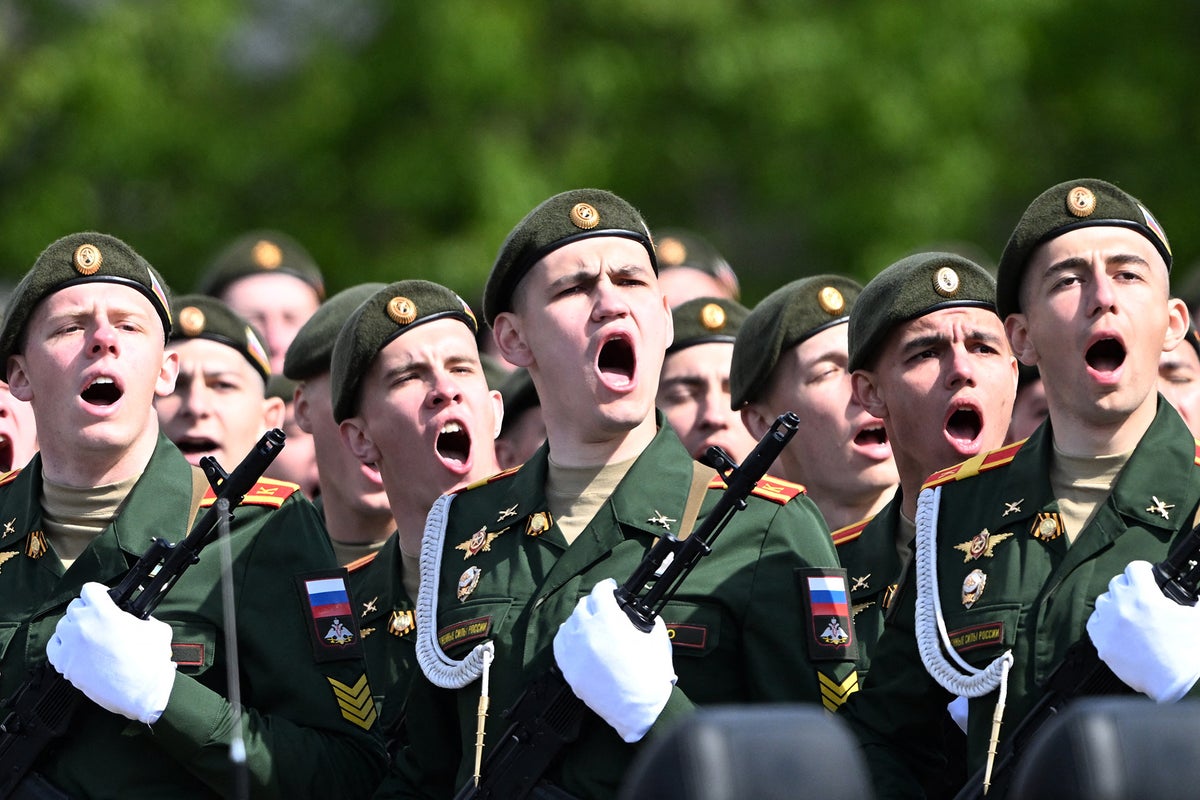
Despite all the pomp of parades and drills on Europe’s eastern frontier, the Russian army has been worn down by the long war in Ukraine. It remains, however, the largest in Europe - and sharp to the demands of modern warfare.
The Independent looks at whether Europe currently has the military and economic force to succeed on the battlefield against Russia.
 open image in galleryBritish soldiers have been training in Romania and across Europe as tensions with Russia grow (Getty)
How do both armies compare?
The Russian army has swollen to a mammoth 1.32 million active personnel over the course of the war, despite sustaining heavy losses on the battlefield. That figure eclipses any standing army on the continent.
War has allowed Putin to legislate for three expansions of his army since 2022. He aims to build the second biggest army in the world, after China, with a regular army of 1.5 million, up to 2.38 million including reserves.
Europe is only now waking up to its defence shortfall, encouraged by the perceived threat on its border and a White House administration reluctant to keep footing the bill. Spending has generally been in decline since the end of the Cold War, so its strength is in unity.
Together, Nato can field 3.14 million active personnel and 2.75 million reserves, totalling 5.89 million personnel. The bloc has more than 14,000 tanks and around 21,000 aircraft. Russia can currently draw on around 2 million reserves, totalling around 3.32 million. It has some 12,000 tanks and nearly 4,500 aircraft. Both sides have nuclear weapons.
 open image in galleryRussia’s Zapad drills on Europe’s border in 2021 (pictured) appeared much bigger than the ones this year, as troops and tanks are drawn into the war in Ukraine (AP)
The differences in spending
Donald Trump is right that Nato overwhelmingly relies on the United States for strength - though this is slowly rebalancing. Total allied spending was expected to reach $1.59 trillion in 2025, but Washington was on course to cover $980 billion of that.
If Washington failed to join a European war with Russia, Nato today would have an estimated $608 billion to put up against around $145 billion spent annually by Russia. The International Institute for Strategic Studies (IISS) said Russia’s sum could be worth upwards of $460 billion, adjusting for purchasing power.
European variation in tactics and technology would also create inefficiency, a problem a joined up Russia would not face.
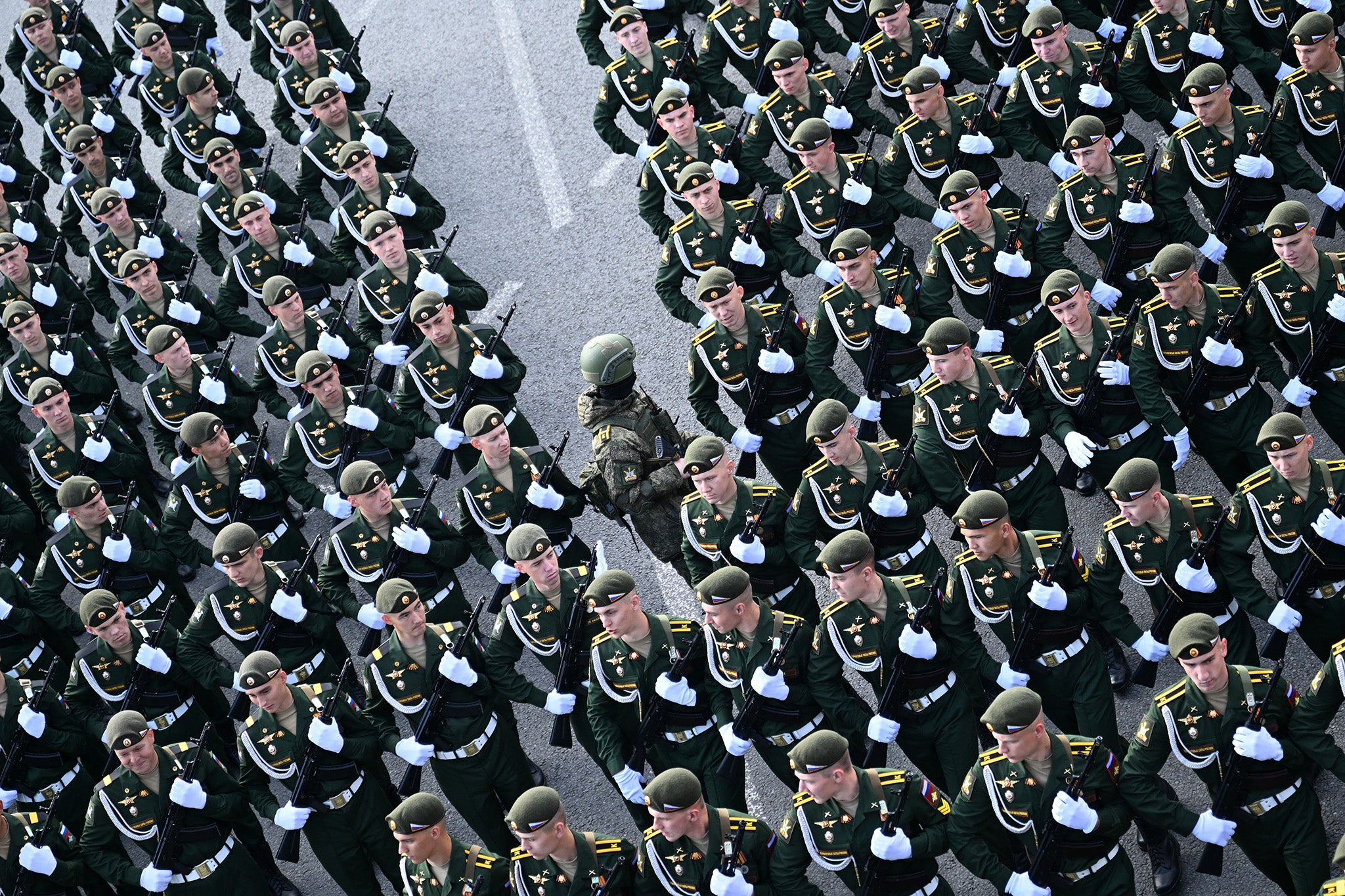 open image in galleryRussia has continued to expand its military despite sustaining heavy casualties over four years of war (AFP/Getty)
Public support in Europe is fractured
Public support would largely depend on who attacked first. But while Russia has already mobilised, European democracies would have more difficulty finding willing volunteers.
A French general only last month sparked uproar when he said France must be “prepared to lose its children” and suffer economically in the event of a war.
When UK Prime Minister Rishi Sunak proposed a national service scheme in 2024 - significantly short of conscription - only 47 per cent of the public supported it. Crucially, the younger people needed to fight a war overwhelmingly opposed it.
Then there is the cost. European businesses are still recovering from Covid as rents and energy prices rise, the latter already linked to the war in Ukraine. Mobilisation might temporarily lift sluggish economies, but a protracted conflict would disrupt trade and deter investment.
Russia, at least, had nearly a decade to tighten its monetary and fiscal policies between the 2014 annexation of Crimea and the 2022 invasion.
More about
Vladimir PutinRussiaUkraineJoin our commenting forum
Join thought-provoking conversations, follow other Independent readers and see their replies
Comments