- News
- UK
- UK Politics
Schools watchdog Ofsted has released its annual report for 2024/25.
Jasmine NordenTuesday 02 December 2025 10:17 GMT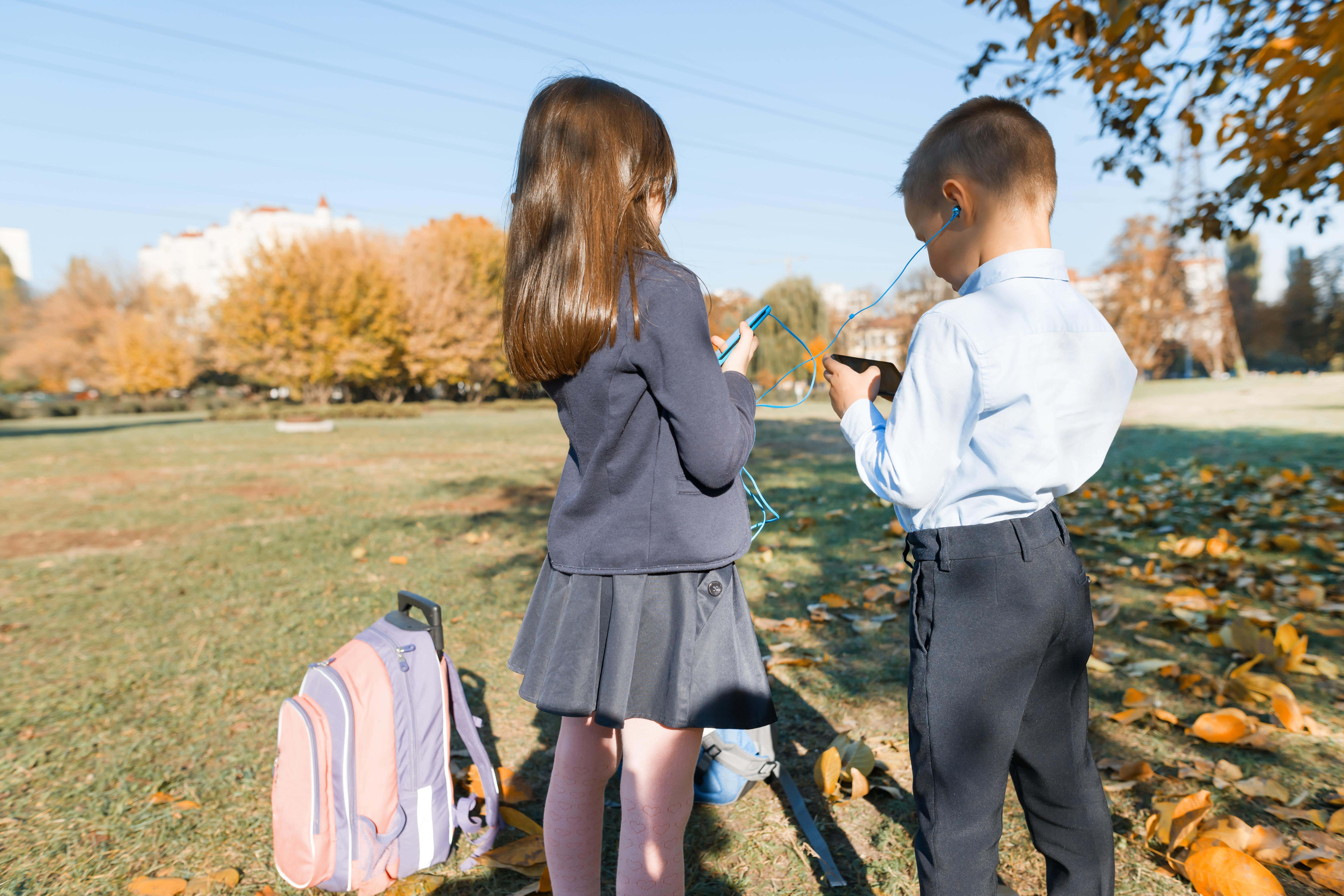 open image in galleryThere has been wide debate over whether phones should be allowed in schools (Alamy/PA)
Sign up for the View from Westminster email for expert analysis straight to your inbox
Get our free View from Westminster email
Get our free View from Westminster email
Email*SIGN UPI would like to be emailed about offers, events and updates from The Independent. Read our Privacy notice
Social media is “chipping away at attention spans” and promoting disrespectful behaviour, Ofsted’s chief inspector warned as he said schools should be a “sanctuary” for children away from their mobile phones.
Sir Martyn Oliver used his annual report to state the influence of social media “clearly plays a part” in driving disruptive behaviour through eroding children’s patience for learning.
His comments come amid an increasing debate over to what extent phones should be allowed in schools.
He said: “Access to social media for young people and mobile phone use in schools have become perennial topics of discussion.
“It’s clear to me that schools need to help their pupils navigate the risks and pitfalls of their online lives, but there is no need to facilitate access on school grounds.
“Far better to provide children with sanctuary from their mobile devices once the school gates close.”
Speaking to press on Tuesday, Sir Martyn reiterated his support for banning phones in the classroom, though he said it should be up to headteachers to make the right decision for their schools, in line with Government policy.
Asked if he would support an Australia-style ban on social media for under-16s, he said: “I think it is just wrong for children to access social media.
“Most of them have an age limit on them, and most of them just ignore the fact that children actually are using their services.”
Ofsted is increasingly hearing from teachers that behaviour plays a part in driving teachers out of the classroom, despite many schools having good policies for dealing with behaviour, Sir Martyn said in the report.
He added that “the problem of absence remains endemic across the school system”, and too many children are spending too long out of school and falling out of step with the expectations of them at school.
The report flagged that 19% more children are missing education entirely compared with last year.
“How can that be right?” Sir Martyn said to reporters.
“How can children missing entirely from education have risen by a fifth in one year? If that’s not a scandal of attendance, I don’t know what is.”
The suspension rate in schools fell slightly in autumn term 2024/25 compared with the record level of the previous year, but still remains significantly higher than pre-pandemic. Six in 10 suspensions that autumn were down to persistent disruptive behaviour.
“So why then the disruptive behaviour?” Sir Martyn said in the report. “The influence of social media, whether by chipping away at attention spans and eroding the necessary patience for learning, or by promoting disrespectful attitudes and behaviours, clearly plays a part.”
The chief inspector said he would like, under Ofsted’s new framework – which came into effect in November – to look at how attendance and behaviour policies are working for different groups of children.
In November, teenager Flossie McShea and mother-of-three Katie Moore joined two fathers seeking to legally challenge government guidance on phones in schools. Their claim for a judicial review hopes to have smartphones completely banned from schools.
In addition, Esther Ghey, mother of murdered teenager Brianna Ghey, launched a campaign this autumn for a statutory ban on phones, saying such a ban “would have really helped Brianna”.
Ms Ghey has advocated for the Government to fund lockable pouches so students cannot access phones during the day.
Analysis from the Centre for Social Justice (CSJ) on Monday suggested more than 800,000 UK children are already engaging with social media even before they start school.
The analysis applied the latest population data to previous research by internet and communications watchdog Ofcom which found that almost four in 10 parents of a three to five year-old reported that their child uses at least one social media app or site.
Former education minister Lord Nash described that research as “deeply alarming”, adding that hundreds of thousands of pre-school children are “being fed content and algorithms designed to hook adults”.
Under the former Conservative government, schools were issued with non-statutory guidance intended to stop the use of phones during the school day.
A survey by the Children’s Commissioner earlier this year found the majority of secondary schools (79%) surveyed allowed pupils to bring phones in, but said they must stay out of sight and not be used. Some 3.5% said pupils were not allowed to bring phones to school.
More recently, the Department for Education’s national behaviour survey found fewer than one in 10 (9%) secondary school leaders say their students have to hand in their mobile phones or leave them somewhere they cannot access them.
The Government maintains that schools already have the power to ban phones, and that it supports headteachers to take the steps needed to prevent disruption.
Pepe Di’iasio, general secretary of the Association of School and College Leaders, welcomed the focus on challenging behaviour and absence, and said schools need the funding and specialist support to address this.
“This reflects what we hear from school leaders and it is clear that these problems have never fully recovered from the disruption caused by the Covid pandemic,” he added.