 December
1,
2025MusicFeatureArt is getting challenging again
December
1,
2025MusicFeatureArt is getting challenging againRosalía’s otherworldly new album has captivated listeners across the globe. In an era where culture has been flattened by algorithms, are we yearning for art that challenges us?
ShareLink copied ✔️December 1, 2025MusicFeatureTextKate BevanRead More Art & PhotographyCandid photos from a Paris strip club locker room
 Life & Culture1 in 4 men believe no one will ever fall in love with them
 Art & PhotographyThese photos trace a diasporic archive of transness
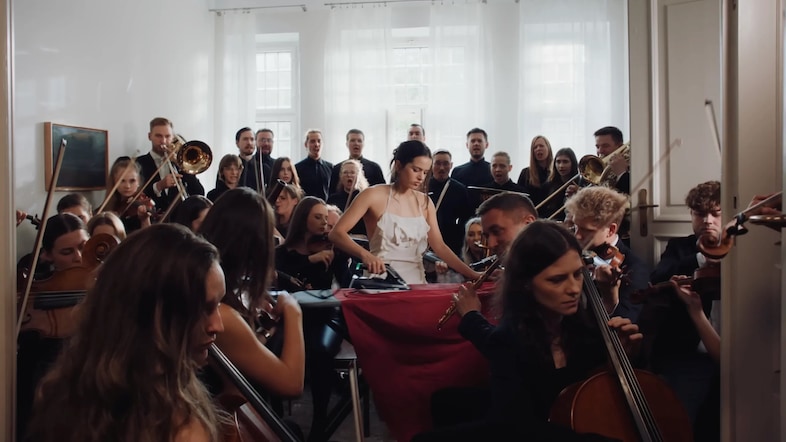
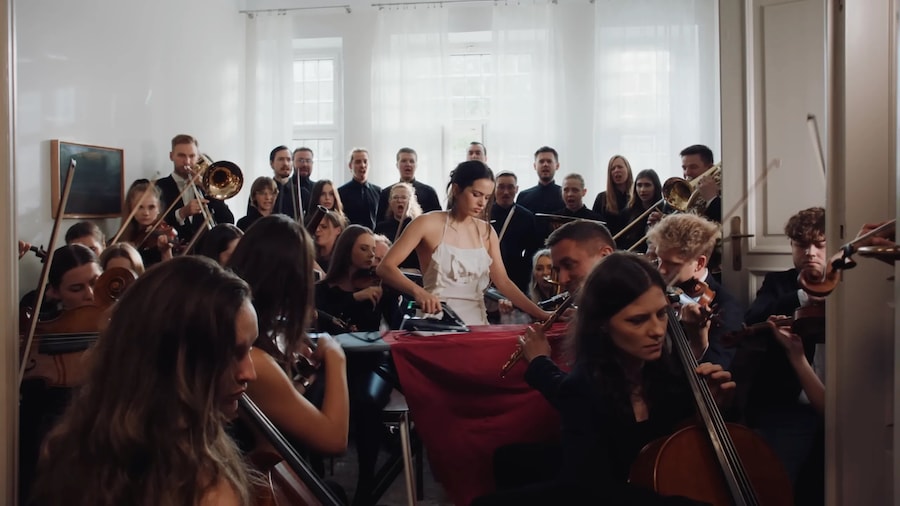
The creative process behind Rosalía’s fourth studio album LUX was Sisyphean. If retreating into isolation in Los Angeles for the best part of three years and writing (and rewriting) lyrics in 13 different languages doesn’t sound like impossibly hard work, then I don’t know what does. No stranger to Herculean efforts, though, Rosalía persevered; LUX has seen the light of day, complete with features from Björk and the London Symphony Orchestra. However, the true challenge – the real metaphorical boulder – would be to get modern audiences on board and immerse themselves in 60 minutes of orchestral drama. After all, it is 2025: attention spans are fried and algorithm-friendly content is king.
“Since digital platforms became the main cultural arbiters of our time, and the digital platforms are controlled by algorithms, the algorithm became the cultural arbiter,” says Kyle Chayka of The New Yorker and author of Filterworld: How Algorithms Flattened Culture. “They push one type of content, and so artists have to pursue that style in order to gain and maintain an audience.” The result is a world of charmless cultural goods, where every song hinges on the same hooks and TV shows are getting dumber to facilitate second-screen viewing. Andy Warhol famously prophesied that in the future, everyone would be famous for 15 minutes – today, in the algorithmic age, 15 seconds is the dream.
All of which makes LUX weird. It is not optimised for a world that favours the easily digestible, shareable, and forgettable. But that is exactly what Rosalía wanted. Appearing on The New York Times ‘Popcast’, she was asked if she is demanding too much of her audience. “Absolutely, I am,” she responded. “The more we are in the era of dopamine, the more I want the opposite.”
It appears she isn’t alone in her mission. Three days after LUX was released, Charli xcx dropped “House”, a tortured track which features The Velvet Underground’s John Cale monologuing atop a screeching string arrangement. The song was written for Emerald Fennell’s forthcoming adaptation of Wuthering Heights, with Charli writing on Substack about how the opportunity to create music for the film encouraged her to do something different post-Brat. “This world felt so opposite from the world I had been inhabiting for the past two and a half years. I began to feel a sense of freedom again,” she wrote. Ethel Cain, with her Southern Gothic worldbuilding in both Preacher’s Daughter and Willoughby Tucker, I’ll Always Love You, as well as 2025’s surprise ambient drone project Perverts, has also long been crafting a cerebral antidote to the internet’s run-of-the-mill sad girl pop.
Simply put, artists are looking to resist the algorithm, crafting sonically complex, deeply human works to challenge their audiences. And interestingly, the audience response has been overwhelmingly positive. “Pop music is sooooo weird rn, I love it”, read one viral post on X. Discussing LUX on a podcast with Nick Grimshaw, DJ Annie Mac said people had been requesting the album’s operatic lead single “Berghain” in the club. “It’s changed everything,” Grimshaw said. The album has even broken Spotify’s record for the most-streamed album in a single day by a Spanish-speaking female artist. “We’ve gotten too used to fast-food music and fast-food art,” says Clare Yeo, a writer and content creator. “But this... this is a feast.” Audiences are proving that they, too, are ready for more than just dopamine bait hooks; just as artists want to challenge them, they want to be challenged.
But why? “In the era of the long 2010s, we reached and passed peak social media, coming to understand and get bored of the flattening of culture,” says Chayka. “Now, we are looking for something that speaks to us differently. What [Rosalía] chose to make is so individual and self-expressive, and so not optimised that it comes across as this great artistic act. That’s why it’s breaking through more.”
In the era of the long 2010s, we reached and passed peak social media, coming to understand and get bored of the flattening of culture. Now, we are looking for something that speaks to us differently
‘Professional music fan’, DJ and radio host Derrick Gee points to fatigue with AI-generated content as another reason why audiences are hankering for real art again. “You think you know when you’re listening to AI, but you really don’t. To have someone so clearly going ‘I want to be as human as possible’, it’s like hell yeah! We should fight back and make it very apparent that we’re going to be as real as can be,” he says. “It’s a fight for what music arguably is for – expression and humanity. Are we ready for it [art to challenge us again]? I think it’s a choice. We have to choose to be ready for it.”
And audiences are starting to make that choice, initiating their own acts of resistance. From ‘rawdogging boredom’, an internet trend where people sit for extended periods of time with no distractions in an attempt to improve their attention spans and reconnect with their imaginations, to constructing ‘personal curriculums’ comprising classic literature and cult cinema, growing numbers of people are evidently seeking out art that demands more. “We’re finally understanding what this digital fatigue we’re feeling is,” says Yeo, who regularly posts breakdowns of her own personal curriculum on TikTok. “It’s us not using our brains and being challenged enough. It’s like someone took the blinders off. The [idea of a] personal curriculum is an opportunity to explore those things that we otherwise would not have. It’s a small thing to reclaim [art] for ourselves.”
All of this hints at a broader cultural recalibration that goes beyond the flickering of a few pyrotechnical pop releases. On all sides, for artists and audiences alike, there is not just a willingness to engage in art that defies the algorithm, but a real hunger for it. Whether that hunger can withstand the force of the algorithm – and AI – remains to be seen, but for the first time in a long time, the desire for depth feels stronger than the impulse to scroll past it.
ShareLink copied ✔️More on these topicsMusicFeatureRosalíaBjorkCharli XCXsocial mediaculturemusic-industryExpand your creative community and connect with 15,000 creatives from around the world.
READ MORE
10 of Yung Lean’s best collabs
‘We’re like brother and sister’: Yung Lean and Charli xcx in conversation
Trail shoe to fashion trailblazer: the rise of Salomon’s ACS PRO
The only tracks you need to hear from November 2025
Inside the world of Amore, Spain’s latest rising star
Lella Fadda is blazing a trail in the Egyptian music scene
The rise of Sweden’s post-pop underground
Neda is the singer-songwriter blending Farsi classics with Lily Allen
6 Flog Gnaw artists on what’s inspiring them right now

Dazed Mix: Ziúr
Parris Goebel is creating the music she wants to dance to