- Home
Edition
Africa Australia Brasil Canada Canada (français) España Europe France Global Indonesia New Zealand United Kingdom United States Edition:
Global
Edition:
Global
- Africa
- Australia
- Brasil
- Canada
- Canada (français)
- España
- Europe
- France
- Indonesia
- New Zealand
- United Kingdom
- United States
Academic rigour, journalistic flair
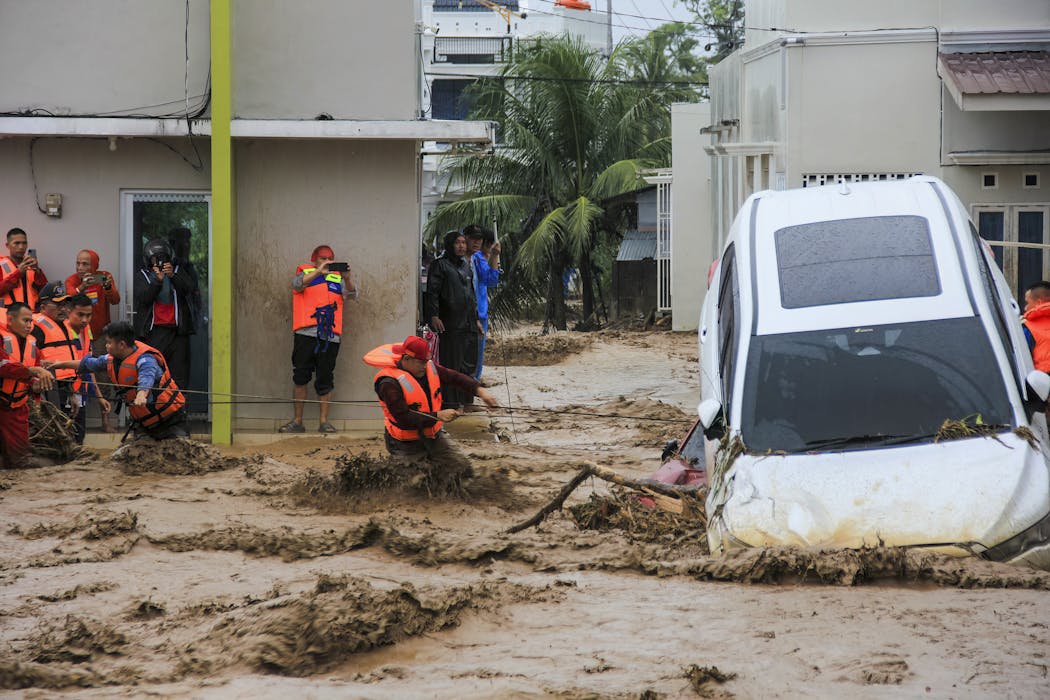
 Rezan Soleh/AFP via Getty Images
Death and devastation: why a rare equatorial cyclone and other storms have hit southern Asia so hard
Published: December 1, 2025 3.10am GMT
Steve Turton, CQUniversity Australia
Rezan Soleh/AFP via Getty Images
Death and devastation: why a rare equatorial cyclone and other storms have hit southern Asia so hard
Published: December 1, 2025 3.10am GMT
Steve Turton, CQUniversity Australia
Author
-
 Steve Turton
Adjunct Professor of Environmental Geography, CQUniversity Australia
Disclosure statement
Steve Turton has previously received funding from the Australian and Queensland governments.
Partners

CQUniversity Australia provides funding as a member of The Conversation AU.
View all partners
DOI
https://doi.org/10.64628/AA.kwvwgqywe
https://theconversation.com/death-and-devastation-why-a-rare-equatorial-cyclone-and-other-storms-have-hit-southern-asia-so-hard-270939 https://theconversation.com/death-and-devastation-why-a-rare-equatorial-cyclone-and-other-storms-have-hit-southern-asia-so-hard-270939 Link copied Share articleShare article
Copy link Email Bluesky Facebook WhatsApp Messenger LinkedIn X (Twitter)Print article
More than 900 people are dead, thousands more missing and millions affected by a band of cyclones and extreme monsoonal weather across southern Asia. Torrential rain has triggered the worst flooding in decades, accompanied by landslides. Indonesia, Sri Lanka, Thailand, Vietnam and Malaysia have been hit hardest. The death toll is likely to rise significantly.
Normally, cyclones don’t form close to the equator. But Cyclone Senyar formed just north of the equator in the Malacca Strait. It triggered lethal flooding in Sumatra and peninsular Malaysia last week.
It wasn’t alone. Other tropical cyclones formed along a zone of converging trade winds north of the equator. Typhoon Koto caused severe flash floods and landslides in the Philippines before weakening as it neared Vietnam. Tropical Cyclone Ditwah devastated Sri Lanka. One reason Sumatra was hit by such severe flooding was due to the unusual interaction between Typhoon Koto and Cyclone Senyar, which has now weakened.
The near-simultaneous emergence of these intense storms isn’t unheard of, and equatorial cyclones are rare but known. But the devastation is extraordinary. Sri Lankan President Anura Kumara Dissanayake described the floods as the “most challenging natural disaster” in the country’s history. Is there a climate link? We don’t know yet, but we do know climate change is projected to trigger fewer cyclones overall, but with higher intensity.
 Cyclone Ditwah brought torrential rains and floods to Sri Lanka.
Chamila Karunarathne/EPA
Cyclone Ditwah brought torrential rains and floods to Sri Lanka.
Chamila Karunarathne/EPA
Why are cyclones rare near the equator?
Cyclones, typhoons and hurricanes are different names for the same strong, spinning tropical storms. These storms form over large expanses of warm water – but not usually on the equatorial seas.
This is because there’s not enough Coriolis force from Earth’s rotation at the equator to spin storms into their classic cyclonic structure.
The closest cyclone to the equator was the 2001 Tropical Storm Vamei which formed at just 1.4°N. Cyclone Senyar formed at 3.8°N.
While tropical cyclones can form in any month, they’re more common between July and October in the northwest Pacific and North Indian oceans. Cyclone Senyar and Typhoon Koto formed in the Northwest Pacific Basin, which has the largest, most frequent and most intense tropical cyclones in the world. Several devastating typhoons have hit the Philippines and parts of southern China this year.
One reason these cyclones have caused widespread damage is because they have hit countries where cyclones are rare, such as Indonesia and Malaysia.
Tropical cyclones are often smaller and much less common in the North Indian Ocean, including the Bay of Bengal and Arabian Sea. But Cyclone Ditwar tracked directly down Sri Lanka’s east coast, magnifying the damage.
Is there a climate link?
As the world’s oceans and atmosphere warm at an accelerating rate due to the rise in greenhouse gases from burning fossil fuels, tropical cyclones are expected to become more intense.
This is because cyclones get their energy from warm oceans. The warmer the ocean, the more fuel for the storm.
The warming atmosphere is supercharging the global water cycle, and peak rainfall rates are increasing. When more rain falls in a short time, flash flooding becomes more likely.
We can’t immediately say climate change made these storms worse, as it takes time to pinpoint any link.
What does this mean for Australia’s cyclone season?
Many Australians will wonder whether these devastating cyclones across Asia are a warning for northern Australia’s monsoon season.
The wet season has started with a bang in northern Australia, after Severe Tropical Cyclone Fina caused damage and disruption across the Top End and Kimberley last week. It was very early for a cyclone in the south Pacific and Indian oceans, as the season runs November to May.
 Cyclone Fina did major damage to the Berkeley River Lodge in the Kimberley region of Western Australia.
Berkeley River Lodge/AAP
Cyclone Fina did major damage to the Berkeley River Lodge in the Kimberley region of Western Australia.
Berkeley River Lodge/AAP
Last week also saw the most damaging spring storms in more than a decade in southeast Queensland and northern New South Wales. Giant hail and destructive winds did major damage, costing one insurer an estimated A$350 million.
This doesn’t mean a bad cyclone season is guaranteed. It’s not possible to predict individual tropical cyclone events far in advance.
All indicators point to a mixed wet season across the north this year, with below-average rainfall across much of the northwest and average to above-average rainfall across the northeast.
Australia’s Bureau of Meteorology has just declared a La Niña in the Pacific. La Niña typically bring cooler, wetter weather to northern Australia and a stronger monsoon and higher risk of cyclones. This La Niña is likely to be relatively weak and short-lived, which is why rainfall predictions are largely average.
Across most of the Coral Sea, sea surface temperatures are up to 2°C above normal. This unusual warmth increases the risk of cyclone formation as well as more intense monsoonal rains and flooding in coming months.
In the south, there’s increased risk of heatwaves and bushfires, with a very hot summer forecast across most of Australia.
The Bureau of Meteorology recently ended seasonal cyclone forecasts as it’s no longer possible to do so reliably. Until now, meteorologists have used historic data to reasonably accurately model the total number of cyclones in a season. But the climate is now changing so fast it’s no longer possible to do this. As rescue attempts continue in many countries in the region, it’s clear we are now entering uncharted territory.
- Climate change
- Cyclones
- La Nina
- Environment
- Extreme weather
- Monsoon
- Flooding
Events
Jobs
-
 Lecturer/Senior Lecturer - Electrical Engineering
-
University Lecturer in Early Childhood Education
-
Case Specialist, Student Information and Regulatory Reporting
-
Lecturer in Paramedicine
-
Associate Lecturer, Social Work
 Lecturer/Senior Lecturer - Electrical Engineering
 University Lecturer in Early Childhood Education
 Case Specialist, Student Information and Regulatory Reporting
 Lecturer in Paramedicine
 Associate Lecturer, Social Work
- Editorial Policies
- Community standards
- Republishing guidelines
- Analytics
- Our feeds
- Get newsletter
- Who we are
- Our charter
- Our team
- Partners and funders
- Resource for media
- Contact us
-
-
-
-
Copyright © 2010–2025, The Conversation