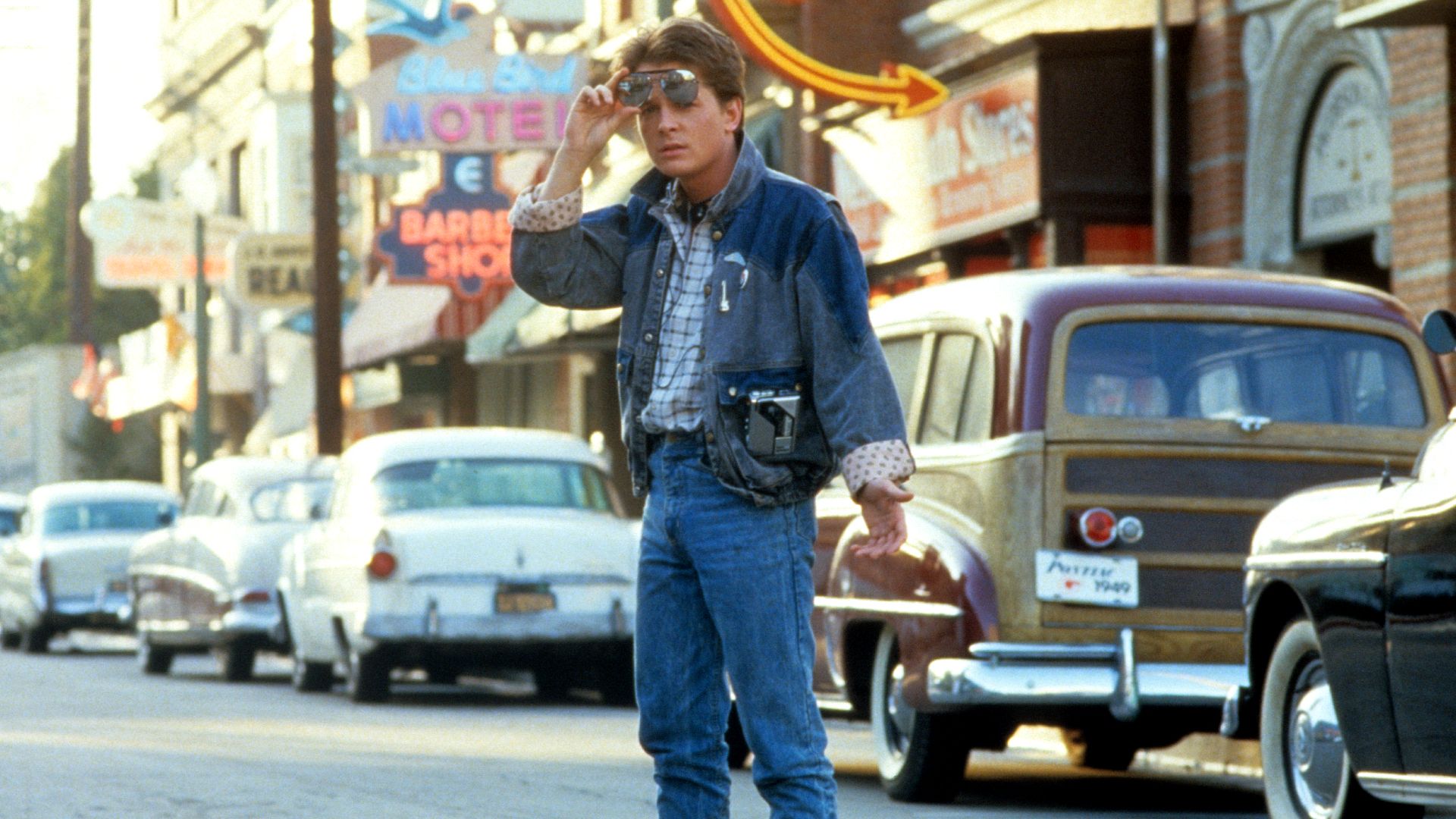
 Marty McFly standing in the street in Back to the Future
 By
Craig Elvy
Published 23 minutes ago
Craig began contributing to Screen Rant in 2016 and has been ranting ever since, mostly to himself in a darkened room. After previously writing for various outlets, Craig's focus turned to TV and film, where a steady upbringing of science fiction and comic books finally became useful. Craig has previously been published by sites such as Den of Geek.
Craig is an approved critic on Rotten Tomatoes.
LinkedIn: https://www.linkedin.com/in/craig-elvy-5b31a3381/
Sign in to your ScreenRant account
Summary
Generate a summary of this story
follow
Follow
followed
Followed
Like
Like
Thread
Log in
Here is a fact-based summary of the story contents:
Try something different:
Show me the facts
Explain it like I’m 5
Give me a lighthearted recap
By
Craig Elvy
Published 23 minutes ago
Craig began contributing to Screen Rant in 2016 and has been ranting ever since, mostly to himself in a darkened room. After previously writing for various outlets, Craig's focus turned to TV and film, where a steady upbringing of science fiction and comic books finally became useful. Craig has previously been published by sites such as Den of Geek.
Craig is an approved critic on Rotten Tomatoes.
LinkedIn: https://www.linkedin.com/in/craig-elvy-5b31a3381/
Sign in to your ScreenRant account
Summary
Generate a summary of this story
follow
Follow
followed
Followed
Like
Like
Thread
Log in
Here is a fact-based summary of the story contents:
Try something different:
Show me the facts
Explain it like I’m 5
Give me a lighthearted recap
Across the three Back to the Future movies, it's quite clear that Marty McFly seems to be the main protagonist, closely followed by Christopher Lloyd's Doc Brown. Drill down into the nuts, bolts, and deleted scenes of the first movie without considering its sequels, however, and another candidate emerges.
A Deleted Scene Changes How You See George McFly In Back To The Future
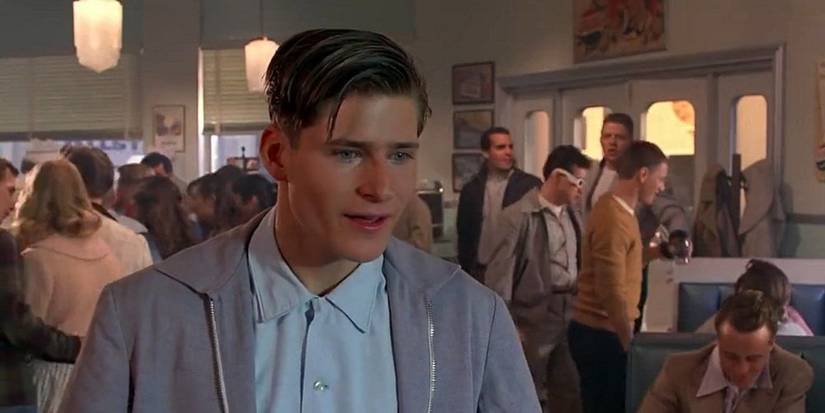 Crispin Glover as George McFly Looking Serious in Back To The Future
In the finished cut of Back to the Future, we see Marty's father, George, bullied by Biff Tannen when both men are adults in the 1985 timeline. The pair evidently work at the same place and Biff takes advantage of George often, causing much trouble for the McFly family. Rewind to 1955, and it's the same story but with Biff bullying George in high school.
Back to the Future's entire plot revolves around Marty giving George the courage to stand up for himself (albeit sometimes via questionable methods), thereby creating a new 1985 where George McFly is a successful sci-fi author and Biff Tannen cleans George's car.
Curiously, a deleted scene alters the perspective on George's situation by proving Biff isn't the primary cause of George's woes. Taking place at the McFly household in 1985 (pre-DeLorean incident), a neighbor knocks on the front door with his child, who's selling peanut brittle. The neighbor declares that he's already signed George up for an entire case at $5 per box, and after George reluctantly agrees in order to avoid confrontation, the distasteful little visitor tells his son, "See, I told you, we only have to go to one house."
The conversation flips George from just being a victim of Biff to being a punching bag for the entirety of Hill Valley, with a reputation as someone to be walked over. This actually explains a line from elsewhere in the movie where Mr. Strickland tells Marty his father was a "slacker" who never amounted to anything. Without the peanut brittle scene, Strickland's verbal assault comes out of nowhere, but if George has a reputation across the Valley for being easily manipulated, Strickland's insult makes more sense.
Is George McFly Back To The Future's Real Main Character?
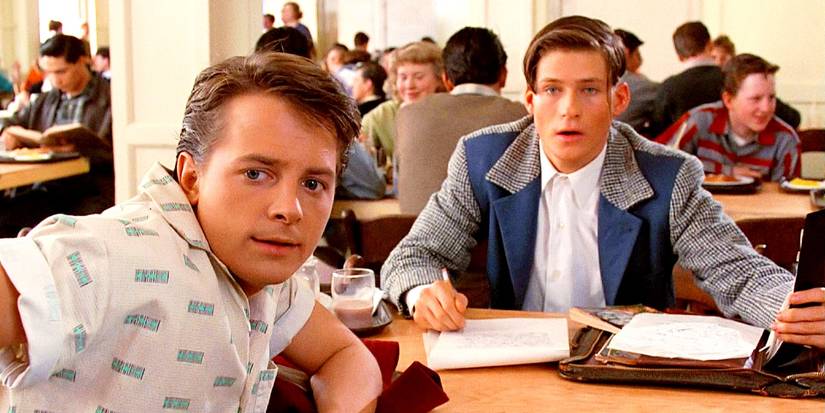 George and Marty in Back to the Future
In the finished cut of Back to the Future, George McFly's newfound confidence and flourishing literary career come about entirely by accident. Marty is really just trying to stop himself (and his siblings, we suppose) vanishing from existence by making sure his parents fall in love. Resolving George's bullying problem with Biff simply happens in the process.
In the aforementioned Back to the Future deleted scene, however, Marty is imploring his dad to change - to say "no" to someone... anyone. This isn't just Marty being annoyed about Biff wrecking his plans like in the final cut, it's about Marty genuinely trying to help his father. Marty fails to get through to his grown-up dad in 1985, but succeeds after trying the same thing with his teenage dad in 1955.
As a result, we get a more solid through line between Marty and George in the present and Marty and George in the past. Getting George and Lorraine together isn't just for Marty's survival, it's saving George from a life of never saying "no" and being walked over by the whole town, including nightmare neighbors selling peanut brittle for extortionate prices.
The central focus of Back to the Future then becomes George, not Marty. George's transformation is the whole point, not just a happy bonus, and Marty provides the catalyst for change - his father's life coach, if you will. In the finished cut, George doesn't really change, he just punches Biff in the face and ends the bullying right there in the school parking lot.
After realizing that George's problems extend beyond just Biff, his stark transformation between the first scene and the last becomes clear. George didn't merely drop a bully, he reinvented himself more than anyone else in the movie, and that gives him a valid claim to being Back to the Future's real main character.
 228
9.2/10
228
9.2/10
 10/10
10/10
Back to the Future
10 stars 9 stars 8 stars 7 stars 6 stars 5 stars 4 stars 3 stars 2 stars 1 star Like Follow Followed PG Adventure Comedy Sci-Fi Release Date July 3, 1985 Runtime 116 minutes Director Robert Zemeckis Writers Robert Zemeckis, Bob Gale Producers Bob Gale, Frank Marshall, Kathleen Kennedy, Neil CantonCast
See All-
 Michael J. Fox
Marty McFly
Michael J. Fox
Marty McFly
-
 Christopher Lloyd
Emmett Brown
Christopher Lloyd
Emmett Brown
 Expand
Collapse
Expand
Collapse
-
 Back to the Future
We want to hear from you! Share your opinions in the thread below and remember to keep it respectful.
Be the first to post Images Attachment(s) Please respect our community guidelines. No links, inappropriate language, or spam.Your comment has not been saved
Send confirmation emailThis thread is open for discussion.
Be the first to post your thoughts.
- Terms
- Privacy
- Feedback
 23 hours ago
The Exorcism at 1600 Penn Drops Exclusive Peek at New Sequel
 20 hours ago
Stranger Things Season 5, Part 2's Frustrating Release Date Continues A Netflix Problem
 21 hours ago
Skyrim Hidden Boss Blows Players Away: "How Did I Not Know About Him?"
 22 hours ago
The Buffy Universe Owes This OG Character A Spot In The Revival
Trending Now 4 Best Netflix Horror Shows That No One Remembers
 Hamnet’s Most Annoying Shakespeare Quirk Is Also Its Most Meaningful Idea
 A Career First For Scarlett Johansson Continues A Major Hollywood Genre Trend