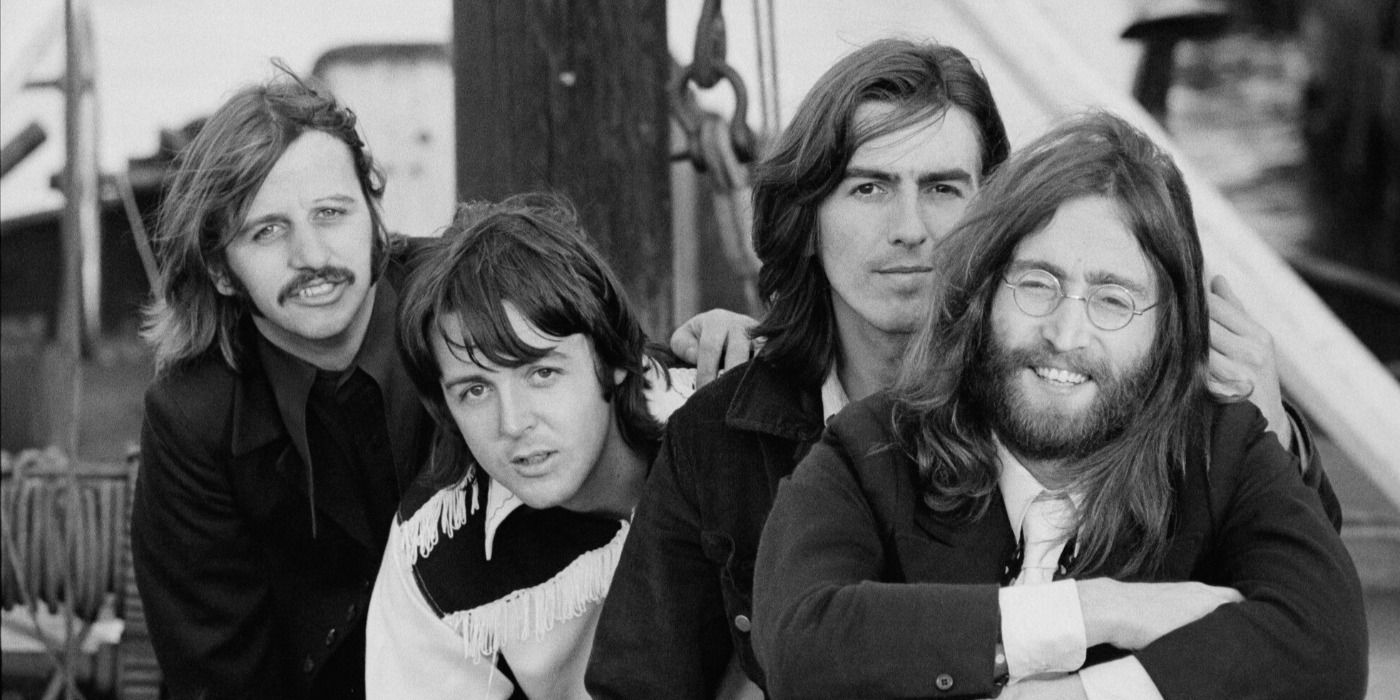
 Ringo Starr, Paul McCartney, George Harrison, John Lennon, The Beatles Anthology press release photoImage via Apple Corps. Ltd.
 By
Val Barone
Published 49 minutes ago
Val Barone is a journalist working remotely and specializing in music features. A passionate music lover, she keeps up to date on the latest developments in the entertainment world, and in the past five years, she's written for several sites, including ScreenRant, MovieWeb, TheThings, and Far Out Magazine. She covers breaking news in the music world and loves sharing stories about the classic rock musicians she grew up listening to. As a Gen Z writer, she offers a fresh perspective on the events that change music history.
Sign in to your Collider account
Summary
Generate a summary of this story
follow
Follow
followed
Followed
Like
Like
Thread
Log in
Here is a fact-based summary of the story contents:
Try something different:
Show me the facts
Explain it like I’m 5
Give me a lighthearted recap
By
Val Barone
Published 49 minutes ago
Val Barone is a journalist working remotely and specializing in music features. A passionate music lover, she keeps up to date on the latest developments in the entertainment world, and in the past five years, she's written for several sites, including ScreenRant, MovieWeb, TheThings, and Far Out Magazine. She covers breaking news in the music world and loves sharing stories about the classic rock musicians she grew up listening to. As a Gen Z writer, she offers a fresh perspective on the events that change music history.
Sign in to your Collider account
Summary
Generate a summary of this story
follow
Follow
followed
Followed
Like
Like
Thread
Log in
Here is a fact-based summary of the story contents:
Try something different:
Show me the facts
Explain it like I’m 5
Give me a lighthearted recap
In 1995, the world of music documentary changed forever with the release of The Beatles: Anthology. It was the product of years of work, of recovering relationships, of healing from past hurts. And most importantly, of Paul McCartney, George Harrison, and Ringo Starr, mourning the tragic passing of John Lennon. But now, 30 years later, so much has changed. Harrison is now gone, and McCartney and Starr are in their 80s. Fewer and fewer current fans have been contemporary to The Beatles, which speaks to their everlasting relevance, but also brings forth the need to look back at the Anthology with a fresh perspective. I sat down with director Oliver Murray ahead of the release of the 9 episodes of Anthology. He directed the 9th episode, the only one consisting purely of previously unseen footage, and through this new material, he has helped bring down the myth of the Fab Four, and instead let the world see John, Paul, George, and Ringo.
The New Anthology Shows Beatlemania Through the Fab Four’s Eyes
The Anthology was a huge turning point for music documentaries. Back in the 1990s, fans were desperate to learn about what happened to The Beatles. Their breakup, the fights that followed, the way it was all violently cut short by Lennon's murder. The 8 original episodes of the docuseries satisfied that hunger, back then. They provided a thorough, journalistic chronology of their history, right to their bitter breakup. But there was no time or space for more in the '90s, and hours of valuable footage were set aside. Until now.
Director Oliver Murray, who previously worked with McCartney and Starr on the making of the Now and Then short film in 2023, which accompanied the release of The Beatles' last song, was brought into the Anthology project to give the world a different perspective on their 1995 reunion. Or, rather, to give us "their" perspective. Episode 9 is “unburdened by the chronology of events,” and as such, won't focus on what happened, but rather on how The Beatles lived through it. Fans will get to see not only their opinions and feelings on their time together, but also their reflections on finally getting together for the Anthology.
While there might not have been a lot of time to focus on each of the surviving Beatles' grief back in the 90s, "John (Lennon)'s absence is a heavy presence, and one that is acknowledged and colors Episode 9," Murray shares. The Beatles had been looking forward to a reunion for years, even before Lennon's passing, and the fact that he wasn't there to look back on their life's work was a heavy blow when they finally got together. This new release of Anthology is a very meta experiment, showing the history of The Beatles through their eyes, and fans getting their individual perspectives on the events that changed the course of history.
"It's interesting to know what The Beatles think of the world, but it's this constant back and forth because it's really about what the world thinks of The Beatles," the director explains.
The Anthology Brings Down the Myth, and That's a Good Thing
The Anthology is one more in a long list of projects made to tell the story of the biggest band in the world, and yet audiences continue to be hungry for more. In 2021, Peter Jackson released The Beatles: Get Back, an 8-hour documentary made out of the footage left out of the 1970s production of Let It Be. Millions of fans watched it eagerly. Then, in 2023, Jackson and Murray worked on a short film and song called "Now and Then," the last track to feature all four Beatles. It was a huge hit, and the music video even won a Grammy. The Beatles broke up over 50 years ago, and their story has been told a million times. By this point, they are not just a band, but a mythical symbol of the 1960s, "arguably the most potent cultural force of the 20th century."
The Anthology, particularly episode 9, looks to break down that myth in the best way possible. "The ethos of Anthology in the 90s was to give them the floor," Oliver Murray says, but when asked about his goal when handling the new footage, he expressed that he wanted to "humanize them," because they are "so mythologized" that people see them as the symbol, not the people they were and are. After The Anthology, he explains, people will remember that, "from their perspective," they just wanted to be good musicians in a good band. The Anthology reminds people that "they are flesh and blood."
The way people see them bare their souls about their history, express their regrets about things they did and didn't do at the time, because maybe they didn't know better, is more humbling than any kind of exposé. As George Harrison says in the documentary, he was 17 when they were playing clubs in Hamburg, sleeping in the same room in the back of a movie theater, and by the time he was 23, they had done Sgt. Pepper.
"[The documentary] Presents them as fallible, people like us, who did extraordinary things, but they're not made of clay." In an era of nostalgia, when we're "looking over our shoulder at culture," it's important to bring them back to Earth. The director went on to explain that this project is paving the way for how legacy acts can preserve their history without becoming untouchable icons, maintaining their connection with the audience through the decades.
“The Beatles didn’t just make music, they made meanings to our thoughts and emotions. Their songs are now a cultural language that gets passed through families, films, playlists… and they’re the last truly universal pop culture reference.”
Follow Followed Like Share Facebook X WhatsApp Threads Bluesky LinkedIn Reddit Flipboard Copy link Email Close Thread Sign in to your Collider accountWe want to hear from you! Share your opinions in the thread below and remember to keep it respectful.
Be the first to post Images Attachment(s) Please respect our community guidelines. No links, inappropriate language, or spam.Your comment has not been saved
Send confirmation emailThis thread is open for discussion.
Be the first to post your thoughts.
- Terms
- Privacy
- Feedback
 Oct 28, 2025
Paul McCartney Reveals New Details About Life After Heartbreaking Split From The Beatles
 11 hours ago
The 11 Greatest Movies of the Last 40 Years, Ranked
 10 hours ago
'Magnum P.I.' Fans Will Love This 46-Year-Old Free-to-Watch Detective Series That Mixes Money and Murder
 16 hours ago
The 10 Greatest Mystery Shows Worth Watching Over and Over
What To Watch
 July 20, 2025
The 72 Best Movies on Netflix Right Now
Trending Now
July 20, 2025
The 72 Best Movies on Netflix Right Now
Trending Now
 The Greatest TV Drama Ever Reclaims Streaming Crown
 Is Steven Spielberg Ever Going To Give Us a Sequel to His Only Animated Movie?
 It's Your Last Chance to Watch One of The Greatest Movies of the 21st Century for Free